-
Whatsapp: +86 15938761000
-
Email: likang@shconcretemixer.com
-
Address: Shenglong Youyi City, Zhongyuan District, Zhengzhou City, Henan Province
-
Whatsapp: +86 15938761000
-
Email: likang@shconcretemixer.com
-
Address: Shenglong Youyi City, Zhongyuan District, Zhengzhou City, Henan Province

What Is a Stationary Concrete Plant? The Complete Guide
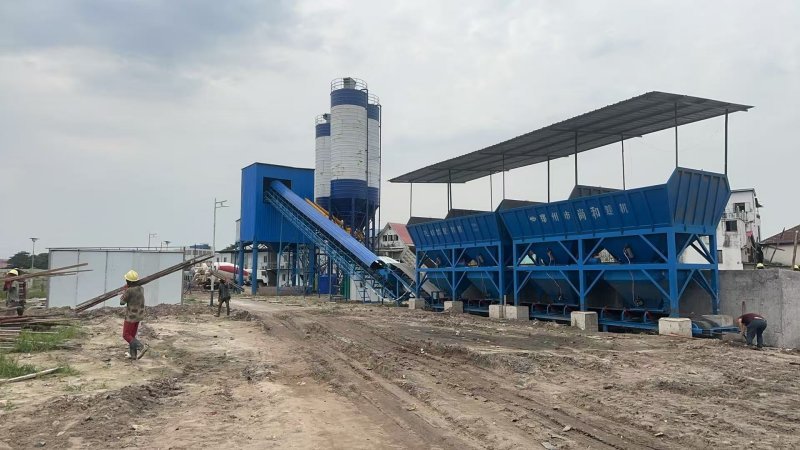
A stationary concrete plant is a permanent, high-capacity manufacturing facility designed to produce ready-mix concrete at a fixed location. By integrating aggregate batching bins, powder silos, precise weighing scales, and heavy-duty mixers, these plants provide a continuous and automated material supply for multi-year infrastructure, precast manufacturing, and commercial projects.
Core Components and Their Functions
A stationary concrete plant relies on several major systems operating in tight synchronization.
Aggregate Batching Systems
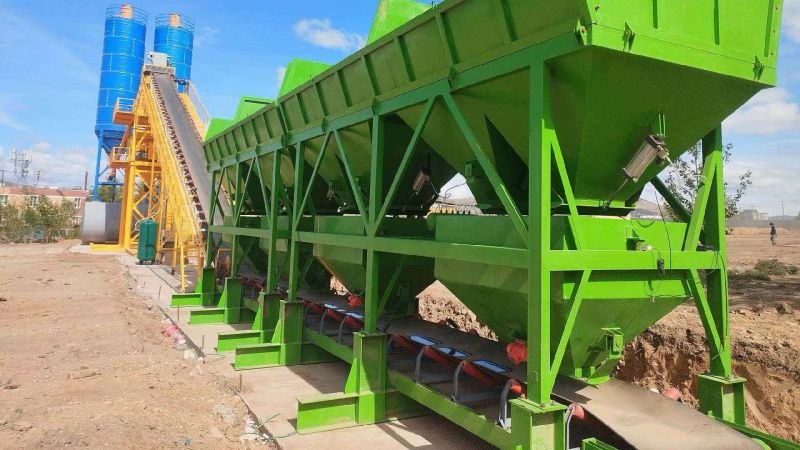
Raw materials like sand, gravel, and crushed stone are stored in the aggregate batching system. This unit typically features multiple steel storage bins to keep different sizes of rocks strictly separated. Heavy-duty batchers generally come with three to six individual bins, with individual capacities ranging from 20 to 50 cubic meters depending on production demands.
When a recipe is initiated, pneumatic discharge doors open to drop the specified aggregate type onto a weighing belt located beneath the hoppers.
Cement Silos and Screw Conveyors
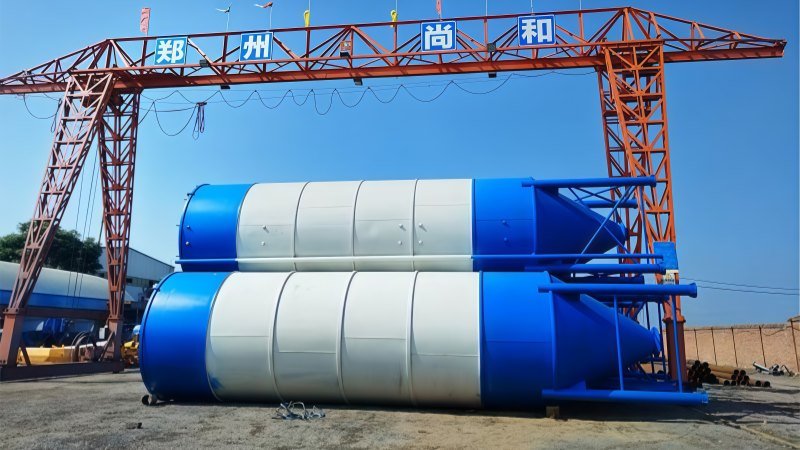
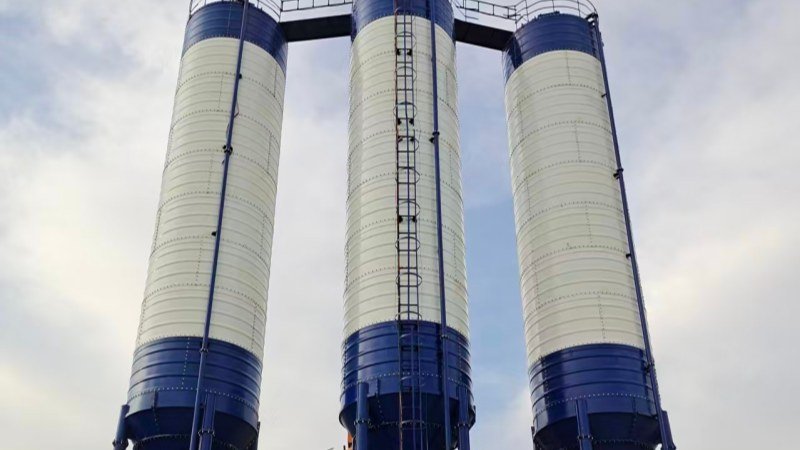
Cement and fly ash require strict protection from moisture and are stored in towering steel silos. A standard stationary setup uses multiple silos, each holding between 50 and 200 tons of powder.
To ensure continuous and safe operation, these silos are equipped with several critical accessories. Level indicators monitor the material volume, while aeration pads or wall vibrators break up material arches to prevent blockages. Pressure relief valves are also installed to protect the silo structure during pneumatic filling. To transport the powder to the weighing scale, the plant utilizes enclosed screw conveyors that move the heavy powder efficiently without generating job site dust.
Main Concrete Mixers
The mixer is the central processing unit of the plant. Most heavy-duty stationary plants utilize a twin-shaft compulsory mixer. Two heavy horizontal metal shafts rotate in opposite directions, using hardened mixing blades to forcefully cut through and bind heavy, abrasive aggregates.
Mixer capacities typically span from 1.0 to over 4.0 cubic meters per batch, depending on the plant’s structural size.
| Mixer Type | Common Application | Key Characteristic |
|---|---|---|
| Twin-Shaft Mixer | Ready-mix concrete, heavy infrastructure | Fast mixing time, easily handles very large aggregates |
| Planetary Mixer | Precast concrete blocks and pipes | Extremely uniform mix, utilizes complex planetary blade motion |
Automated Control Systems
The entire facility is managed by a Programmable Logic Controller (PLC) and specialized industrial software housed in a climate-controlled control room. The computer executes the concrete recipe by signaling bins to open, activating conveyors, and monitoring load cell scales in real time to prevent manual weighing errors.
A crucial technology integrated into modern automated systems is the microwave moisture sensor. Installed inside the sand bins, these probes detect the water content of the raw aggregates in real time. The control system uses this data to automatically deduct the corresponding amount of mixing water, ensuring the final water-to-cement ratio remains strictly within engineering parameters. The system also records daily production data, tracks material usage, and prints customer delivery tickets.
How the Batching Process Works
The batching process is a highly synchronized mechanical operation that prioritizes precise material proportioning and efficient blending.
Material Feeding and Precise Weighing
Strict weight accuracy dictates the final compressive strength of the concrete. Industry standards generally require cement and water to be weighed within a strict ±1% accuracy margin, while aggregates allow a ±2% tolerance.
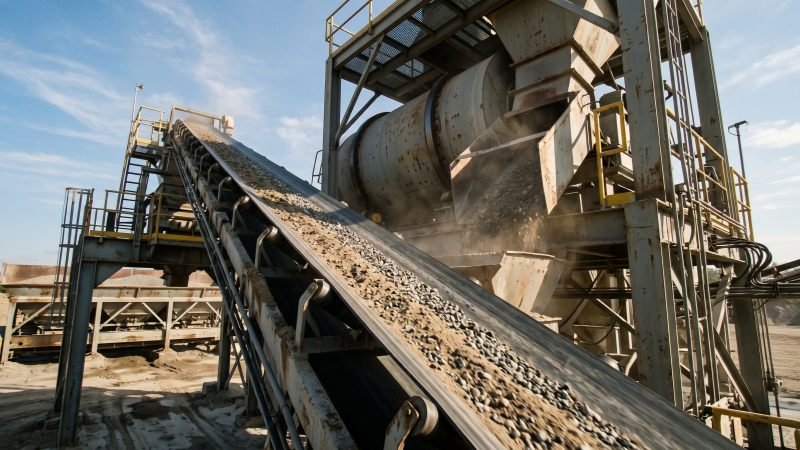
The feeding sequence relies heavily on electronic load cells.. The automation system commands the aggregate bins to drop materials onto the weighing belt. Once weighed, a transfer belt or skip hoist transports the aggregates up into a holding hopper (transition hopper) positioned above the mixer. Simultaneously, screw conveyors feed cement into a dedicated powder scale, while industrial pumps deliver water and liquid admixtures into their respective scale hoppers. This parallel weighing process maximizes hourly production efficiency.
Mixing and Final Discharge
Once all scales confirm the target weights, the blending phase begins. The aggregate holding hopper, powder scale, and liquid scales discharge their contents into the mixing drum simultaneously.
Inside the drum, aggressive blade rotation forces the materials to cross paths constantly, thoroughly coating the aggregates with cement paste. Depending on the mix design, the total mixing time usually ranges from 30 to 90 seconds.
| Concrete Type | Typical Mixing Time | Material Characteristics |
|---|---|---|
| Standard Ready-Mix | 30 – 45 Seconds | High water content, highly flowable |
| High-Strength Structural | 45 – 60 Seconds | Lower water-to-cement ratio, denser |
| Dry-Cast Concrete | 60 – 90 Seconds | Very low moisture, extremely stiff |
Once the timer finishes, the pneumatic discharge gate at the bottom of the mixer opens, allowing the fresh concrete to pour through a discharge funnel directly into a waiting transit mixer truck. The gate then closes, and the next weighed batch is immediately dropped into the drum.
Best Applications for Permanent Plants
Stationary plants provide the most value for construction businesses managing high-demand, long-term projects requiring consistent material output.
Large-Scale Commercial Construction
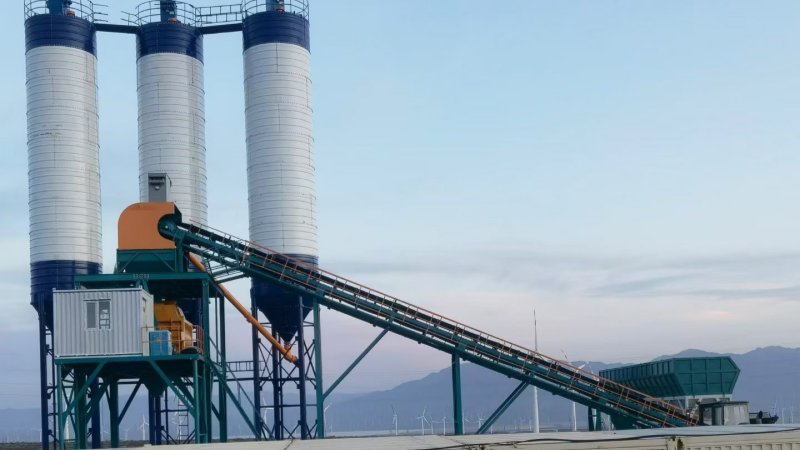
Building skyscrapers, logistics warehouses, and shopping malls requires a massive, uninterrupted concrete supply. A typical commercial high-rise foundation pour can consume over 50,000 cubic meters of concrete. Relying on distant commercial ready-mix suppliers introduces traffic risks that can delay critical pours. Setting up a permanent plant on the outskirts of the city guarantees that general contractors can meet tight building schedules.
Precast Concrete Manufacturing
Precast factories manufacturing sewer pipes, hollow-core slabs, and retaining walls operate year-round indoors. They require a stationary batching plant integrated directly into their production lines. Precast manufacturing demands extremely stiff, low-moisture concrete, and slight variations in moisture can ruin expensive architectural panels. Stationary plants equipped with planetary mixers and precise moisture controls handle this requirement perfectly.
Major Infrastructure and Dam Projects
Heavy civil engineering projects demand astronomical volumes of concrete. A major hydroelectric dam, for example, requires millions of cubic meters of roller-compacted concrete (RCC). Installing a high-capacity stationary plant directly on-site eliminates transportation logistics.
For mass concrete pours like dams, controlling the heat of hydration is critical to prevent structural cracking. In these scenarios, stationary plants are frequently integrated with industrial water chillers or flake ice plants to significantly lower the concrete’s temperature before the pour.
| Infrastructure Project Type | Typical Concrete Volume Demand | Key Material Requirement |
|---|---|---|
| Hydroelectric Dams | 1,000,000+ cubic meters | Low heat of hydration, extremely high density |
| Commercial Airport Runways | 100,000 – 500,000 cubic meters | High flexural strength, fast curing times |
| Major Suspension Bridges | 50,000 – 200,000 cubic meters | Extreme durability against weathering and salt |
Choosing Between Stationary and Mobile Concrete Plants
Deciding between a permanent facility and a portable mixing unit depends heavily on production volume, project duration, and operational costs.
High-Volume Production Requirements
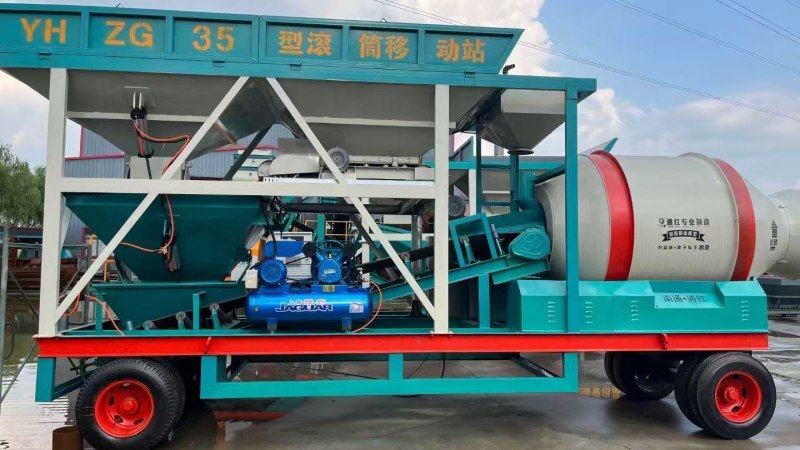
While mobile plants are compact and deployable, their road-legal size limits their maximum output, with most portable units producing 90 to 120 cubic meters per hour. Stationary plants feature much larger twin-shaft mixers and aggregate bins, easily producing 180 to 240 cubic meters of concrete per hour. If a project requires continuous, high-volume loading for fleets of transit trucks, a stationary setup is necessary.
Long-Term Projects at a Fixed Location
Mobile plants can be deployed in a few days and are ideal for quick, three-to-six-month highway repairs. Stationary plants require extensive poured concrete foundations and take several weeks to assemble. However, this heavy foundation eliminates machine vibrations, reducing mechanical wear over multi-year projects.
| Equipment Type | Ideal Project Duration | Foundation Requirement | Setup Time |
|---|---|---|---|
| Mobile Plant | 1 to 6 Months | Compacted soil or steel plates | 2 to 5 Days |
| Stationary Plant | 1 to 10+ Years | Deep poured concrete footings | 2 to 4 Weeks |
Prioritizing Lower Operating Costs Over Mobility
Stationary plants are designed with spacious operating layouts, featuring wide steel walkways and easy access to critical wear parts. This allows maintenance crews to perform daily inspections and replacements safely and rapidly, reducing equipment downtime. Additionally, the ability to store much larger volumes of bulk cement and aggregates lowers the unit cost of raw materials, offsetting the initial foundation expenses over time.
Key Factors to Consider Before Purchasing
To guarantee a profitable and compliant operation, operators must evaluate several site-specific factors before installing a stationary plant.
Assessing Your Target Capacity Requirements
It is essential to calculate the difference between a plant’s theoretical capacity and its practical output. Real-world conditions—such as transit truck maneuvering, aggregate loading speeds, and operator shift changes—typically reduce actual output by 15% to 20%. Selecting a plant with a theoretical capacity slightly larger than the required daily tonnage prevents production bottlenecks.
Site Space and Layout Planning
Stationary plants require a significant physical footprint. Beyond the main mixing tower, the site must accommodate raw material stockpiles and heavy vehicle traffic. An efficient, one-way traffic layout is required so wheel loaders can feed the aggregate bins without crossing paths with the ready-mix trucks driving under the discharge gate.
| Site Zone | Typical Space Requirement | Key Function |
|---|---|---|
| Main Tower & Silos | 300 – 500 square meters | Houses the mixer, weighing scales, and cement storage |
| Aggregate Stockpiles | 1,000+ square meters | Stores bulk sand and different gravel sizes safely |
| Traffic & Loading Lanes | 600 – 800 square meters | Allows loader maneuvering and transit truck staging |
Environmental Compliance and Dust Control Systems
To comply with local environmental regulations, stationary plants must utilize comprehensive pollution control equipment. Top-mounted dust collectors containing fabric filter bags must be installed on every cement silo to trap airborne particulates during pneumatic filling. For urban projects, the entire mixing platform is often enclosed with steel cladding to reduce noise and trap residual dust. Furthermore, a dedicated concrete washout and water recycling system is necessary to separate solid sludge and safely reuse alkaline wastewater for future batches.
Conclusion
A stationary concrete plant is the ultimate solution for securing a reliable, high-volume material supply on long-term projects. With precise automated batching and massive mixing capacities, it guarantees consistent concrete quality for mega-projects, precast manufacturing, and urban developments. Ultimately, a properly configured permanent setup delivers unmatched reliability and significantly lower long-term operating costs.
Looking to configure a stationary concrete plant for your next project? Contact us today to speak with our engineering team about custom layouts and capacity sizing tailored to your job site.