-
Whatsapp: +86 15938761000
-
Email: likang@shconcretemixer.com
-
Address: Shenglong Youyi City, Zhongyuan District, Zhengzhou City, Henan Province
-
Whatsapp: +86 15938761000
-
Email: likang@shconcretemixer.com
-
Address: Shenglong Youyi City, Zhongyuan District, Zhengzhou City, Henan Province

What Is a Stationary Concrete Plant? The Complete Guide
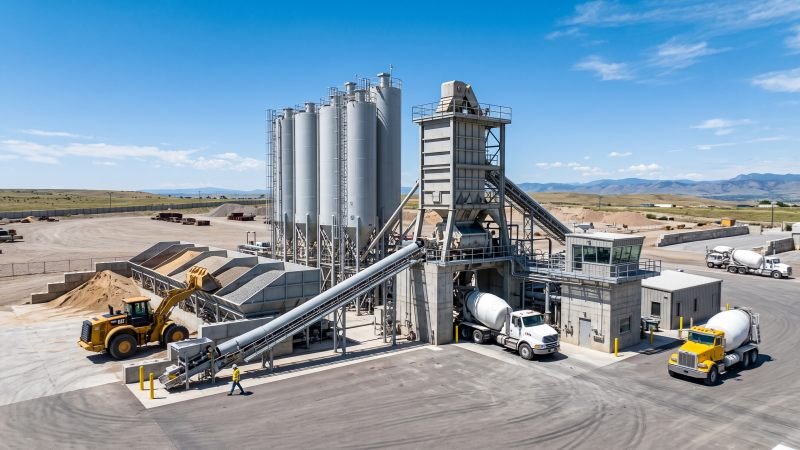
What exactly is a stationary concrete plant, and what role does it play in modern construction?
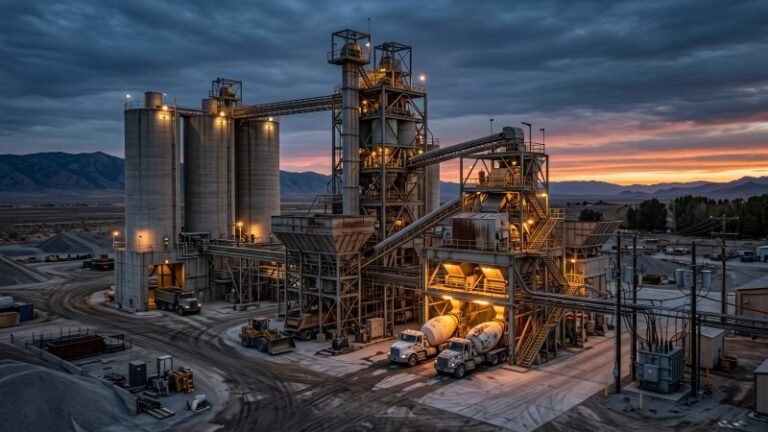
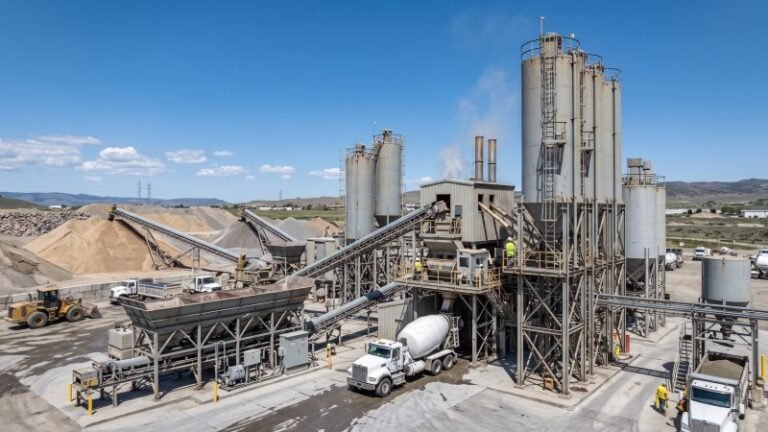
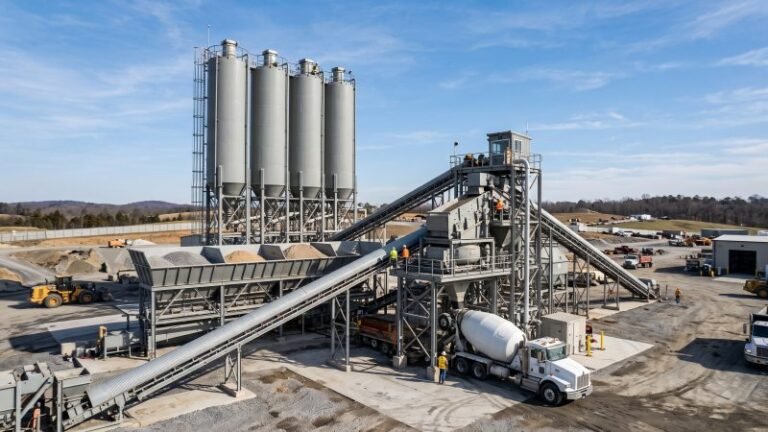
A stationary concrete plant is a large-scale, permanent manufacturing facility designed to produce high volumes of high-quality concrete at a fixed location. It systematically integrates aggregate batching bins, cement silos, precision electronic scales, and heavy-duty mixers to provide a continuous, highly automated material supply for multi-year infrastructure and commercial projects.
Core Components and Their Functions
What are the essential building blocks of a permanent concrete facility?
A stationary concrete plant consists of four main systems working together to produce concrete at a fixed location. First, the aggregate batching system stores and weighs sand and gravel. Next, cement silos and screw conveyors manage the dry powders. Finally, the main concrete mixer blends the materials together, while an automated control system coordinates the entire operation.
Aggregate Batching Systems
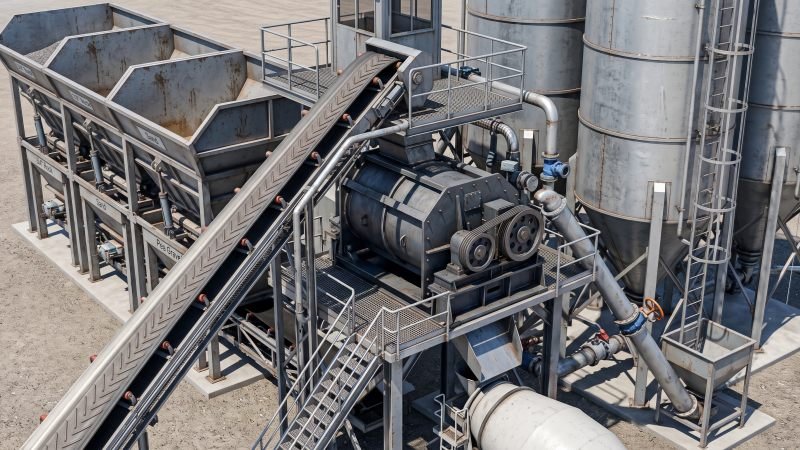
First, bulky materials like sand, gravel, and crushed stone need a dedicated storage area. The aggregate batching system perfectly handles this job. It usually features multiple large steel storage bins side by side. Different concrete recipes require completely different sizes of rocks. Therefore, these hoppers keep the materials cleanly separated.
For instance, this setup works exactly like the cold feed bins in an asphalt mixing plant. Materials are strictly separated by size before any processing begins. Each bin holds a specific aggregate type. When a recipe starts, pneumatic discharge doors open automatically. They drop the exact amount of material onto a weighing belt below.
Generally, heavy-duty batchers come with three to six individual bins. Furthermore, individual bin capacities often range from 20 to 50 cubic meters. However, since hopper sizes and steel configurations vary heavily depending on your specific production demands, you should always verify the exact capacity ranges and dimensions with your equipment supplier.
Cement Silos and Screw Conveyors
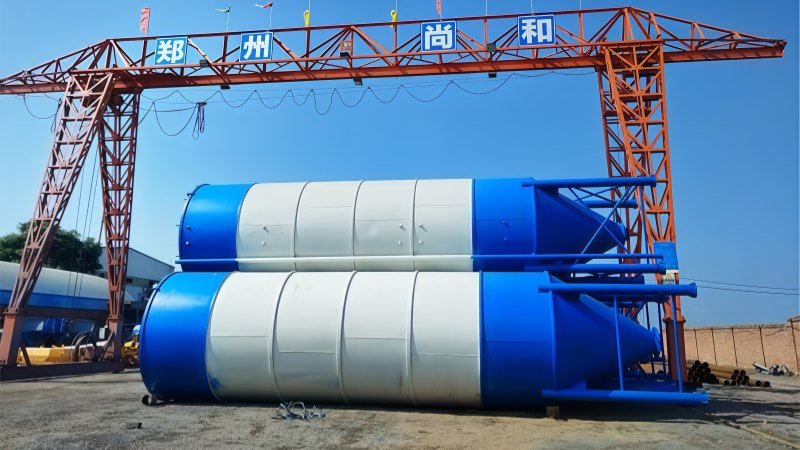
Where do the fine dry powders go? Cement and fly ash require absolute protection from outside moisture. Therefore, cement silos act as massive, sealed storage tanks for these critical binders. These towering steel cylinders keep the powder perfectly dry and ready for immediate use.
To move the cement from the silo to the weighing area, the plant uses screw conveyors. Inside these long metal tubes, a rotating spiral blade steadily pushes the powder forward. This mechanism operates just like the discharge augers found inside bulk cement tanker trucks. It moves fine, heavy powders efficiently upward without creating massive dust clouds on your job site. A standard stationary setup might utilize multiple silos, with each holding anywhere from 50 to 200 tons of cement.
Main Concrete Mixers
The main mixer acts as the beating heart of the entire plant. After all the raw materials are accurately weighed, they drop directly into this central machine. The mixer rapidly blends the aggregates, cement, water, and chemical additives into a uniform, wet concrete batch.
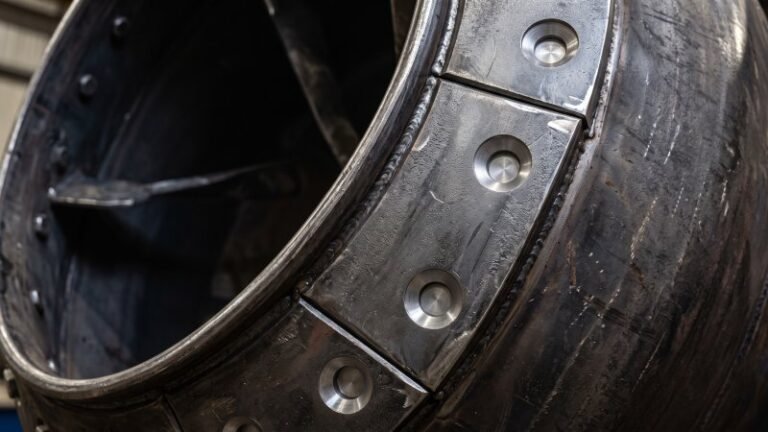
Most heavy-duty stationary plants use a twin-shaft compulsory mixer. Inside the drum, two heavy horizontal metal shafts rotate in opposite directions. The strong, hardened mixing blades cut aggressively through the dense materials. You can easily compare its mixing action to the rugged pugmill mixers used in stabilized soil plants. Both machines are purposely designed to forcefully fold and bind heavy, abrasive aggregates together.
Depending on the plant’s overall size, these mixer capacities usually span from 1.0 to over 4.0 cubic meters per batch.
| Mixer Type | Common Application | Key Characteristic |
|---|---|---|
| Twin-Shaft Mixer | Ready-mix concrete, heavy infrastructure | Fast mixing time, easily handles very large aggregates |
| Planetary Mixer | Precast concrete blocks and pipes | Extremely uniform mix, utilizes complex planetary blade motion |
Automated Control Systems
How does the plant coordinate all of these heavy moving parts? The automated control system serves as the digital brain of the operation. Housed safely inside a climate-controlled room, this setup relies on a Programmable Logic Controller (PLC) and specialized industrial software.
Instead of an operator manually pulling physical levers, the computer executes the exact concrete recipe. It simultaneously signals the aggregate bins to open, activates the screw conveyors, and monitors the load cell scales in real time. This centralized control network functions much like the digital SCADA systems used to safely manage complex rock crushing circuits. It ensures every single mechanical action happens in the correct, safe sequence.
“Automation eliminates human error in material weighing, ensuring every single batch meets strict structural engineering standards.”
Consequently, this smart system records all daily production data. This makes it incredibly easy for plant managers to track total material usage, print customer delivery tickets, and adjust complex recipes on the fly.
How the Batching Process Works
How exactly do all these large components work together to produce a continuous flow of ready-mix concrete?
The batching process is a highly synchronized mechanical operation divided into two primary phases. First, raw materials including coarse aggregates, fine sand, cement, and water are fed into dedicated hoppers and precisely weighed using electronic load cells. Second, these accurately measured ingredients are transferred into the central drum, vigorously blended into a uniform composite material, and finally discharged directly into waiting transit mixer trucks.
Material Feeding and Precise Weighing
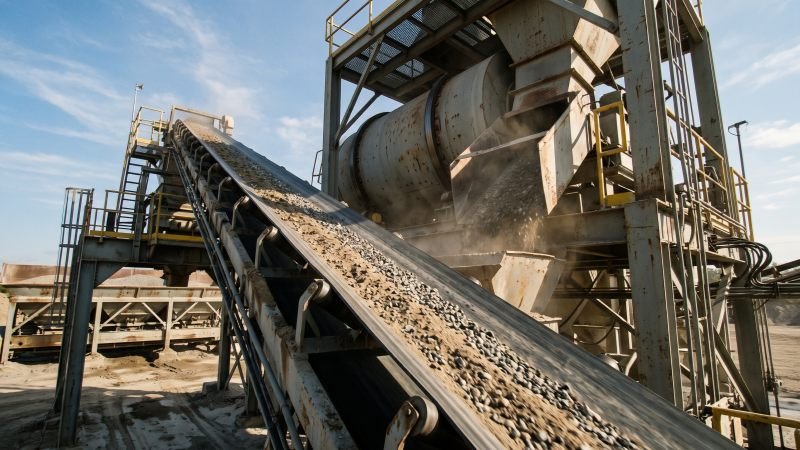
First, the production cycle begins with precise material proportioning. You cannot make strong concrete without exact measurements. Therefore, the automation system commands the aggregate bins to open their pneumatic gates. The required sand and gravel drop onto a heavy-duty weighing belt located directly beneath the bins.
Meanwhile, screw conveyors rapidly transport dry cement and fly ash from the tall storage silos. They push this powder into a dedicated steel weighing hopper suspended above the mixer. Simultaneously, industrial pumps draw water and chemical liquid admixtures into their own respective scale hoppers.
This entire step relies heavily on electronic load cells. These highly sensitive sensors measure the downward force of the materials. You can easily compare this setup to the precision bitumen weighing scales used in high-capacity asphalt mixing plants. Both systems ensure expensive binders are not wasted.
“Strict weight accuracy directly determines the final compressive strength of the cured concrete structure.”
Typically, industry standards require cement and water to be weighed within a strict ±1% accuracy margin. Furthermore, aggregates usually allow a slightly wider ±2% tolerance.
Here is the standard sequential feeding order for most commercial plants:
- Step 1: Aggregates drop onto the weighing belt.
- Step 2: Cement and fly ash auger into the powder scale.
- Step 3: Water and admixtures pump into the liquid scale.
- Step 4: All scales confirm the target weights with the digital control system.
Mixing and Final Discharge
After all scales successfully hit their target weights, the blending phase immediately starts. The aggregate weighing belt securely transports the sand and rocks up into the mixer. At the exact same time, the cement, water, and admixtures release from their hoppers and flow downward into the mixing drum.
Inside the drum, the machine violently churns the ingredients. The heavy steel blades cut through the dense mud. This fast, aggressive action forces the materials to cross paths constantly, ensuring every single piece of rock is thoroughly coated with the wet cement paste.
Consequently, the total mixing time is surprisingly brief. For standard ready-mix concrete, the drum usually only needs 30 to 60 seconds to achieve a perfectly uniform blend.
| Concrete Type | Typical Mixing Time | Material Characteristics |
|---|---|---|
| Standard Ready-Mix | 30 – 45 Seconds | High water content, highly flowable |
| High-Strength Structural | 45 – 60 Seconds | Lower water-to-cement ratio, denser |
| Dry-Cast Concrete | 60 – 90 Seconds | Very low moisture, extremely stiff |
Finally, once the countdown timer finishes, the pneumatic discharge gate at the bottom of the mixer swings open. The fresh, wet concrete instantly pours out through a specialized discharge funnel. It falls directly into the rotating drum of a transit mixer truck parked directly below. Afterward, the mixer gate closes tightly, and the plant immediately begins weighing the very next batch.
Best Applications for Permanent Plants
Where do these heavy-duty stationary plants provide the most value for construction businesses?
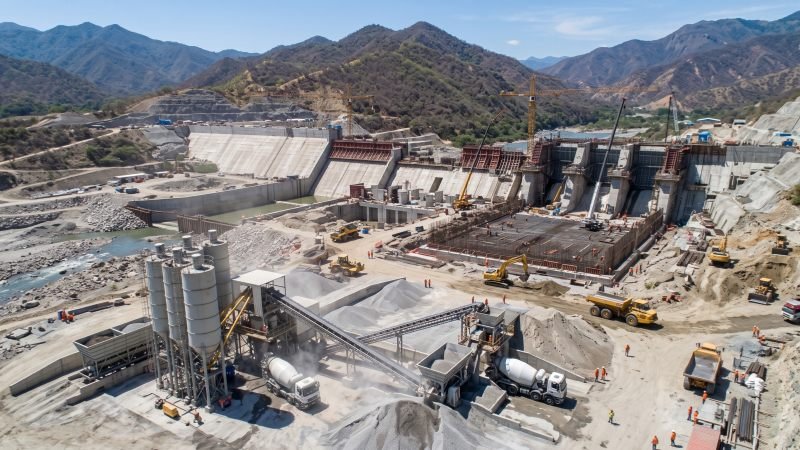
Permanent concrete plants are best suited for high-demand, long-term construction projects requiring consistent material output over several years. Their massive production capabilities make them the ideal choice for large-scale commercial real estate developments, continuous precast concrete manufacturing facilities, and heavy infrastructure jobs like highway networks and dams.
Large-Scale Commercial Construction
Commercial construction sites demand massive, uninterrupted material supply. Building skyscrapers, giant logistics warehouses, and sprawling shopping malls requires a dedicated concrete source. You cannot rely on distant commercial ready-mix suppliers when pouring a massive high-rise foundation. Traffic delays will easily ruin the pour. Therefore, contractors often set up permanent plants right on the outskirts of the city.
These permanent installations function similarly to heavy-duty stationary tower cranes. Both remain securely anchored in one spot to support long, multi-year building schedules. A typical commercial high-rise project easily consumes over 50,000 cubic meters of concrete. The stationary plant pumps out material daily. Consequently, this ensures the general contractor always meets tight, demanding deadlines.
Precast Concrete Manufacturing
Precast concrete factories manufacture items like sewer pipes, hollow-core slabs, and retaining wall blocks. These enclosed indoor facilities operate year-round. They absolutely require a stationary batching plant integrated directly into their production buildings.
The manufacturing process operates like a continuous automated assembly line. The plant mixes the material indoors. Next, an internal conveyor or automated bucket system immediately delivers the wet mix into heavy steel molds. Precast manufacturing demands extremely stiff, low-moisture concrete. Fortunately, stationary plants equipped with specialized planetary mixers handle this stiff material perfectly.
“Precast operations require absolute consistency; even a slight variation in the water-to-cement ratio can ruin an entire batch of expensive architectural panels.”
Major Infrastructure and Dam Projects
Heavy civil engineering projects push equipment to its absolute limits. Building hydroelectric dams, long-span suspension bridges, and international airport runways requires astronomical volumes of concrete. For example, a major hydroelectric dam can require millions of cubic meters of roller-compacted concrete (RCC).
These massive mega-projects often last for five to ten years. Therefore, installing a high-capacity stationary plant directly on-site is mandatory. This strategy works just like installing a massive primary jaw crusher at a permanent mining quarry. It handles brutal, high-volume workloads for years without moving an inch.
Let’s look at the specific production demands of different major infrastructure projects:
| Infrastructure Project Type | Typical Concrete Volume Demand | Key Material Requirement |
|---|---|---|
| Hydroelectric Dams | 1,000,000+ cubic meters | Low heat of hydration, extremely high density |
| Commercial Airport Runways | 100,000 – 500,000 cubic meters | High flexural strength, fast curing times |
| Major Suspension Bridges | 50,000 – 200,000 cubic meters | Extreme durability against weathering and salt |
By keeping production strictly on-site, construction crews completely eliminate transportation logistics. They can confidently pour thousands of cubic meters continuously, operating day and night without interruption.
Choosing Between Stationary and Mobile Concrete Plants
How do you decide between installing a permanent concrete facility and buying a portable mixing unit?
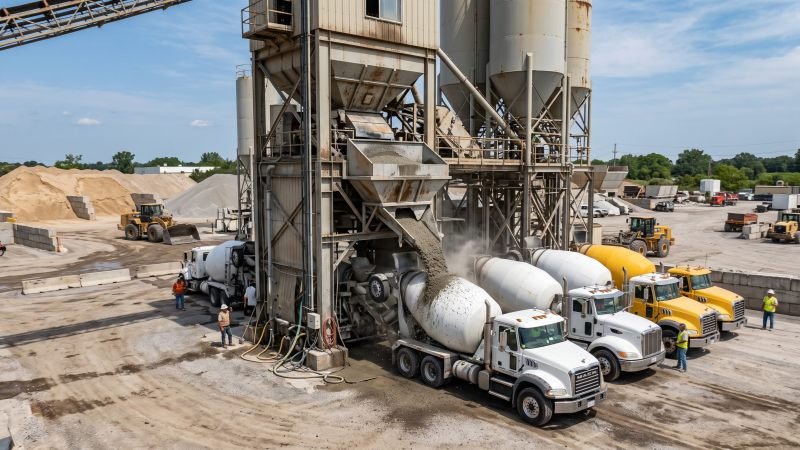
You should select a stationary plant over a mobile unit for multi-year projects demanding massive daily production. Permanent setups are strictly necessary when hourly volumes constantly exceed 120 cubic meters. They remain the best choice when lowering long-term operating costs matters more than quick site relocation.
High-Volume Production Requirements
Does your project require an endless, high-speed material pour? Mobile plants are certainly incredibly convenient. However, their compact, road-legal size strictly limits their maximum output. Most portable units struggle to push past 90 to 120 cubic meters per hour.
Conversely, permanent installations boast massive twin-shaft mixers and giant aggregate bins. A heavy-duty stationary plant easily produces 180 to 240 cubic meters of concrete per hour. This massive throughput completely outpaces the capabilities of smaller, trailer-mounted batchers, providing the continuous volume needed for non-stop pouring.
When you need hundreds of transit trucks loaded daily, the permanent setup never falls behind. Since maximum output heavily depends on your specific mixer size and hopper configurations, always verify exact practical production capacities with your equipment supplier.
Long-Term Projects at a Fixed Location
How long will your construction crew remain on the exact same site? Project duration drastically impacts your equipment choice. Mobile plants deploy in just a few short days. Therefore, they are perfect for quick highway repairs lasting three to six months.
However, stationary plants require extensive concrete foundations. Pouring these deep footings and assembling the heavy steel structures takes several weeks. Yet, this upfront time investment pays off massively for multi-year developments. If your site remains active for over twelve months, the permanent foundation provides unmatched structural stability.
“The heavy concrete foundation of a permanent plant completely eliminates destructive machine vibrations. This drastically reduces mechanical wear and tear over a multi-year project.”
Here is a basic breakdown of project timelines versus equipment suitability:
| Equipment Type | Ideal Project Duration | Foundation Requirement | Setup Time |
|---|---|---|---|
| Mobile Plant | 1 to 6 Months | Compacted soil or steel plates | 2 to 5 Days |
| Stationary Plant | 1 to 10+ Years | Deep poured concrete footings | 2 to 4 Weeks |
Prioritizing Lower Operating Costs Over Mobility
Do you want to maximize your profit margins on every single cubic meter poured? Mobile units unfortunately charge a premium for their flexibility. Their cramped chassis makes routine maintenance difficult. Mechanics must squeeze into tight spaces to replace worn mixer liners.
In contrast, stationary plants prioritize spacious, safe operating layouts. They feature wide steel walkways, sturdy staircases, and easy access to all critical wear parts. This spacious design works exactly like the generous maintenance platforms found on a towering asphalt batch plant. It allows mechanics to perform daily greasing and inspections safely and rapidly. Consequently, this drastically reduces expensive equipment downtime.
Furthermore, permanent setups hold significantly larger volumes of bulk cement and aggregates. Buying raw materials in massive bulk quantities drastically lowers your unit cost. Over a two-year operational period, these reduced material and maintenance costs easily outweigh the initial concrete foundation expenses.
Key Factors to Consider Before Purchasing
What critical details must you evaluate before investing in a permanent concrete facility?
Before investing in a permanent concrete facility, you must carefully evaluate three critical factors to guarantee a profitable investment. First, accurately calculate your true daily concrete capacity requirements to avoid buying an oversized or undersized machine. Next, thoroughly analyze your job site space to ensure a smooth traffic layout for heavy material loaders. Finally, you must integrate robust dust filtration and water recycling systems to strictly comply with local environmental laws.
Assessing Your Target Capacity Requirements
You must clearly calculate your maximum hourly concrete demand. Buying an undersized plant creates a massive production bottleneck. Conversely, buying an oversized plant wastes valuable capital.
However, you must understand the difference between theoretical capacity and practical output. A plant rated for 120 cubic meters per hour rarely achieves that perfect number. Real-world conditions inevitably slow things down. Transit truck delays, operator fatigue, and slow aggregate loading times easily reduce your actual output by 15% to 20%.
This sizing strategy is crucial. You must select a plant with a theoretical capacity slightly larger than your required daily tonnage to safely account for routine mechanical pauses and operator shifts.
Site Space and Layout Planning
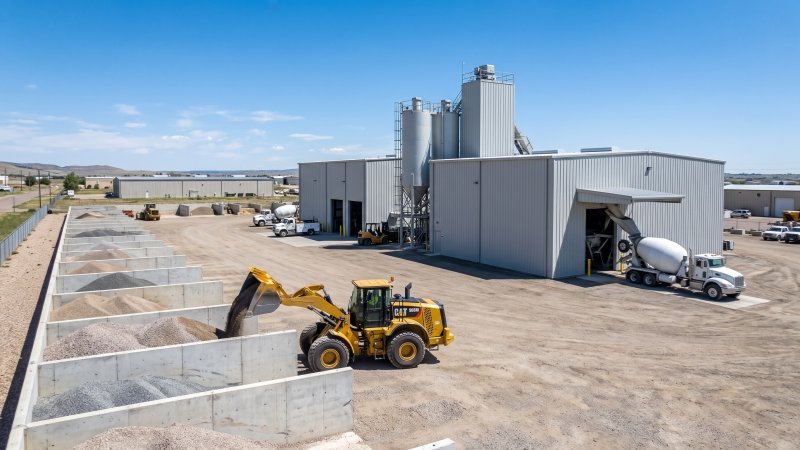
Stationary plants require a massive physical footprint. You are not just placing the main mixing tower. You must also allocate significant space for raw material stockpiles and heavy vehicle traffic.
A poorly designed site layout completely ruins production efficiency. Wheel loaders need wide, clear paths to scoop gravel and feed the aggregate bins rapidly. Furthermore, ready-mix trucks require a straight, unobstructed drive-through lane directly under the mixer discharge gate. You must actively prevent massive material trucks from backing up or crossing paths during peak production hours.
| Site Zone | Typical Space Requirement | Key Function |
|---|---|---|
| Main Tower & Silos | 300 – 500 square meters | Houses the mixer, weighing scales, and cement storage |
| Aggregate Stockpiles | 1,000+ square meters | Stores bulk sand and different gravel sizes safely |
| Traffic & Loading Lanes | 600 – 800 square meters | Allows loader maneuvering and transit truck staging |
“An efficient one-way traffic flow drastically reduces vehicle collision risks and speeds up your hourly loading times.”
Environmental Compliance and Dust Control Systems
Modern construction faces incredibly strict environmental regulations. You cannot operate a heavy-duty plant that constantly emits thick cement dust into the air. Therefore, you must invest heavily in proper pollution control equipment.
First, every single cement silo requires a high-quality top-mounted dust collector. These vital units actively trap fine cement particles while the silos are being pneumatically filled by bulk trucks. This specific technology functions identically to the heavy-duty baghouse filters used on hot mix asphalt plants. Both systems rely on fabric filter bags to capture dangerous airborne particulates before they escape into the atmosphere. Ensure your chosen filtration system strictly meets your local emission laws.
Second, you must closely consider the main mixing tower. Many urban projects now require the entire mixing platform to be fully enclosed with steel cladding. This physical barrier drastically reduces mechanical noise and traps any residual airborne dust.
Finally, daily plant cleaning generates highly alkaline wastewater. You must install a dedicated concrete washout and water recycling system. This setup uses large settling basins to separate heavy solid sludge from the dirty water. Consequently, you can safely pump the clarified water back into the plant to mix the very next batch.
Conclusion
Investing in a stationary concrete plant is a major strategic decision for any large-scale construction business. By thoroughly understanding its core components, evaluating the automated batching process, and matching its massive production capabilities to your specific project requirements, you ensure a highly profitable operation. Whether you are supplying a multi-year dam project or establishing a permanent precast manufacturing facility, a properly sized and strategically laid-out stationary plant delivers unmatched reliability, lower long-term operating costs, and consistent ready-mix concrete quality.