-
Whatsapp: +86 15938761000
-
Email: likang@shconcretemixer.com
-
Address: Shenglong Youyi City, Zhongyuan District, Zhengzhou City, Henan Province
-
Whatsapp: +86 15938761000
-
Email: likang@shconcretemixer.com
-
Address: Shenglong Youyi City, Zhongyuan District, Zhengzhou City, Henan Province
What Is a Dry Batch Concrete Plant: The Complete Guide
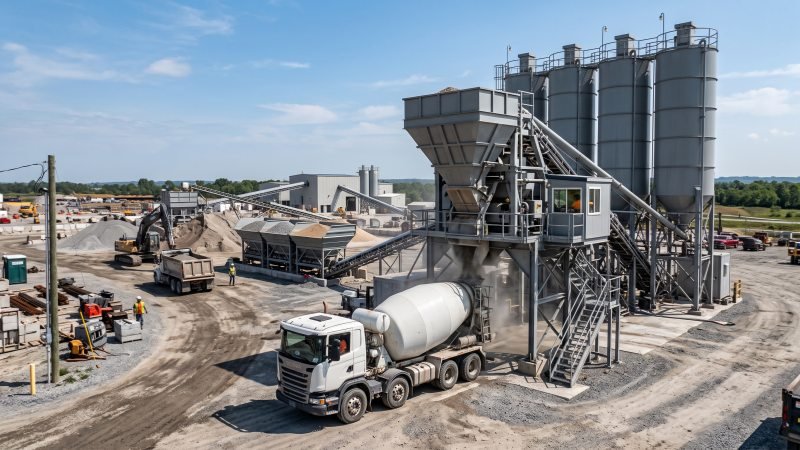
What exactly is a dry batch concrete plant, and how does it function on a construction site?
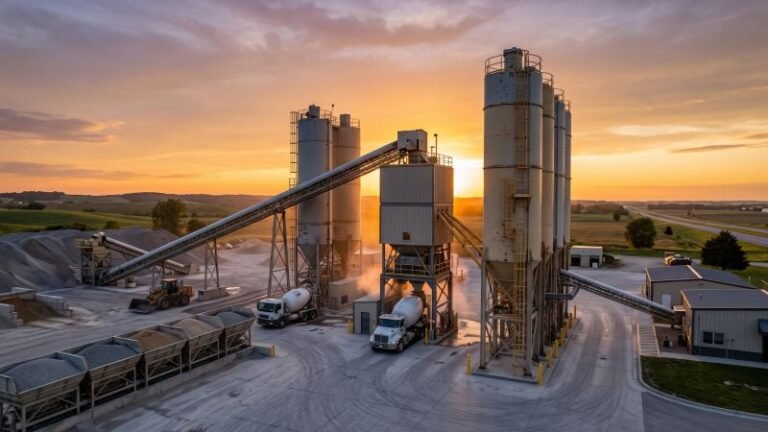
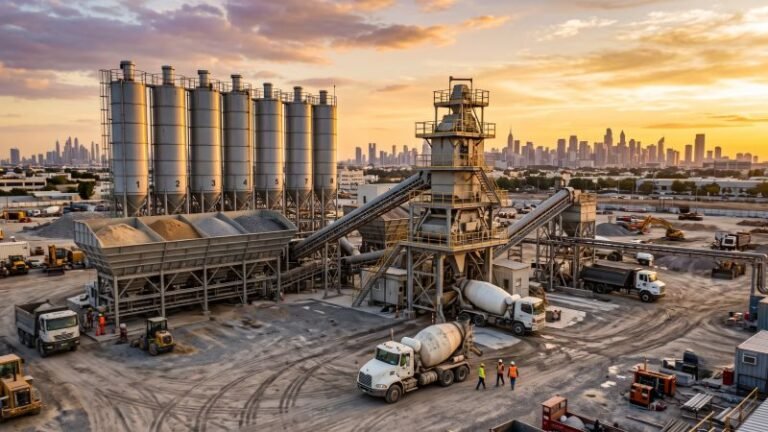
A dry batch concrete plant is a specialized construction facility that precisely weighs dry materials like sand, gravel, and cement, then discharges them directly into a transit mixer truck without mixing them first. Unlike traditional systems, it lacks a central mixing unit, relying entirely on the truck’s rotating drum to blend the dry ingredients with water during transport to the job site.
Dry Mix vs Wet Mix Concrete Plants
What is the main difference between dry mix and wet mix concrete plants?
The primary difference between a dry mix and a wet mix concrete plant lies in where the mixing occurs. A wet mix plant uses a central mixer to blend all materials, including water, before discharging the finished concrete. Conversely, a dry batch plant scales dry ingredients like sand, gravel, and cement. It drops them directly into a transit mixer truck. Then, it relies on the truck’s drum to mix these materials with water during transport.
Core Differences in Mixing Mechanisms
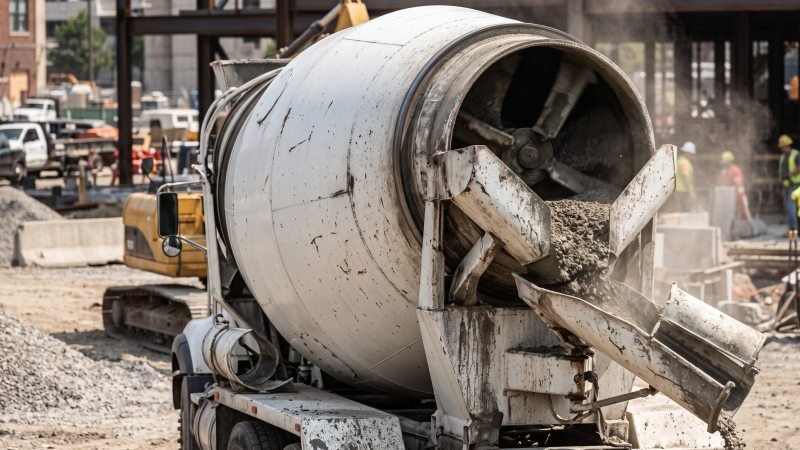
How exactly do these two systems handle the materials? To answer this, we must look at the mechanical workflow. Specifically, a wet plant performs the entire blending process in one central location. A heavy-duty twin-shaft mixer violently churns the aggregates, cement, and water together. Then, it drops a completely uniform batch of wet concrete into a waiting truck.
On the other hand, a dry setup skips the central mixing step entirely. Instead, it acts as an advanced weighing station. It drops perfectly measured dry materials through a discharge chute into the transit truck. Consequently, the truck itself becomes the mixer. Furthermore, the water is usually added from the truck’s onboard water tanks.
| Feature | Dry Mix Plant | Wet Mix Plant |
|---|---|---|
| Mixing Location | Inside the transit mixer truck | Inside a central stationary mixer |
| Water Addition | Added into the truck drum | Added into the central mixer |
| Equipment Complexity | Lower (no central mixing unit) | Higher (requires central twin-shaft mixer) |
| Batching Speed | Faster discharge of dry materials | Slower discharge (requires mixing time) |
Concrete Quality and Uniformity
Does the mixing method affect the final product? Yes, it certainly does. Therefore, quality control is a major deciding factor for contractors.
Wet mix plants provide superior concrete consistency. Specifically, the central twin-shaft mixer guarantees that every batch has the exact same slump and strength. It forcefully binds the cement and water with the aggregates. As a result, this process leaves almost no room for dry spots.
Conversely, a dry batch system relies heavily on the truck driver and the truck drum’s blade condition. Sometimes, the truck drum does not mix the concrete perfectly. For instance, you might occasionally find unmixed cement balls inside the drum if the internal fins are worn out. Therefore, a dry plant is less suitable for projects requiring strict, high-strength structural concrete.
Industry Note: High-specification infrastructure projects often strictly demand wet-mixed concrete to ensure exact compressive strength requirements are met consistently.
Initial Investment and Operating Costs
Are you trying to minimize your initial equipment costs? If so, the financial differences between these two plants are significant.
First, dry batch plants are notably cheaper to purchase upfront. Because they do not include a massive central mixer, the equipment is simpler. Consequently, they consume less electricity. Moreover, they require less maintenance since there are fewer moving parts to wear out.
However, wet mix plants demand a much higher initial investment. The central mixer requires heavy-duty motors and thick steel liners. However, they can process concrete faster overall. This speed can lead to lower operating costs per cubic yard on massive jobs. Generally, production capacities range from 50 to over 200 cubic yards per hour. Because exact capacities and power requirements can vary greatly based on the manufacturer, always verify the precise specifications with your chosen supplier before making a purchase.
Main Components of the System
What are the essential mechanical parts that make up a dry batch concrete plant?
A dry batch concrete plant consists of three primary systems working together to measure and dispense materials. These include the aggregate batching machine for storing and dispensing sand and gravel, cement silos paired with screw conveyors for managing powder materials, and precision weighing systems that ensure exact material proportions before discharging them into the transit truck.
Aggregate Batching Machines
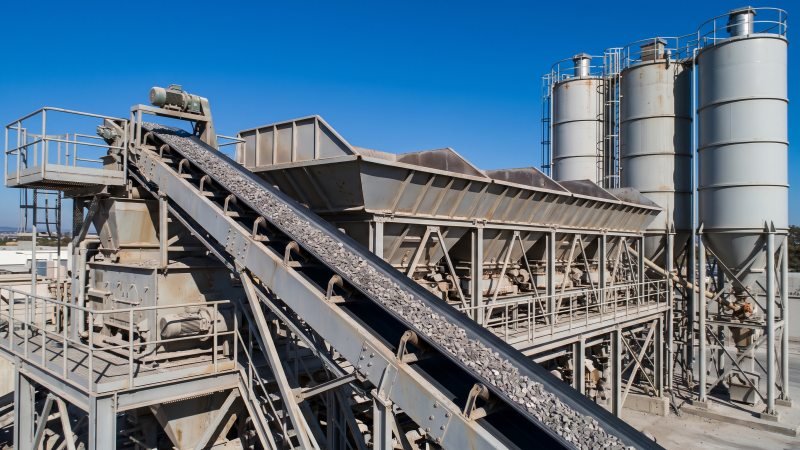
How do plants handle hundreds of tons of raw rock and sand? First, they use aggregate batching machines. These large steel structures feature multiple separate storage bins. Think of them like the heavy-duty feed hoppers used in asphalt mixing plants. They hold the raw materials securely until the system demands them.
Typically, a standard plant includes two to four individual bins. Consequently, operators can store different sizes of crushed stone and sand completely independent of one another. Underneath each bin, powerful pneumatic gates control the release of these heavy materials. Once the gates open, the aggregates fall directly onto a conveyor belt. Then, this main belt transports the rocks upward toward the discharge chute. Hopper storage capacities typically range from 15 to 30 cubic meters per bin, depending on the specific plant design.
Cement Silos and Screw Conveyors
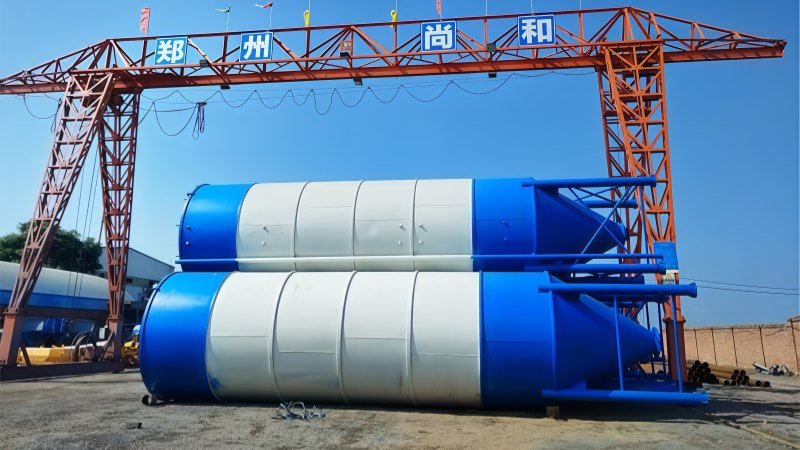
How does the system manage fine powders without creating a massive dust cloud? It relies entirely on sealed cement silos and screw conveyors. Specifically, silos are tall, cylindrical steel tanks that keep moisture out. They prevent bulk cement and fly ash from hardening prematurely.
At the base of every silo, you will find a screw conveyor. This component operates on the Archimedes’ screw principle. It uses a rotating helical steel blade inside a sealed metal tube to transport the powder upward. It safely moves the cement from the bottom of the silo directly into the central weighing hopper.
Professional Insight: Modern silos usually feature active dust collectors on the roof. These filter cartridges prevent cement dust from escaping into the surrounding air during pneumatic filling operations. Additionally, aeration pads at the bottom of the cone blow air into the cement to prevent the powder from compacting.
Silo capacities normally range between 50 and 200 tons, engineered specifically to withstand regional wind load ratings and local structural safety standards.
Precision Weighing Systems
Why is accurate measurement so critical in this dry process? Without precise weighing, the final concrete structure could easily fail quality testing. Therefore, precision weighing systems act as the central brain of the entire operation.
The plant uses industrial electronic load cells attached to specific hoppers. These sensors operate similarly to the precise tension load cells used on industrial crane scales to measure heavy payloads safely. First, the computer reads the exact weight of the falling aggregates. Next, it measures the cement through a separate scale. Finally, a dedicated water meter measures the liquid volume before it enters the truck.
To ensure structural integrity, the concrete industry mandates strict accuracy standards for these scales.
| Material Type | Allowable Weighing Error Margin |
|---|---|
| Aggregates (Sand/Gravel) | ± 2% |
| Powders (Cement/Fly Ash) | ± 1% |
| Liquids (Water/Additives) | ± 1% |
Ultimately, these highly accurate load cells ensure that every single batch meets the project’s exact mix design. They prevent costly material waste and guarantee structural consistency.
Ideal Project Applications
What specific types of construction projects benefit the most from using a dry batch concrete plant?
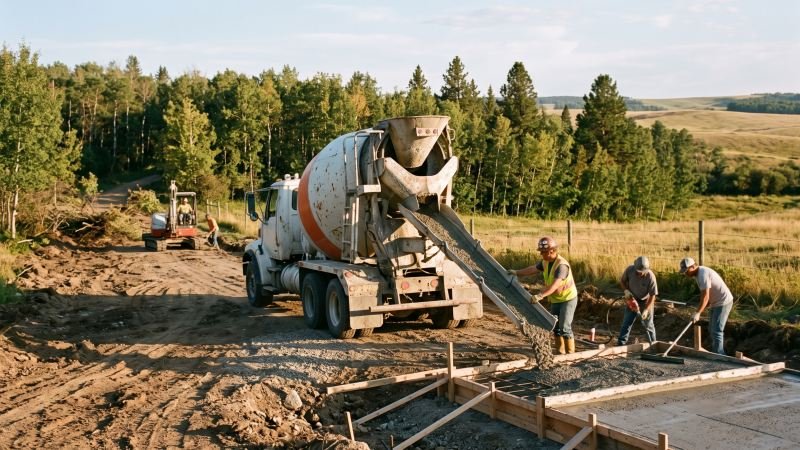
A dry batch concrete batching plant is ideally suited for projects where flexibility and transportation time dictate the logistics. Specifically, these plants excel in remote rural construction sites, scenarios requiring long-distance concrete transportation, and small to medium-scale infrastructure projects that do not demand the extreme structural consistency of central-mixed wet concrete.
Remote and Rural Construction Sites
Why do contractors prefer this setup for off-grid locations? Primarily, remote sites often lack heavy-duty industrial electrical grids. A dry system requires significantly less electricity because it operates without a massive central mixer. Therefore, you can easily power the entire facility using standard mobile diesel generators. Think of it like deploying a diesel-powered mobile rock crusher at a remote quarry, rather than building a permanent, grid-tied processing facility.
Furthermore, installing these dry setups in rural areas is much faster. You simply do not need the deep, heavy concrete foundations required for wet plants. Consequently, construction teams can start batching materials within days of equipment delivery. Ultimately, this mobility keeps remote projects moving forward without expensive electrical infrastructure upgrades.
Long-Distance Concrete Transportation
How do you safely supply concrete to a site located two hours away? Wet-mixed concrete usually begins to cure quickly. In fact, most industry standards strictly require wet concrete to be poured within 90 minutes of initial mixing. However, a dry batch setup solves this time-limit problem perfectly.
First, the plant loads the completely dry ingredients into the transit mixer truck. Next, the truck safely drives to the distant location. Finally, the driver adds water from the truck’s onboard tanks just before arriving at the pour site. This process operates similarly to how paving crews use insulated asphalt transfer vehicles to keep materials workable over long highway trips. Consequently, this method completely eliminates the risk of concrete hardening inside the drum during a long drive.
Industry Note: Logistics managers must account for onboard water tank capacities and drum mixing speeds when planning these long-distance delivery routes.
Small to Medium-Scale Infrastructure Projects
Are these plants appropriate for building massive commercial skyscrapers? Generally, they are not. Instead, they are absolutely perfect for small to medium-scale infrastructure tasks. For instance, contractors frequently use them for pouring residential foundations, rural agricultural roads, and municipal sidewalk repairs.
These projects require steady volumes of standard concrete. However, they do not demand the ultra-precise compressive strength of heavy civil engineering.
| Project Type | Suitability for Dry Batching |
|---|---|
| Agricultural Silo Foundations | Highly Suitable |
| Rural Road Paving | Highly Suitable |
| High-Rise Building Columns | Not Recommended |
| Commercial Airport Runways | Not Recommended |
Thus, the dry method provides more than enough quality for everyday construction. Moreover, it allows medium-sized contractors to supply their own projects directly. They do not have to wait for expensive commercial ready-mix suppliers. Consequently, they maintain complete control over their daily pouring schedules and project timelines.
Key Advantages and Limitations
What are the main pros and cons you should expect when operating this equipment?
The primary advantages of a dry batch concrete plant include significantly reduced mechanical maintenance, faster equipment installation, and a smaller overall site footprint. Conversely, the major limitations involve increased wear on transit truck drums, potential dust management challenges during loading, and a heavy reliance on the truck’s mechanical condition to achieve proper concrete mixing.
Top Benefits for Contractors
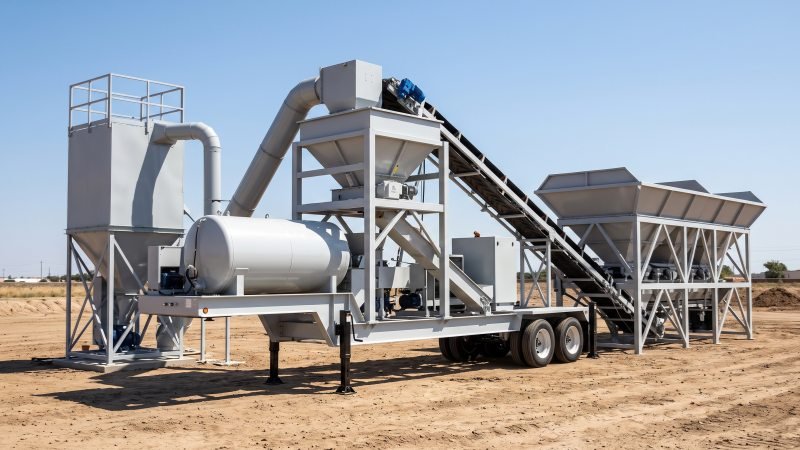
Why do so many construction companies choose this streamlined system? First, the mechanical simplicity of a dry batch plant offers massive operational benefits. Because the system completely lacks a central mixing unit, you immediately eliminate the most maintenance-heavy component of traditional concrete production.
Furthermore, you do not have to constantly inspect, clean, or replace heavy steel mixing blades and protective drum liners. Think of it like operating a standard aggregate conveyor belt instead of a complex multi-stage rock crusher. With fewer moving gears and heavy-duty motors, the chances of experiencing a sudden mechanical breakdown drop significantly. Therefore, contractors experience much higher daily equipment uptime.
- Lower Maintenance Labor: Mechanics spend less time chipping hardened concrete out of a central drum.
- Faster Relocation: Without a massive central mixer, disassembling the modular steel frame is much faster.
- Reduced Power Demands: You avoid the massive electrical spikes caused by starting a heavily loaded twin-shaft mixer.
Consequently, this streamlined design keeps your daily operations moving smoothly. It allows your site crew to focus entirely on loading trucks and pouring concrete rather than fixing machinery.
Potential Drawbacks to Consider
What are the hidden challenges of skipping the central mixing process? While dry plants are highly efficient, transferring the mixing burden directly to the transport trucks creates several operational limitations.
First, the transit truck experiences severe wear and tear. Because the truck drum must vigorously tumble raw rocks, dry cement, and water from scratch, the internal steel mixing fins degrade much faster. This rapid internal abrasion is similar to the accelerated wear experienced by the metal paddles inside a heavy-duty asphalt pugmill when mixing highly abrasive stones. The friction happens entirely inside your expensive trucks.
Secondly, dust control becomes a major hurdle. Dropping dry cement powder directly into a truck’s rear chute creates large clouds of airborne dust. To stay compliant with strict environmental regulations, you must install specialized rubber loading boots and powerful vacuum dust collectors.
| Operational Challenge | Root Cause | Typical Mitigation Strategy |
|---|---|---|
| Accelerated Truck Wear | Truck drums act as the primary mixer. | Schedule frequent inspections of drum fins. |
| Airborne Dust Emissions | Dry cement falls directly into an open truck chute. | Install heavy-duty dust collection systems. |
| Incomplete Mixing | Worn truck fins fail to fold materials properly. | Limit batch sizes; increase mixing time. |
Industry Note: Required airflow rates (CFM) for dust collection systems can vary greatly. Ensuring your baghouse or dust collector meets local environmental codes is critical for continuous operation.
Ultimately, you must weigh these increased truck maintenance costs against the savings of not running a central mixer.
How to Choose the Right Equipment
What factors should you evaluate when selecting a dry batch concrete plant for your business?
To choose the right equipment, you must first determine your project mobility needs by selecting either a permanent stationary plant or a towable mobile unit. Next, you need to calculate your required hourly production capacity to ensure the plant’s batching speed aligns perfectly with your concrete pouring schedules and transit truck fleet size.
Stationary vs Mobile Configurations
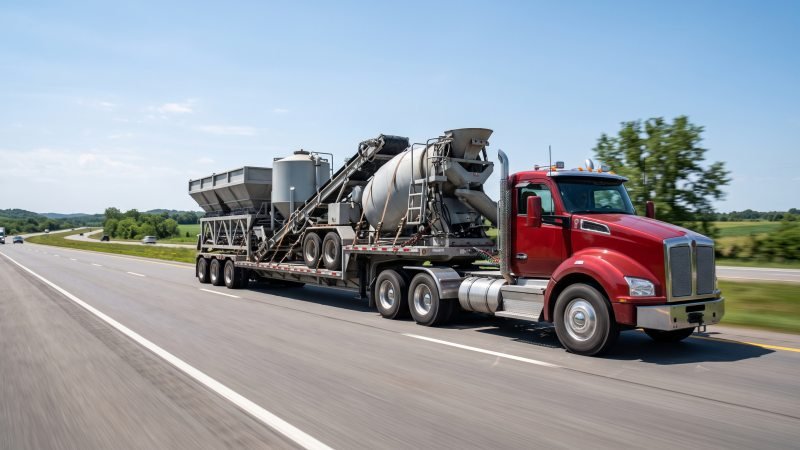
Are you planning to stay in one place, or will you move frequently? First, you must understand the physical differences between stationary and mobile setups.
A permanent stationary plant is bolted securely to a solid concrete foundation. Consequently, it takes several weeks to fully install. However, it generally costs less upfront. Commercial ready-mix companies usually choose this setup because they serve a fixed local radius for decades.
Conversely, a towable mobile unit sits on a wheeled steel chassis. Therefore, a standard semi-tractor can safely tow it directly to the next job site. You can usually set it up in just a few days. Furthermore, it rarely requires a deep poured foundation.
This structural choice operates much like choosing between a fixed tower crane and a mobile truck crane. Both perform the exact same lifting function, but the mobile version offers complete relocation freedom.
Professional Insight: If you plan to move your equipment more than once every two years, the quick assembly time of a mobile plant will easily offset its higher initial purchase price.
Assessing Production Capacity Requirements
How much concrete do you actually need to output every single hour? You must accurately calculate your maximum hourly production requirements.
Manufacturers rate these plants by how many cubic yards they can weigh and load per hour. Typically, dry systems produce anywhere from 50 to 150 cubic yards per hour. However, actual production speeds depend heavily on the width of the main transfer belts. They also depend on the diameter of the silo screw conveyors.
Because specific technical parameters and maximum output capacities vary between models, always confirm the exact production range with your manufacturer to ensure it meets your site’s specific daily demands.
If your plant loads materials too slowly, your expensive transit trucks will sit idle in line. This frustrating situation is exactly like pairing a tiny mini-excavator with a massive articulated dump truck. The loading equipment simply becomes a massive bottleneck for the transport fleet.
| Production Need | Recommended Plant Capacity | Matched Fleet Size |
|---|---|---|
| Low Volume | 50 – 60 cubic yards/hour | 2 – 4 Transit Trucks |
| Medium Volume | 80 – 100 cubic yards/hour | 5 – 8 Transit Trucks |
| High Volume | 120+ cubic yards/hour | 10+ Transit Trucks |
Therefore, always match your plant’s batching speed directly to the number of trucks you operate. This careful matching ensures continuous, highly profitable daily pouring operations.
Conclusion
Ultimately, a dry batch concrete plant offers a highly efficient, streamlined solution for specific construction scenarios. By eliminating the central mixer, contractors can significantly reduce their initial machinery costs, cut down on daily mechanical maintenance, and speed up equipment relocation. While it may not provide the ultra-precise consistency required for massive structural towers, it remains the perfect choice for remote sites, long-distance deliveries, and mid-sized infrastructure projects. By carefully assessing your specific production needs and mobility requirements, you can select the ideal equipment configuration to keep your trucks moving and your projects profitable.