-
Whatsapp: +86 15938761000
-
Email: likang@shconcretemixer.com
-
Address: Shenglong Youyi City, Zhongyuan District, Zhengzhou City, Henan Province
-
Whatsapp: +86 15938761000
-
Email: likang@shconcretemixer.com
-
Address: Shenglong Youyi City, Zhongyuan District, Zhengzhou City, Henan Province
How to Batch Concrete: A Professional Guide to Industrial Plant Operations
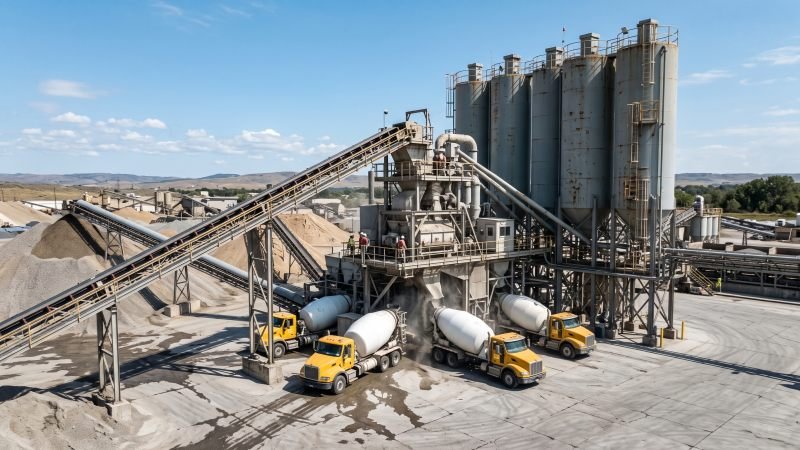
What are the essential processes for manufacturing industrial-grade concrete at a commercial scale?
Batching concrete requires precision measurement of raw materials, rigorous moisture compensation, and exact adherence to engineering tolerances. Commercial plants achieve this by systematically weighing cement, aggregates, and water through automated load cells before mixing them via dry transit trucks or central wet mixers to guarantee structural integrity.
Core Weighing and Calibration Standards
What are the absolute foundational rules for accurate batching in a commercial concrete plant?
To ensure structural integrity, commercial batch plants must measure materials by weight rather than volume. Operators must calibrate load cells regularly, maintain strict material tolerances, and use certified test weights to guarantee every batch meets exact engineering specifications.
Cement and Aggregate Weighing Precision
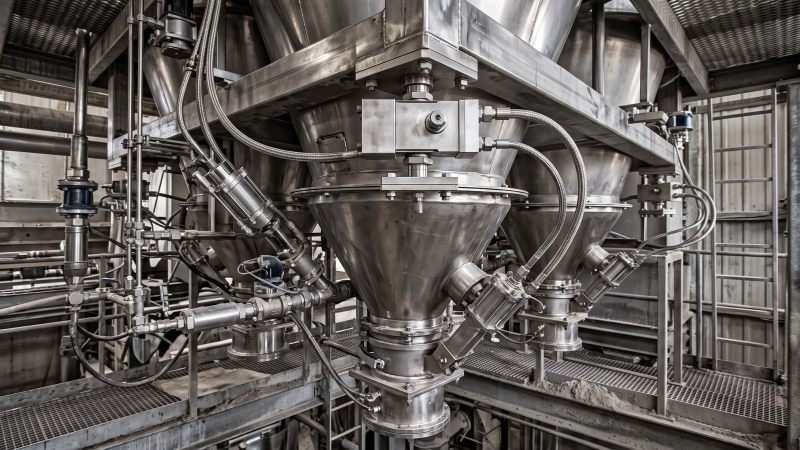
Cement and aggregates form the physical backbone of any concrete mix. Therefore, measuring them accurately is critical for product quality. Are you relying on outdated measurement methods? In modern industrial operations, you must measure these heavy bulk materials strictly by weight.
To achieve this, industrial plants use electronic load cells attached directly to the weigh hoppers. Think of a load cell like the digital tension sensors used in heavy-duty crane rigging. Just as a crane sensor measures exact lifting loads in real-time, a hopper load cell continuously measures the precise mass of falling materials.
Different materials naturally require different levels of measurement precision. Furthermore, exact equipment capacities and sensor sensitivities often differ. Always verify the maximum load range and required calibration intervals with your specific equipment supplier.
| Material Type | Standard Measurement Method | Acceptable Tolerance | Typical Weighing Equipment |
|---|---|---|---|
| Cement / Fly Ash | By Weight (Mass) | ± 1.0% | Independent Dedicated Hopper |
| Coarse Aggregate | By Weight (Mass) | ± 2.0% | Cumulative Aggregate Hopper |
| Fine Aggregate | By Weight (Mass) | ± 2.0% | Cumulative Aggregate Hopper |
To maintain this required precision, plant operators must follow specific industrial guidelines:
- Isolate Cementitious Materials: Cement must always have its own dedicated weigh hopper. It should never mix with aggregates during the weighing phase.
- Sequential Cumulative Weighing: Plants often weigh different aggregates, like sand and gravel, in the same large hopper. However, the automated system must weigh them sequentially, one at a time, to isolate errors.
- Routine Physical Calibration: You must physically test your scales using certified test weights. Typically, commercial plants perform this rigorous testing every 90 days.
Water and Chemical Admixture Control
Water and chemical admixtures directly control the final strength and workability of the concrete. Water chemically activates the cement powder. Meanwhile, admixtures significantly alter how the wet concrete behaves during transport and pouring.
Water can be batched by weight or by volume through industrial flow meters. However, chemical admixtures are highly concentrated liquids. Therefore, plants must measure them using incredibly precise volumetric dispensers. Consider the process of injecting air-entraining agents into a mix. It is very similar to adding tiny amounts of highly reactive hardener to a large batch of industrial construction epoxy. A fraction of an ounce completely changes the final curing process.
“Strict water-to-cement ratios govern concrete strength. Consequently, admixture dispensers and water meters demand the highest sensitivity and maintenance in the entire plant.”
Here are the primary control practices for handling liquids in a batch plant:
- Meter Verification: Flow meters for water need regular flushing and inspection. Hard minerals in the water supply can build up internally and ruin the meter’s accuracy over time.
- Dispenser Isolation: Different chemical admixtures can react violently with each other. Therefore, you must pump them through completely separate, dedicated transparent lines.
- Admixture Tolerances: The standard acceptable tolerance for chemical admixtures is typically very tight, sitting at ± 3.0%.
- Total Water Tolerances: Total batch water usually requires a strict tolerance of ± 1.5% to prevent low-strength blowouts.
Dry Mix vs Wet Mix Batching Processes
What is the fundamental difference in how dry mix and wet mix concrete plants combine materials?
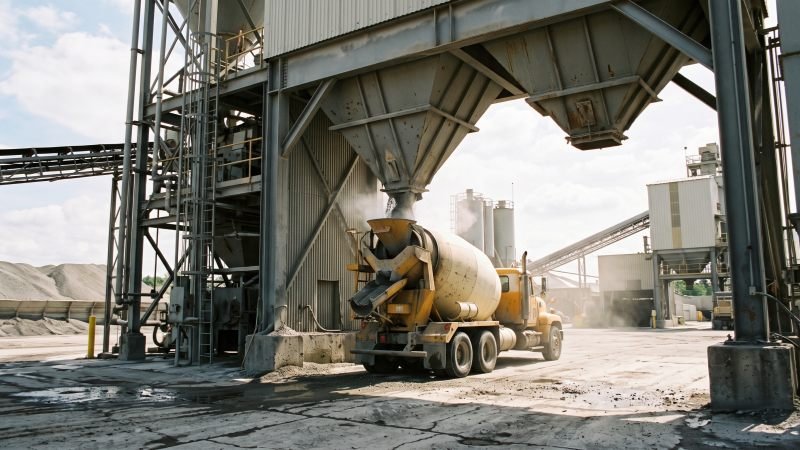
The primary distinction lies in where the actual mixing occurs. A dry mix plant weighs all raw materials and discharges them into a transit mixer truck. The truck then combines the dry ingredients with water during transport. Conversely, a wet mix plant uses a central stationary mixer to fully blend all materials before discharging the finished concrete into a transport vehicle.
Operating a Dry Mix Transit Plant
Operating a dry mix transit plant requires careful coordination between the batching tower and the mixing truck. Are you maximizing your truck fleet’s efficiency? In a dry batch operation, the plant itself only measures and drops the materials. Therefore, the transit mixer truck must perform the actual mixing task.
First, the plant discharges weighed cement, sand, and stone through a transit sleeve into the truck’s drum. Simultaneously, the plant pumps the required water directly into the drum. This process resembles charging an asphalt drum mixing plant. Just as the drum requires physical rotation to process raw feed, the truck drum must rotate to create a completely uniform product.
Consequently, the truck driver must rotate the drum at a specific mixing speed. Industry standards generally require 70 to 100 drum revolutions at mixing speed to ensure a homogeneous blend. Typically, this mixing speed ranges from 12 to 18 revolutions per minute (RPM). Operating within the manufacturer’s specified RPM range is critical to prevent mechanical wear while achieving the correct mix.
“A transit plant trades stationary mixing infrastructure for mobile mixing capability. Ultimately, this makes dry batching highly cost-effective for vast, spread-out delivery networks.”
Maximizing Output with Central Mix Plants
Central mix plants prioritize speed, volume, and absolute product consistency. Do you need to produce massive amounts of concrete for a large infrastructure project? If so, a central mix setup is usually the superior choice.
In this process, a stationary central mixer receives all the weighed materials, including water. It then thoroughly blends them before dropping the completely wet concrete into a waiting truck. Therefore, the truck only needs to slowly agitate the mix during transport to prevent early hardening.
The Central Mixer Advantage
This method drastically reduces the time trucks spend waiting under the plant. Because the stationary mixer is incredibly powerful, it can fully mix a large batch in just 60 to 90 seconds. To understand this efficiency, compare it to an industrial pugmill used in continuous asphalt production. Both machines use aggressive mechanical shear. Central mixers often rely on twin horizontal shafts and paddles to violently fold the heavy materials together inside a fixed chamber.
Furthermore, this forced mixing action ensures a more consistent slump across every single batch. It is especially beneficial for producing heavy, low-slump paving concrete.
Performance Comparison
| Feature | Dry Mix (Transit) Plant | Wet Mix (Central) Plant |
|---|---|---|
| Mixing Location | Inside the transit truck drum | Inside the stationary plant mixer |
| Typical Truck Loading Time | 3 to 5 minutes | 1 to 2 minutes |
| Production Capacity | Medium to High | Very High (up to 300+ cubic yards/hour) |
| Initial Setup Cost | Generally lower | Higher (requires large central mixer) |
Ultimately, a wet mix plant maximizes hourly output. By separating the mixing action from the transport vehicle, the batching cycle runs completely independently of the truck fleet.
Quality Control and Tolerance Management
How do plant operators ensure every single concrete batch meets strict engineering requirements?
Industrial batch plants maintain quality control by actively managing raw material variations and enforcing strict equipment limits. Operators must constantly adjust for aggregate moisture, prevent mechanical scale overloads, and maintain strict compliance with specific civil engineering tolerance codes like ACI and DOT standards.

Moisture Compensation for Aggregates
Are you accidentally watering down your concrete? Sand and gravel naturally absorb rainwater. Consequently, this hidden moisture dramatically changes the final strength of your mix.
Think about hot mix asphalt production. An asphalt plant runs wet stone through a massive rotary dryer before mixing it with liquid binder. A concrete plant does not dry the stone. Instead, it must precisely calculate the hidden water already inside the raw sand. Then, the control system subtracts that exact amount from the total batch water.
Furthermore, the wet sand is now heavier than dry sand. If your sand is 5% water by weight, you are loading water instead of solid rock. Therefore, the system must add 5% more sand to the hopper to make up the difference.
Plants use electronic moisture probes inside the aggregate bins to track this. These sensors continuously read the water content in real-time. The sensitivities of these electronic sensors can vary widely, requiring precise initial calibration to ensure accurate water reduction.
“Failing to compensate for aggregate moisture ruins the water-to-cement ratio. Ultimately, this causes the concrete to crack under heavy loads.”
Preventing Overloading in Weigh Hoppers
Weigh hoppers are sensitive measuring instruments. What happens if you dump too much material into them? Pumping beyond the rated capacity damages the load cells.
Think of a hopper scale like the suspension system on a heavy-duty dump truck. Overloading a dump truck far beyond its rated payload permanently damages the leaf springs. Similarly, repeatedly overloading a hopper physically warps the load cell suspension points. This ruins the scale’s calibration.
Overloading often happens due to “in-flight” material. This is the material still falling through the air after the bin gate closes. To prevent dangerous overloading, operators must implement clear safeguards:
- Set Pre-Act Values: Program the computer to close the gates early. This accounts for the falling material.
- Install Limit Switches: Use physical sensors that instantly cut power to the feed belts if the hopper gets too full.
- Control Feed Rates: Slow down the material flow when the scale gets close to the target weight.
Meeting ACI and DOT Tolerance Guidelines
Do your plant’s batch tickets satisfy the state inspector? Every batch must pass strict legal and structural reviews. In North America, these rules mostly come from the American Concrete Institute (ACI) and the local Department of Transportation (DOT).
ACI guidelines, specifically ACI 304R, provide the baseline rules for measuring, mixing, and transporting concrete. However, state DOTs often enforce even stricter rules for highway and bridge projects. State inspectors will regularly audit your batch tickets. They check if your material weights stay within the legal limits.
| Regulatory Body | Primary Focus Area | Typical Application | Inspection Frequency |
|---|---|---|---|
| ACI (Baseline) | General structural integrity | Commercial buildings, housing | Periodic reviews |
| State DOT (Strict) | High-stress durability | Highways, bridges, tunnels | Daily or per-project audits |
Your automated control system must lock out the discharge gate if the weights fall outside these exact tolerances. If a batch is out of tolerance, the operator must manually accept the error. This action prints a warning flag directly on the batch ticket. Ultimately, strict adherence to these codes prevents catastrophic structural failures.
Troubleshooting Common Plant Inefficiencies
What are the most frequent causes of slowdowns in a commercial batching facility?
Plant inefficiencies primarily stem from physical material blockages and digital communication errors. To prevent costly production delays, operators must systematically clear silo bridging, maintain conveyor belt tension, and calibrate digital control panels.
Material Flow Bottlenecks
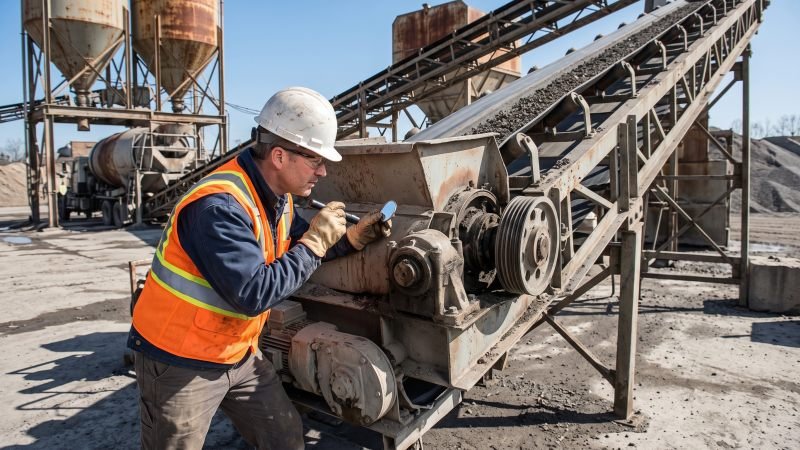
Are your raw materials refusing to flow smoothly into the weigh hoppers? Physical blockages immediately stall your batching cycle. Cement and fly ash are incredibly fine powders. Consequently, they easily compact and stick together inside storage silos.
This compaction causes a severe problem known as “bridging.” The powder forms a solid arch over the discharge gate. Think of damp sand clogging a primary jaw crusher chute in a quarry. If the rock stops flowing, the whole crushing circuit halts. Similarly, compacted cement completely blocks the silo outlet.
To fix this, plants use aeration pads inside the silo cone. These pads inject low-pressure air to fluidize the powder. Typically, aeration blowers operate between 3 to 5 PSI. However, optimal air pressure depends heavily on the specific powder density and silo geometry, requiring careful adjustment to fluidize the material without blowing cement dust out of the filter vents.
Aggregates also cause severe material bottlenecks:
- Oversized Rocks: Large stones can physically jam the pneumatic clam gates located under the aggregate bins.
- Conveyor Slippage: Worn drive pulleys cause the main aggregate incline belt to slip under heavy loads.
- Freezing: In cold climates, wet sand easily freezes into solid chunks that block the feeder bins.
Automated Control System Discrepancies
Is your plant computer displaying weird weight fluctuations? Digital communication errors silently destroy batch accuracy. Modern plants rely on automated control systems to open gates and read sensors. However, electrical interference or worn components frequently disrupt these signals.
Consider an automated slip-form concrete paver. If the machine’s primary sensor sends delayed grade coordinates to the hydraulic leveling cylinders, the resulting pavement will be uneven. Similarly, if your batching computer experiences a signal delay, it will close the hopper gates too late, dumping excess material into the mix.
“Digital discrepancies often masquerade as mechanical failures. Consequently, this forces maintenance teams to waste hours inspecting the wrong physical components.”
Common digital discrepancies include:
- Pneumatic Valve Lag: Solenoid valves eventually wear out. Consequently, they take an extra second to close the air lines. This ultimately causes heavy material overruns.
- Load Cell Drifting: Electrical interference from large motors can cause the weight readings on the computer screen to jump erratically.
- Limit Switch Failures: Heavy dust often coats the mechanical switches. These switches tell the computer when a gate is fully closed.
When troubleshooting digital issues, always check your physical cables first. Next, closely monitor the signal reaction time.
| Troubleshooting Symptom | Probable Digital Cause | Recommended Corrective Action |
|---|---|---|
| Erratic jumping weights on screen | Electrical grounding issue or water in junction box | Isolate load cell cables and dry the junction boxes |
| Consistent material overruns | Pneumatic solenoid lag or incorrect pre-act settings | Replace solenoids or adjust computer pre-act values |
| Computer freezes mid-batch | Network switch failure or severe voltage drop | Inspect plant power supply and replace network switch |
Conclusion
Mastering how to batch concrete requires a deep understanding of weight calibration, moisture control, and equipment diagnostics. By strictly enforcing ACI tolerances and actively preventing material flow bottlenecks, operators can ensure that every commercial mix meets the highest structural standards. Whether you operate a mobile dry mix fleet or a high-volume central mix plant, maintaining automated systems and load cell precision is the key to minimizing waste and maximizing production yield. If you are ready to upgrade your batching operations, build custom plant solutions, or optimize your current equipment, please contact us for professional engineering support.