-
Whatsapp: +86 15938761000
-
Email: likang@shconcretemixer.com
-
Address: Shenglong Youyi City, Zhongyuan District, Zhengzhou City, Henan Province
-
Whatsapp: +86 15938761000
-
Email: likang@shconcretemixer.com
-
Address: Shenglong Youyi City, Zhongyuan District, Zhengzhou City, Henan Province

What is Batching Concrete? A Complete Guide to Methods and Quality Control
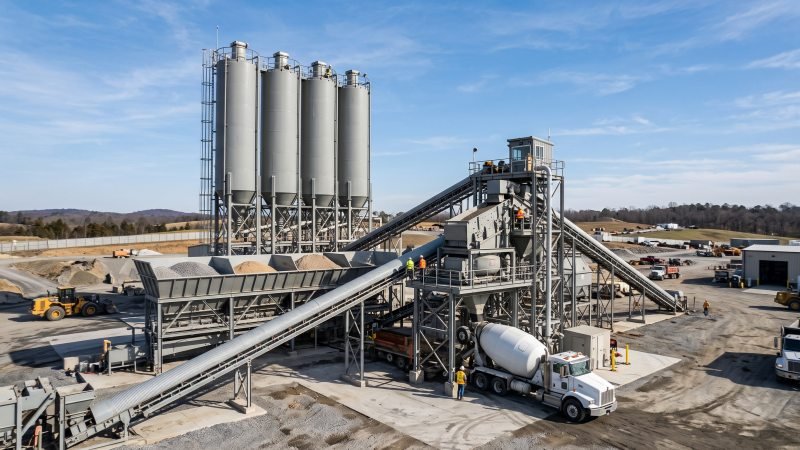
What exactly does “batching” mean when preparing concrete for a construction project?
Batching concrete is the critical preliminary process of precisely measuring and combining all necessary raw materials—such as cement, water, sand, coarse aggregates, and chemical admixtures—according to a specific mix design. This procedure ensures the correct ratio of ingredients before they enter the mixer, which is fundamental to achieving the final structural strength, durability, and workability of the concrete.
Volume Batching vs Weight Batching: Which Method is Better?
When deciding how to measure materials on a construction site, which method actually gives you the best results?
Weight batching is universally considered the better method because it measures materials by exact mass. This completely avoids inaccuracies caused by volume changes in wet sand. Volume batching relies on simple boxes and works well for minor, non-structural repairs. However, weight batching is strictly mandatory for structural projects to guarantee consistent concrete strength and compliance with strict engineering standards.
How Volume Batching Works and When to Use It
Volume batching measures cement, sand, and coarse aggregates by their physical space rather than their mass. Workers use standardized wooden or steel containers, commonly known as gauge boxes. To measure the materials, a worker simply fills the box to the top edge and levels it off.
However, this method faces a major technical flaw known as the bulking of sand. When fine aggregate absorbs surface moisture, its physical volume expands by up to 30%. Because of this expansion, a completely full gauge box actually holds significantly less solid sand than it would if the sand were completely dry. Consequently, the final concrete mix becomes highly inconsistent.
To understand this flaw, consider the process of earthmoving and soil compaction. Measuring excavated dirt simply by the truckload is inaccurate because loose, aerated soil takes up much more space than densely compacted soil. You need the actual mass to know exactly how much material you have.
Therefore, volume batching is generally prohibited for critical concrete structures. You should only use this method for small tasks:
- Minor pavement or driveway repairs
- Damp-proof courses
- Temporary mass concrete foundations
The Advantages of Weight Batching for Structural Projects
Weight batching measures all raw materials using highly precise weighing mechanisms. Modern construction relies exclusively on this method to produce high-strength structural concrete.
The primary advantage is absolute consistency. By measuring the mass in kilograms or pounds, weight batching completely ignores the physical expansion of wet sand. One hundred kilograms of sand always contains the exact same amount of solid material, regardless of its moisture content. As a result, engineers can perfectly maintain a strict water-cement ratio.
Structural elements like load-bearing columns, bridge decks, and high-rise foundations demand exact material proportions. For example, producing an M30 grade structural concrete requires high precision to safely achieve a compressive strength of 30 MPa.
Furthermore, this precise measurement significantly reduces material waste. It prevents workers from accidentally adding too much expensive cement into a single batch, keeping the project on budget.
Key Differences in Accuracy and Overall Cost
Choosing between these two methods directly impacts both your project budget and structural safety. The table below highlights the core differences between the two systems.
| Feature | Volume Batching | Weight Batching |
|---|---|---|
| Accuracy Level | Low. Heavily affected by sand bulking. | High. Measures exact solid mass. |
| Initial Setup Cost | Very low. Requires only cheap gauge boxes. | High. Requires weighing scales and machinery. |
| Long-Term Economy | Poor. Leads to material waste and weak structures. | Excellent. Saves cement and guarantees strength. |
| Labor Requirement | High manual labor. Relies entirely on visual checks. | Low manual labor. Often uses automated systems. |
| Best Application | Small residential repairs or non-structural work. | Highways, dams, and structural building frames. |
While volume batching saves money on day one, it often results in severe hidden costs. If the concrete fails a compressive strength test due to poor proportions, you must demolish and rebuild the entire structure. Conversely, weight batching requires a larger upfront investment. However, it ultimately saves money by optimizing cement usage and preventing catastrophic structural failures.
Concrete Batching vs Mixing: Understanding the Core Differences
It is common to confuse the batching phase with the actual mixing of concrete, but distinguishing between them is vital for proper quality control.
Concrete batching and mixing are two distinct but consecutive stages in production. Batching is the preliminary process of precisely measuring and gathering raw materials like cement, water, and aggregates based on a specific mix design. Mixing is the subsequent physical operation that vigorously blends these pre-measured dry and wet ingredients together to form a uniform, homogeneous concrete paste.
The Role of Precise Measurement in the Batching Phase
The batching phase is strictly about preparation and accuracy. During this stage, no actual blending occurs. Instead, automated systems or operators carefully measure out the exact quantities of sand, gravel, cement, and water.
Think of batching like a pre-assembly kitting process in a steel fabrication workshop. Before a welder joins anything, a logistics team gathers the exact number of steel plates and specialized bolts into a kit. If the kit is missing pieces, the final steel beam will be structurally weak. Similarly, batching gathers the precise kit of raw materials.
Accuracy during this step dictates the final strength of the structure. This preliminary step ensures that the subsequent mixing stage has the correct ingredients to work with. If a major batching error occurs here, the mixer cannot fix it later. Therefore, meticulous measurement is the absolute foundation of quality control.
The Physical Blending Process in the Mixing Phase
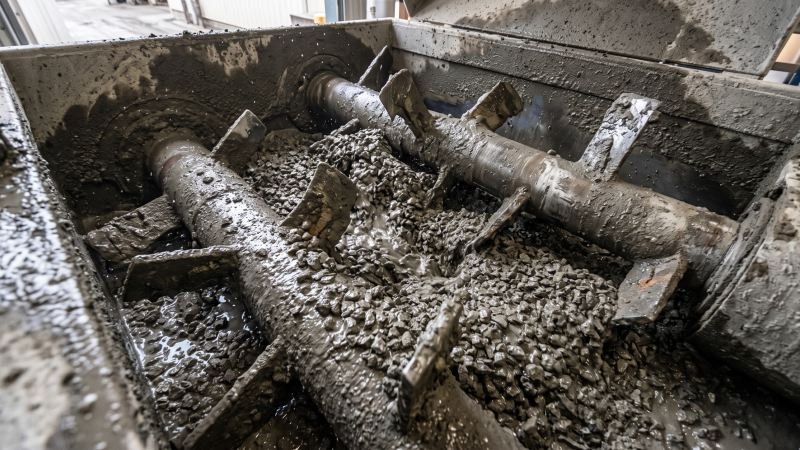
Once the batching phase ends, the mixing phase immediately begins. The pre-measured materials drop into a mechanical mixer. Next, this equipment uses powerful rotating blades to physically combine the dry materials with water.
The main goal of mixing is to coat every single piece of aggregate with cement paste. This mechanical action transforms loose, separate materials into a fluid, uniform mass.
You can compare this to soil stabilization using a heavy-duty rotary mixer. In that process, a machine mechanically churns dry lime into the native earth to create a solid, uniform subgrade. The mixing phase of concrete works on the exact same principle of forceful mechanical integration.
Industry standards dictate specific timeframes for this process. A standard stationary twin-shaft mixer typically requires 60 to 90 seconds of active blending time to achieve full homogeneity.
“Proper mechanical mixing ensures the cement paste actively binds the aggregate framework together.”
To clarify these separate stages, the table below outlines the core differences.
| Feature | The Batching Phase | The Mixing Phase |
|---|---|---|
| Core Purpose | Measuring and gathering materials. | Physically blending materials together. |
| Primary Equipment | Weighing hoppers and load cells. | Rotating drums or twin-shaft mixers. |
| Material State | Ingredients remain completely separate. | Ingredients become a unified wet paste. |
| Timing in Sequence | This is the first step. | This is the second step. |
Consequently, you must complete accurate batching before any successful mixing can happen. Both steps are equally critical to producing durable construction materials.
Essential Equipment Used in the Batching Process
What specific machinery and tools are required to accurately measure concrete materials on a job site?
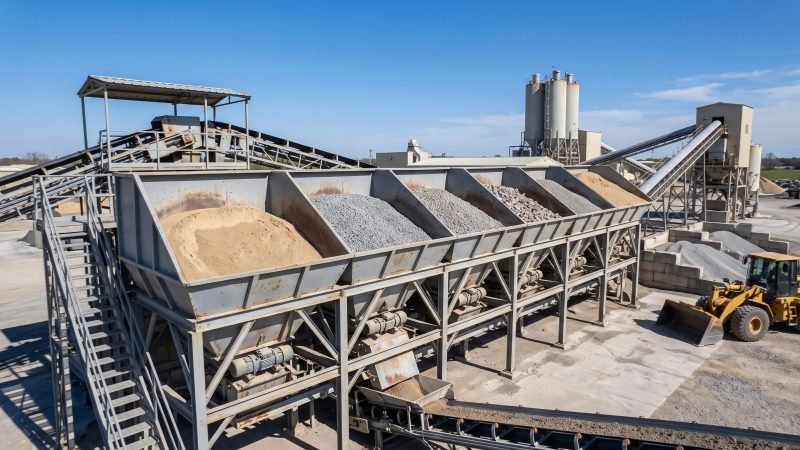
The essential equipment for concrete batching ranges from simple manual tools to highly advanced automated machinery. Small-scale projects utilize wooden or steel gauge boxes for basic volume measurement. Conversely, large operations rely on complex batching plants equipped with electronic load cells. These plants use automated weighing hoppers and computer panels for absolute precision.
Traditional Gauge Boxes for Low-Budget Jobs
A gauge box is a rigid container made of wood or steel. Workers use it strictly for volume batching. It provides a standardized physical space for measuring sand and gravel.
Think of a gauge box like a standard excavator bucket. An operator uses the bucket to quickly estimate the volume of moved soil. However, the bucket cannot calculate the exact mass of that soil. It only provides a spatial estimate.
Typically, a gauge box holds exactly 35 liters. This volume specifically matches a standard 50-kilogram bag of Portland cement. Because they rely on visual leveling by laborers, these boxes offer very low precision. Consequently, contractors only use them for minor, low-budget jobs where exact structural strength is not critical.
Load Cells and Automated Weighing Systems
Modern construction requires exact precision. Therefore, industrial plants use automated weighing systems instead of manual boxes.
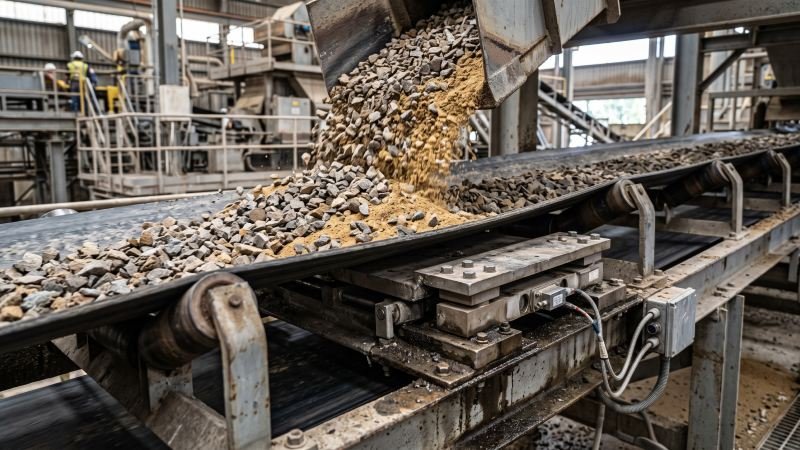
The core component of this advanced system is the load cell. A load cell is an electronic sensor positioned directly underneath a batching hopper. It acts exactly like an industrial crane scale used to weigh massive steel beams before a heavy lift. As raw material falls into the hopper, the load cell measures the physical downward force. Then, it instantly converts that physical pressure into a highly accurate digital weight reading.
These electronic sensors connect directly to a programmable logic controller (PLC). First, the operator enters the specific mix design into the computer. Next, the PLC automatically opens the pneumatic gates of the storage silos. Once the load cell detects the exact target weight, the computer instantly shuts the gates.
This automated process eliminates human error entirely. Furthermore, modern load cells consistently achieve an impressive accuracy rate of 0.1%. To maintain this precision, operators should regularly consult their equipment supplier to ensure load cells remain calibrated to local regulatory standards.
Choosing the Right Type of Batching Plant
Contractors must select the correct batching plant for their specific project scale. The two primary categories are dry mix plants and wet mix plants.
A dry mix plant, often called a transit mix plant, only measures the dry ingredients. After batching, the plant discharges the dry materials directly into a concrete transit truck. The truck then adds water and mixes the concrete internally during transport to the site.
In contrast, a wet mix plant, or central mix plant, features a built-in mechanical mixer. It batches all materials, including water, and mixes them thoroughly on-site. Then, it pours the fully mixed wet concrete directly into a delivery truck.
The table below compares these two primary plant types to help you choose.
| Feature | Dry Mix Plant | Wet Mix Plant |
|---|---|---|
| Mixing Location | Inside the transit truck drum. | Inside the central plant mixer. |
| Production Speed | Slower overall production rate. | Very high continuous production rate. |
| Quality Consistency | Moderate. Depends on truck blades. | Excellent. Centrally controlled blending. |
| Initial Investment | Lower upfront equipment cost. | Higher upfront equipment cost. |
Furthermore, plants can be either stationary or mobile. Mobile plants offer rapid setup for temporary highway or bridge projects. Stationary plants serve permanent commercial ready-mix operations.
Quality Control and Standard Tolerances for Materials
How strict must your measurements actually be to pass standard quality control inspections?
Quality control in concrete production relies on strict mathematical tolerances defined by international engineering codes, such as ACI or IS 456. These standards dictate exactly how much a material’s measured weight can deviate from the target mix design. Specifically, crucial reactive materials like cement have an extremely tight tolerance of ±2%, while bulk aggregates generally allow for a slightly larger margin of ±3%.
Acceptable Margin of Error for Cement and Aggregates
Even the best automated weighing systems experience slight variations. Therefore, engineering standards define an acceptable margin of error, known as tolerance.
Tolerance ensures that minor measurement fluctuations do not compromise the final structural integrity. For example, cement acts as the critical chemical binder. If a batch contains too little cement, the concrete will fail to reach its designed compressive strength. Conversely, adding too much cement increases the heat of hydration, which can lead to severe thermal cracking. Because of its critical role, standard codes limit the tolerance for cement and chemical admixtures to just ±2% of the target weight.
On the other hand, sand and gravel serve as the inert structural filler. While important, minor variations in these materials do not affect the chemical reaction as drastically as cement. Thus, codes typically permit a slightly wider tolerance of ±3% for fine and coarse aggregates.
“Strict adherence to batching tolerances directly dictates the final durability of the cured concrete.”
The table below summarizes these standard industry tolerances.
| Material | Typical Acceptable Tolerance | Impact on Mix Design |
|---|---|---|
| Cement | ± 2% | Critical. Affects strength and heat of hydration. |
| Water | ± 3% | High. Controls workability and strength. |
| Admixtures | ± 2% | High. Alters setting time and air content. |
| Aggregates (Sand & Gravel) | ± 3% | Moderate. Affects yield and overall density. |
Specific local building codes or specialized project requirements might mandate even tighter tolerances. Always verify the exact acceptable margins with your structural engineer or the governing construction authority.
Adjusting Water Content for Aggregate Surface Moisture
One of the most complex challenges in quality control involves managing water content. Water is added directly to the mix, but it also hitchhikes in on wet aggregates.
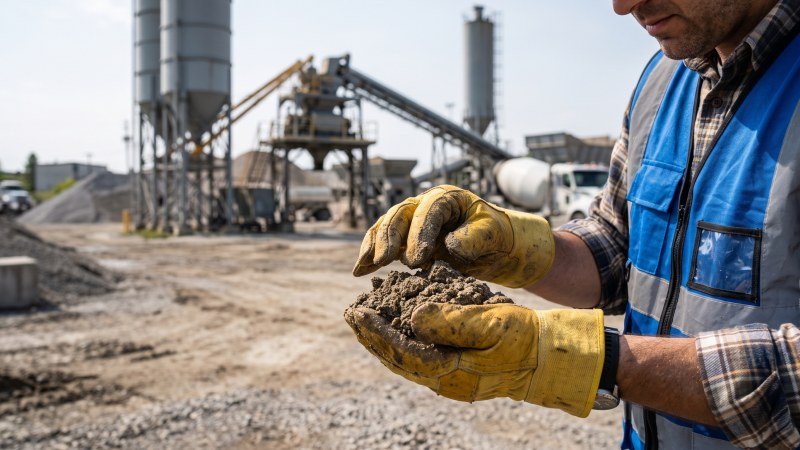
Sand and gravel stored outdoors naturally absorb rainwater. This surface moisture physically acts as part of the total mixing water. If an operator ignores this hidden moisture and adds the full amount of calculated batch water, the mix will become completely saturated.
Think of this process like applying a water-based sealant to a porous masonry wall. If the wall is already soaked from a recent rainstorm, it cannot absorb the sealant properly. The extra water ruins the application. Similarly, wet aggregates throw off the entire chemical balance of the concrete.
Therefore, operators must constantly test the aggregates for surface moisture percentage. Once determined, they must mathematically subtract that exact weight of water from the main batch water supply. At the same time, they must increase the aggregate batch weight to compensate for the weight of the water coating the stones. Automated plants handle these complex moisture compensations instantly via sensors and software.
Common Construction Issues Caused by Poor Batching
When quality control fails during the batching phase, the resulting concrete often exhibits severe physical defects. These issues rarely appear immediately; they usually manifest during placement or curing.
- Segregation: This occurs when the heavy coarse aggregates separate from the lighter cement paste. It happens when poor batching results in an overly wet, soupy mix. The resulting structure will have weak, porous sections.
- Bleeding: If too much water is added during batching, the excess water physically rises to the surface of the slab. This creates a weak, dusty top layer that easily chips away under traffic.
- Honeycombing: This defect looks exactly like a natural bee’s honeycomb. It occurs when a mix is too dry or lacks sufficient fine sand to fill the gaps between the large gravel pieces. Honeycombing exposes the internal steel rebar to rust and rapid corrosion.
Ultimately, precise batching is the only way to prevent these costly and dangerous structural failures.
Conclusion
Mastering the concrete batching process is the absolute foundation of producing durable, high-quality structures. By understanding the critical shift from traditional volume batching to precise weight batching, utilizing the correct automated equipment, and strictly adhering to material tolerances, contractors can prevent catastrophic failures. Whether you are running a simple transit mix operation or a massive central plant, accurate measurement dictates the ultimate success of your construction project. If you need any high-quality equipment solutions for your concrete production or want to upgrade your current batching systems, please feel free to contact us.