-
Whatsapp: +86 15938761000
-
Email: likang@shconcretemixer.com
-
Address: Shenglong Youyi City, Zhongyuan District, Zhengzhou City, Henan Province
-
Whatsapp: +86 15938761000
-
Email: likang@shconcretemixer.com
-
Address: Shenglong Youyi City, Zhongyuan District, Zhengzhou City, Henan Province
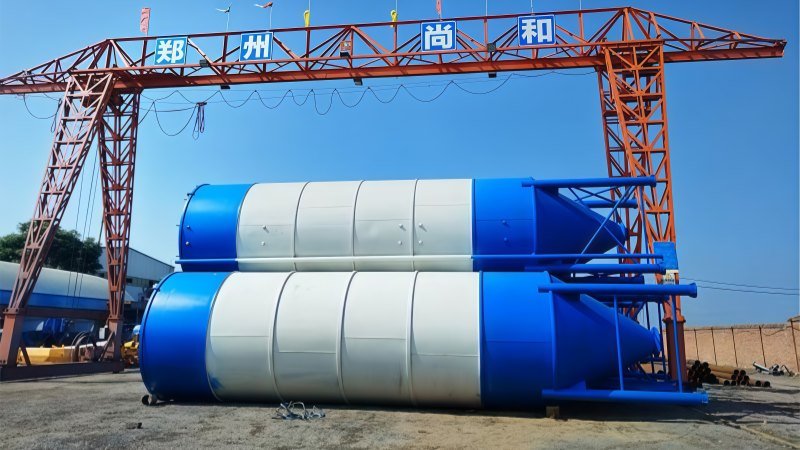
The Ultimate Concrete Batching Plant Maintenance Checklist
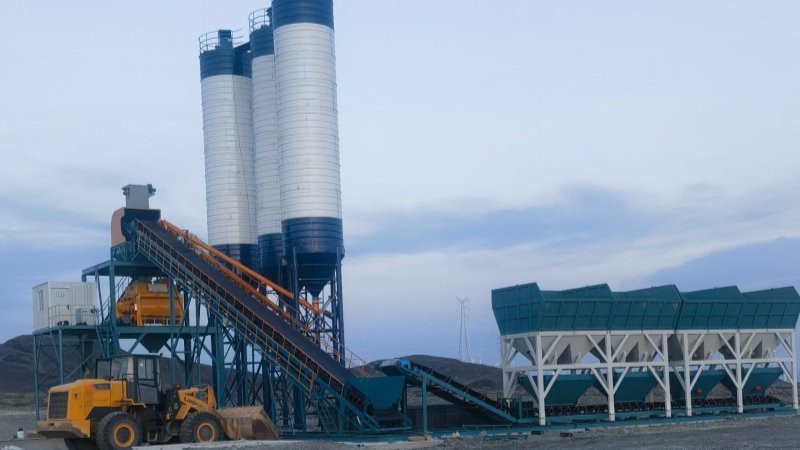
To keep a concrete batching plant running smoothly, operators must execute a structured maintenance checklist covering safety interlocks, mixing blade wear, scale calibration, and dust collector health. Regular inspections prevent mechanical breakdowns, guarantee accurate concrete mix proportions, and ensure compliance with environmental standards.
Daily Pre-Start Inspections for Safety and Operation
Executing a strict daily walk-through prevents accidents and avoids costly downtime before starting the plant each morning. This routine focuses on testing emergency circuits, verifying oil levels, and bleeding moisture from pneumatic systems.

Verifying Safety Guards and Emergency Stops
Physical inspection of machine guards is mandatory before applying power. Missing metal guards on rotating shafts or conveyor pinch points pose severe physical risks and must be secured.
Emergency stop (E-stop) buttons require routine testing to ensure they effectively cut power to the plant. Concrete dust accumulation can jam these mechanical switches over time.
- Visual Check: Ensure no metal guards are loose, bent, or missing.
- Function Test: Verify E-stops on the main control panel and field stations operate smoothly.
- Reset Verification: Confirm the system will not restart until the E-stop is manually reset.
Checking Oil Levels and Key Lubrication Points
Proper lubrication prevents metal-to-metal contact and premature component wear. Oil levels in main gearboxes and air compressors must be checked daily. The oil should sit in the middle of the sight glass. If low, top it up with the recommended gear oil (e.g., ISO VG 220, depending on climate and model).
Inspect the automatic grease pumps to ensure the reservoir holds enough grease for the day’s production, and check main grease lines for leaks or blockages.
| Inspection Point | What to Look For | Action Required if Failing |
|---|---|---|
| Gearbox Sight Glass | Oil level is below the center line. | Add the specified industrial gear oil. |
| Auto Grease Pump | Grease reservoir is almost empty. | Refill the grease reservoir immediately. |
| Lubrication Hoses | Visible cracks or actively leaking grease. | Replace the damaged line before starting. |
Draining Moisture from Air Compressors and Pneumatic Lines
Pneumatic systems control the heavy gates throughout the plant, requiring clean and dry air. Air compressors naturally generate water condensation, which can cause internal rust, ruin pneumatic cylinders, and freeze in cold weather, leading to system pressure loss.
Drain the main air tanks daily:
- Open the bottom manual drain valve slowly.
- Allow the mixture of water and oil to vent.
- Close the valve tightly once only dry air escapes.
Additionally, empty the clear collection bowls on inline moisture separators as soon as they fill up.
Core Mixing and Conveying System Maintenance
Systematically evaluating the components subjected to the most friction is critical for continuous operation. This involves measuring mixer blades, inspecting twin-shaft seals, and tensioning conveyor belts.
Inspecting Mixer Blades and Liners for Wear
Aggregates are highly abrasive and constantly wear down mixer blades and internal liners. Maintaining a clearance gap of roughly 5mm to 8mm between the mixing blade and the liner is standard practice. If the gap becomes too large, coarse stones can wedge between the blade and liner, potentially jamming the mixer and overloading the drive motor.
| Wear Indicator | Visible Symptom | Required Action |
|---|---|---|
| Blade Gap | Gap exceeds manufacturer maximum limit. | Adjust blade outward or replace blade completely. |
| Liner Thickness | Liner is worn past 50% of original thickness. | Schedule liner plate replacement. |
| Missing Bolts | Fasteners securing the blades are sheared off. | Stop immediately and install new hardened bolts. |
Evaluating Shaft Seals to Prevent Slurry Leaks
Twin-shaft concrete mixers use heavy-duty bearings located near the wet concrete slurry. Reliable shaft seals act as a physical barrier against this abrasive cement paste. If a seal fails, slurry enters the bearing housing, necessitating a costly shutdown for replacement.
Modern plants use an automated grease pump to pressurize these seals. The system typically requires a working pressure of 20 to 30 MPa to push grease through the seal galleries. Visually inspect the shaft ends daily for gray slurry drips, which indicate a seal failure.
Aligning and Tensioning the Conveyor Belt
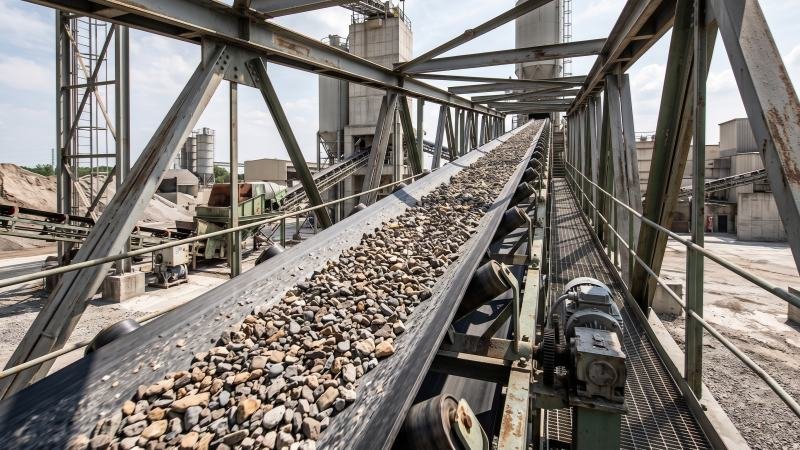
The main incline conveyor transports massive volumes of raw aggregate and requires proper alignment and tensioning. Insufficient tension causes the drive pulley to slip, while excessive tension damages pulley bearings. Misalignment leads to material spills and edge fraying against the conveyor frame.
Adjust the threaded tensioning bolts on the tail pulley in small increments to maintain proper alignment.
| Conveyor Issue | Probable Cause | Maintenance Solution |
|---|---|---|
| Belt Slipping | Insufficient tension or wet drive pulley. | Tighten tail pulley bolts equally on both sides. |
| Belt Drifting Left | Tension is uneven (left side is too loose). | Tighten the left-side tension bolt slightly. |
| Edge Fraying | Belt is rubbing against the steel frame. | Re-align the belt and check for seized idler rollers. |
Ensuring Batching Accuracy and Quality Control
Batching accuracy relies on the precise calibration of weighing and discharge systems.
Calibrating Load Cells and Weighing Hoppers
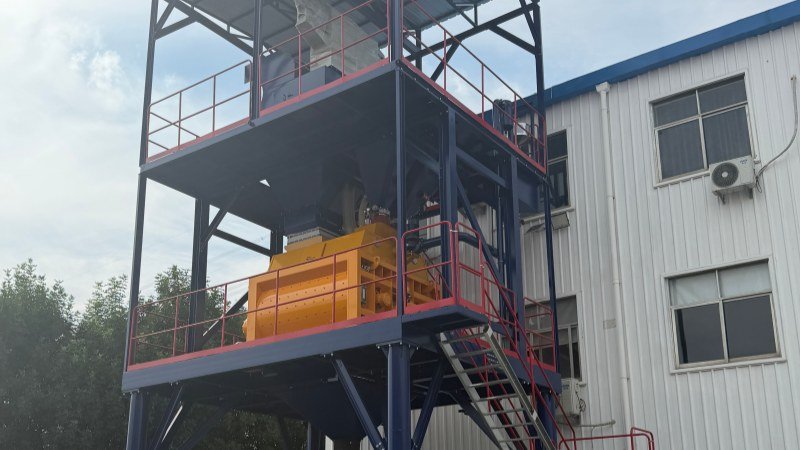
Load cells measure sand, gravel, and cement. Plant vibrations can cause these sensors to drift out of calibration over time. A scale off by just 2% can significantly alter the mix design, leading to wasted cement or rejected loads due to low structural strength.
Calibrate weighing hoppers regularly using certified cast-iron test weights. Industry standards typically recommend a full-scale calibration every three to six months. During calibration, ensure hopper suspension bolts are free from binding against the main frame.
Testing Pneumatic Discharge Gates for Complete Closure
Pneumatic discharge gates manage material flow into the mixer. If a gate fails to close completely, material leaks into the drum, throwing off batch proportions.
Sticky material buildup or worn rubber edge seals are common culprits. Inspect the rubber seals for tears and verify that pneumatic cylinders maintain enough air pressure to hold the gates tightly shut. Also, check the magnetic limit switches on the cylinders to ensure they send accurate open/closed signals to the plant computer.
Maintaining Water and Admixture Systems
Water and liquid admixture systems require consistent upkeep to prevent blockages. Chemical admixtures can be highly corrosive and sticky, frequently clogging metering pumps, scales, and spray nozzles. Flush the admixture scales and piping with clean water daily after production. Verify the flow meter or scale accuracy to prevent overdosing, which can drastically alter concrete setting times.
Verifying Material Level Indicators in Silos
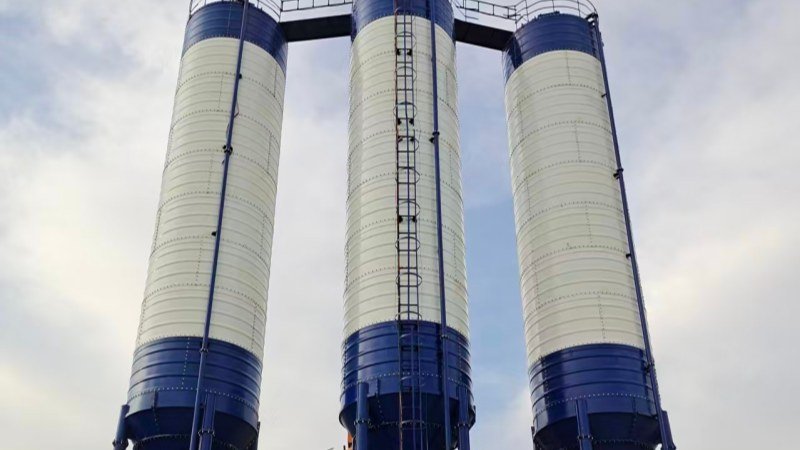
Material level indicators inside cement and fly ash silos prevent overfilling and track powder inventory. Cement dust is fine and sticky, often coating the sensors and freezing them in place, resulting in false signals to the control room.
Ensure these sensors are maintained properly based on their specific operating mechanism.
| Sensor Type | Common Failure Mode | Required Maintenance Action |
| Rotary Paddle | Paddle jams due to hardened cement dust. | Remove sensor and wire-brush the paddle clean. |
| Tuning Fork | Sticky material bridges across forks. | Clean the metal forks and verify vibration frequency. |
| Radar Level | Dust accumulation causes signal interference. | Utilize automated air-purge systems or recalibrate signal sensitivity. |
Environmental Control and Deep-Check Priorities
Long-term maintenance tasks protect both the local environment and the machinery from critical failures.
Cleaning Pulse Dust Collectors and Filter Bags
Dust collectors use high-pressure air bursts to knock caked dust off internal filter bags, regulating internal silo pressure during pneumatic loading. If filter bags are blocked, internal pressure spikes, potentially triggering the pressure relief valve and releasing cement dust into the atmosphere.
Inspect the compressed air manifold and ensure the electric solenoid valves fire sequentially. Synthetic filter bags typically last 12 to 24 months, depending on throughput.
Inspecting Electrical Control Cabinets and Wiring
Constant plant vibrations can loosen screw terminals on contactors and relays inside the electrical cabinet. Loose connections create high electrical resistance and heat. Furthermore, conductive cement dust entering a poorly sealed cabinet can short out control circuits.
Inspect and replace cracked rubber door seals. Schedule a certified industrial electrician to perform a thermographic scan of the main panel every six months to identify hidden hot spots before components fail.
Evaluating Gearbox and Motor Health
Main gearboxes and electric motors handle immense torque loads. Monitoring heat and vibration helps detect internal wear before failure.
Keep the external cooling fins of electric motors free of hardened concrete splatter to allow proper heat dissipation. Monitor gearboxes for excessive vibration, abnormal noise, or high-pitched whining. Periodically drain a small sample of gear oil to inspect for metal shavings.
| Component Assessed | Critical Warning Sign | Required Deep-Check Action |
|---|---|---|
| Electric Motor | External cooling fins are coated in hardened concrete. | Chisel and wire-brush the metal fins completely clean. |
| Main Gearbox | High surface temperature or loud internal whining. | Check oil level and take an oil sample for metal debris. |
| Drivetrain Bearings | Excessive vibration felt on the outer steel housing. | Use a digital vibration meter to diagnose bearing health. |
Conclusion
Structured maintenance transforms plant management from reactive troubleshooting into a predictable, manageable process. By consistently addressing safety checks, monitoring the wear on mixing components, verifying scale accuracy, and maintaining environmental controls, operators protect their equipment investment and ensure continuous production quality.
For expert equipment support, replacement parts, or to optimize your batching plant operations, please contact us.