-
Whatsapp: +86 15938761000
-
Email: likang@shconcretemixer.com
-
Address: Shenglong Youyi City, Zhongyuan District, Zhengzhou City, Henan Province
-
Whatsapp: +86 15938761000
-
Email: likang@shconcretemixer.com
-
Address: Shenglong Youyi City, Zhongyuan District, Zhengzhou City, Henan Province
What is a Concrete Batching Computer? A Guide to Plant Automation
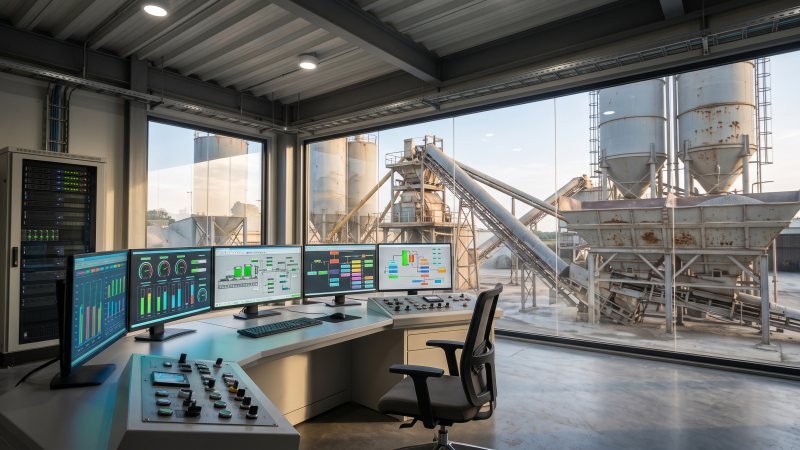
What exactly is a concrete batching computer, and how does it transform a standard batch plant into a highly efficient production facility?
A concrete batching computer is a specialized industrial automation system that controls the weighing, sequencing, and discharging of materials in a ready-mix plant. It combines rugged Programmable Logic Controllers (PLCs) with advanced software to ensure exact mix accuracy, drastically reduce material waste, and seamlessly integrate production data with dispatch and accounting operations.
Core Components of an Automated Control System
What exactly makes up the brain and nervous system of a modern concrete batch plant?
An automated plant control system consists of two primary components working together. First, the Programmable Logic Controller (PLC) acts as the rugged hardware that physically executes commands, opens gates, and reads scale inputs. Second, the Human-Machine Interface (HMI) paired with specialized batching software provides the visual dashboard. Here, operators input mix designs, monitor production logic, and manage plant data.
Programmable Logic Controller (PLC) Hardware
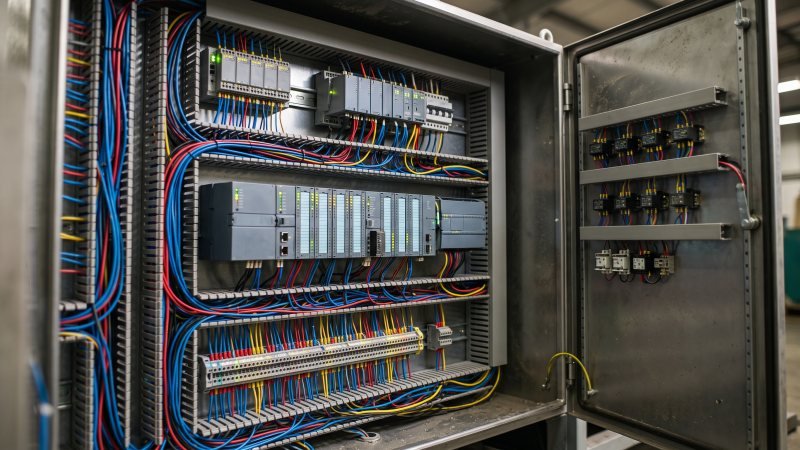
The PLC is the industrial computer mounted on the plant floor. Specifically, it serves as the physical bridge between the software and the heavy machinery. It receives digital commands and turns them into physical actions.
Think of a PLC like the hydraulic valve block on a concrete pump truck. The valve block does not decide where the concrete goes. However, it physically routes the pressurized fluid to move the boom exactly when commanded. Similarly, the PLC routes electrical currents to open pneumatic gates, start conveyor motors, and trigger water valves.
Furthermore, PLCs are built for harsh industrial environments. They must withstand extreme dust, heavy vibration, and moisture. Inside the PLC cabinet, you will find various Input/Output (I/O) modules. These modules connect directly to the plant’s load cells, limit switches, and motor starters.
| Parameter | Typical Industrial Specification | Primary Plant Function |
|---|---|---|
| Operating Temperature | -4°F to 140°F (-20°C to 60°C) | Ensures reliability in unheated control rooms. |
| Input Voltage | 24V DC or 120V AC | Reads signals from limit switches and buttons. |
| Output Voltage | 120V AC or 240V AC | Drives relays for heavy conveyor motors. |
| Scan Time | 1 to 5 milliseconds | Processes load cell weights instantly. |
Note: Hardware specifications and I/O capacities will vary based on specific manufacturing standards or local climates. Always verify exact environmental ratings and voltage ranges with your equipment supplier to ensure reliable operation in your region.
Human-Machine Interface (HMI) and Batching Software
If the PLC is the nervous system, the HMI and batching software act as the conscious brain. The HMI is the actual computer screen, keyboard, and mouse setup. Meanwhile, the batching software is the application running on that computer.
The software translates human commands into digital signals. For instance, an operator selects a 10-yard load of 3000 PSI concrete. Next, the software calculates the exact target weights for sand, stone, cement, and water. Then, it sends this precise sequence to the PLC.
To clarify, the HMI functions much like the digital dashboard inside a modern wheel loader cabin. The loader’s dashboard does not scoop the gravel. Instead, it shows payload data, engine health, and bucket position in real-time. Likewise, the plant HMI displays a live graphic representation of bins, scales, and silos.
Modern batching software processes data incredibly fast. Industry data shows that high-quality software refreshes scale weights on the HMI screen every 100 to 250 milliseconds. Consequently, the operator sees the material flowing in true real-time.
Below are the core functions executed directly within the HMI software:
- Visual Plant Mapping: Displays animated graphics of material flowing from silos into weigh hoppers.
- Sequence Control: Dictates the exact order materials drop into the mixer truck to prevent clogging.
- Alarm Management: Instantly flags over-weight tolerances or stuck pneumatic gates.
- Manual Overrides: Provides digital buttons to pause or adjust the automated batching sequence safely.
Ultimately, the software continuously records everything. It logs the target weights versus the actual batched weights. Then, it stores this data for quality control and reporting.
How Automation Software Improves Mix Accuracy
How exactly does a computer system guarantee that every single batch of concrete perfectly matches its engineered design?
Automation software improves mix accuracy by continuously monitoring scale weights and making instant micro-adjustments during the batching process. It proactively calculates the precise amount of material currently falling through the air and closes the discharge gates early. Furthermore, the software reads live moisture data from the sand and stone. It then automatically reduces the batched water to maintain the perfect water-to-cement ratio.
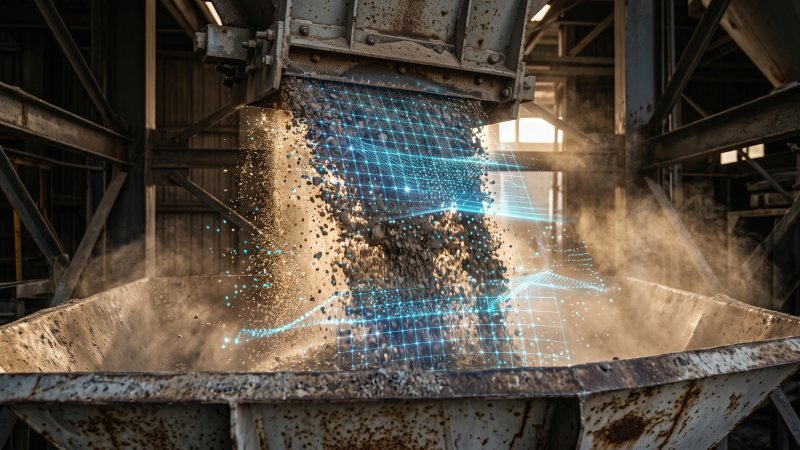
Auto-Tuning and Free-Fall Material Compensation
When a pneumatic gate opens, material falls from the overhead silo into the weigh hopper below. However, when the target weight is reached, closing the gate instantly will not stop the material immediately. There is always a column of sand or cement suspended in mid-air. This airborne material is called “free-fall.”
If the computer waits until the scale reads the exact target weight to close the gate, the batch will always be overweight. Therefore, the batching computer must close the gate early.
Think of this process like an automated aggregate conveyor feeding a radial stacker. The conveyor belt does not turn off when the stockpile reaches its maximum height. Instead, it stops several seconds earlier. The system knows that the gravel already traveling on the belt will perfectly complete the pile. Similarly, the batching software predicts the weight of the falling material and cuts the flow at the exact right millisecond.
Modern batching computers use “auto-tuning” to perfect this process. Auto-tuning is an algorithm that learns from past mistakes. For instance, if the previous batch of cement was 10 pounds over the target, the software automatically adjusts the free-fall value. On the very next batch, it will close the cement butterfly valve a fraction of a second earlier.
This continuous learning keeps the plant strictly within the standard ASTM C94 tolerances. Typically, these tolerances require cement to be within +/- 1% and aggregates within +/- 2% of the target weight.
| Batching Method | Free-Fall Calculation | Accuracy Result |
|---|---|---|
| Manual Control | Operator guesses when to close the gate. | Inconsistent. Frequently overweight. |
| Basic Computer | Uses a fixed, pre-programmed cutoff weight. | Moderate. Struggles with changing material flow. |
| Auto-Tuned Software | AI constantly adjusts the cutoff based on the last batch. | Highly precise. Stays within 1% to 2% tolerance. |
Moisture Probe Integration and Dynamic Water Trimming
Water control is the most critical factor in concrete strength. Too much water weakens the concrete. However, the sand and gravel sitting in your plant’s bins already contain natural water. If it rained the night before, your sand is soaking wet. If you ignore this hidden water, your final concrete mix will fail quality tests.
Consequently, automation software integrates directly with microwave moisture probes. These rugged sensors are typically mounted inside the sand and aggregate bins. They constantly send a live moisture percentage to the batching computer.
For example, assume your mix design calls for 2,000 pounds of sand and 100 gallons of water. The moisture probe detects that the sand has a 5% moisture content. The software instantly calculates that 5% of 2,000 pounds equals 100 pounds of pure water.
Therefore, the computer automatically performs a process called “dynamic water trimming.” It subtracts that 100 pounds of water from the main water scale target. Simultaneously, it adds 100 pounds of dry sand to the aggregate scale target. This ensures the physical yield of the concrete remains perfectly accurate.
This dynamic adjustment works much like adding chemical admixtures to a central mix drum. If you add an aggressive liquid superplasticizer, you must proportionally reduce the mixing water. The computer handles these complex adjustments automatically, ensuring the water-to-cement ratio never fluctuates.
Note: Microwave sensor accuracy can be slightly affected by the aggregate’s specific mineral makeup, such as high iron content. Always confirm calibration ranges with the probe manufacturer during initial plant setup.
Key Operational Benefits for Ready-Mix Producers
An automated batching computer provides three primary operational benefits for ready-mix producers. First, it completely eliminates costly material waste and cement over-yield by strictly enforcing target weights. Second, it drastically reduces operator errors and shortens new employee training time. Finally, it enables seamless data integration directly with dispatch software and corporate accounting systems.

Eliminating Material Waste and Cement Over-Yield
Cement is always the most expensive material in any concrete mix. Therefore, controlling your cement usage is absolutely critical for overall profitability. In a manual plant, operators frequently add extra cement to batches. They usually do this intentionally to guarantee the concrete reaches its required strength. In the industry, this costly practice is known as cement over-yield.
However, an automated computer system stops this waste instantly. The batching software precisely measures every single pound. Consequently, you never give away free material to the customer. Industry data reveals that manual batch plants typically over-yield cement by 2% to 4%. Conversely, an automated plant reliably restricts over-yield to less than 1%.
Over-yielding premium cement is exactly like a loader operator dropping an extra, unbilled bucket of crushed stone into every customer’s dump truck. Over a full year, that small daily waste destroys your profit margins. Automation strictly enforces the engineered mix design, locking out manual overrides that lead to material loss.
Reducing Operator Errors and Training Time
Operating a manual batch plant effectively requires years of hands-on experience. A manual operator must learn the exact physical “feel” of every pneumatic gate. Furthermore, they must memorize complex material sequences to prevent mixer plugging. This steep learning curve makes hiring and training new plant staff incredibly difficult.
Fortunately, modern batching software solves this ongoing labor problem. The computer automatically handles all the complex timing, scale monitoring, and gate controls. Thus, a new operator primarily needs to select the correct mix design on the screen and monitor the process.
Just as a guided laser screed drastically simplifies pouring a perfectly flat concrete slab compared to manual hand-screeding, automation simplifies plant production. The technology performs the high-speed heavy lifting. Furthermore, the computer prevents catastrophic human errors. It physically stops an operator from accidentally loading an incorrect mix into a waiting truck.
“Automation shifts the operator’s daily role from pulling physical levers to simply monitoring overall plant health and logistics.”
Seamless Integration with Dispatch and Accounting
Without automation, a ready-mix plant suffers from disconnected data islands. First, dispatchers take orders and hand paper tickets to the batch operator. After loading, the operator manually types the batched weights into an accounting program. Naturally, this manual data entry causes massive billing errors.
A concrete batching computer connects these systems together perfectly. It bridges the gap between the front office and the plant floor.
This automatic data flow acts just like an automated truck weighbridge at a quarry. A modern quarry scale automatically sends the gross aggregate payload directly to the billing server. It requires no clerk to type in the numbers. Batching automation does the exact same thing for ready-mix concrete.
| Production Phase | Manual Plant Workflow | Automated Software Workflow |
|---|---|---|
| Order Entry | Dispatch hands paper ticket to operator. | Dispatch software sends digital order to batch PC. |
| Batching | Operator manually reads paper mix design. | Computer loads exact formula automatically. |
| Invoicing | Clerk re-types hand-written batch weights. | Software pushes exact consumed weights to accounting. |
Upgrading from Manual Control Panels
How do you know when it is finally time to replace old manual push-buttons with a modern concrete batching computer?
You must upgrade from manual control panels when your plant suffers from slow batch cycles, inconsistent truck loading times, and frequent mechanical breakdowns. Upgrading replaces outdated physical switches with synchronized automated sequences, drastically increasing your maximum hourly yardage output and delivering a rapid return on investment.
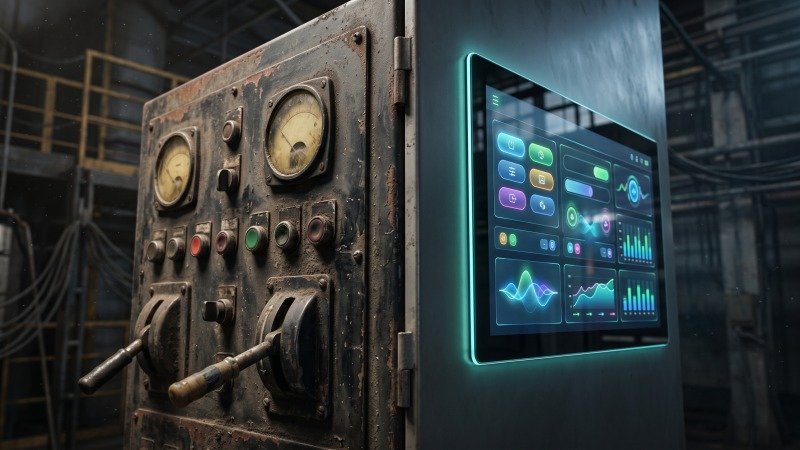
Signs Your Current Setup Limits Production Efficiency
Many older ready-mix plants still rely on mechanical levers and manual buttons. However, this aging hardware eventually creates a severe production bottleneck. You can easily spot the signs that your current setup limits efficiency.
First, look closely at your batch cycle times. A manual operator must wait for one scale to empty completely before starting the next material. Consequently, the manual batch process is entirely linear and slow. Conversely, a modern computer multitasks seamlessly. It can weigh aggregates, measure water, and discharge cement simultaneously.
Think of a manual control panel like a narrow, single-lane aggregate feeder supplying a massive jaw crusher. The crusher can easily process much more rock. However, the feeder simply cannot deliver it fast enough. Similarly, your physical plant might have a massive capacity. Unfortunately, manual buttons strictly limit your actual production speed.
“The true cost of a manual control panel is the hidden revenue lost every day to slow, inconsistent batching cycles.”
Furthermore, wildly inconsistent loading times signal a major efficiency problem. For instance, your lead operator might load a standard mixer truck in five minutes. Meanwhile, a newer relief operator takes eight minutes. This inconsistency destroys your daily dispatch scheduling.
Finally, physical hardware degradation directly hurts efficiency. Old mechanical relays constantly fail. Analog dials lose their calibration quickly. When these manual components break, finding exact replacement parts causes extensive plant downtime.
Calculating the ROI of an Automation Upgrade
Business owners must justify the cost of new plant technology. Fortunately, calculating the Return on Investment (ROI) for a concrete batching computer is straightforward. You must measure the new revenue gained from your unlocked production capacity.
While automation definitely saves money on material waste, the biggest financial gain comes from increased throughput. An automated system shaves precious minutes off every single batch. Over a standard ten-hour shift, saving two minutes per truck adds up massively. Therefore, you can dispatch significantly more concrete every day without purchasing additional delivery trucks.
To calculate your specific ROI, you must evaluate your potential hourly yardage increase. Industry data consistently shows that upgrading to full automation increases plant throughput by 20% to 30%.
Consider this simplified ROI performance comparison for a mid-sized batch plant:
| Production Metric | Manual Panel Setup | Automated Computer Setup |
|---|---|---|
| Average Batch Time | 6 Minutes | 4 Minutes |
| Trucks Loaded Per Hour | 10 Trucks | 15 Trucks |
| Daily Output (10 Hours) | 100 Trucks | 150 Trucks |
| Efficiency Gain | Baseline | +50 Extra Loads Per Day |
By selling those extra loads, many high-volume plants pay for the new computer system in less than six months. Additionally, some manufacturers offer trade-in programs for your old manual panels, which can further reduce your initial capital expense.
Essential Features to Evaluate in Modern Systems
When evaluating a modern batching system, you must prioritize three critical features. First, look for cloud-based remote monitoring and digital ticketing that allows real-time plant management from anywhere. Second, ensure the software includes advanced recipe management to handle highly complex custom concrete blends. Finally, demand a modular system architecture so the computer can easily expand as you add new silos, scales, or admixture tanks to your facility.

Cloud-Based Remote Monitoring and Ticketing
Historically, production data remained trapped on a single local computer hard drive. Today, modern batching software utilizes cloud-based remote monitoring. Consequently, plant managers can access live production dashboards directly from a smartphone or laptop.
Think of this cloud access like modern GPS fleet tracking systems installed in mixer trucks. A dispatcher does not need to sit inside the truck cab to know its exact location. Similarly, a production manager does not need to stand in the control room to see live scale weights, material inventory, or daily production totals.
Furthermore, cloud systems enable seamless digital ticketing. Drivers receive digital load tickets directly on their cab tablets. This completely eliminates expensive paper waste. It also speeds up the sign-off process at the job site.
Advanced Recipe and Formula Management
Modern concrete is no longer just a simple mix of sand, gravel, water, and cement. Today, commercial ready-mix producers handle highly engineered formulas. These custom formulas regularly include multiple chemical admixtures, synthetic fibers, and color pigments. Therefore, your software needs advanced recipe management capabilities.
A quality batching system stores thousands of unique mix designs. More importantly, it manages the precise loading sequence for each recipe. For instance, a high-strength bridge deck mix might require water and air-entraining chemicals to enter the mixer first. Then, the cement and crushed stone follow.
“Advanced recipe management ensures that complex chemical loading sequences are perfectly executed every single time.”
This software capability is just like the automated logic controls on a modern block-making machine. That machine must switch seamlessly between pressing standard paving stones and heavy retaining wall blocks without any physical recalibration. Likewise, the batching computer instantly resets all scale targets and timing sequences the moment a new recipe is selected by the operator.
Modular Architecture for Future Plant Expansion
Your concrete plant will likely grow over time. You might eventually add a supplementary cementitious material (SCM) silo for fly ash or slag. Alternatively, you might install a new chilled water system for hot summer pours. Your computer system must grow alongside your physical equipment.
Therefore, you must choose software and hardware with a modular architecture. A modular system uses flexible, plug-and-play components. When you add a new aggregate bin, an electrician simply snaps a new input/output (I/O) card into the existing PLC cabinet. Then, the plant manager activates that new bin in the software menu.
Conversely, a rigid system limits your growth. It often requires a completely new software license and a total hardware replacement just to add one single scale.
| System Architecture | Hardware Expansion Process | Software Update Process | Cost to Expand |
|---|---|---|---|
| Rigid System | Requires entirely new control cabinets. | Needs complete custom reprogramming. | Very High |
| Modular System | Accepts snap-in I/O expansion cards easily. | Unlocks features via simple menu toggles. | Low |
Conclusion
Transitioning to a modern concrete batching computer is no longer just an operational upgrade; it is a fundamental requirement for remaining competitive in the ready-mix industry. By replacing slow, manual processes with intelligent automation, plants can instantly improve their mix accuracy, eliminate costly cement over-yield, and drastically increase daily truck throughput. Whether it is leveraging auto-tuning to dial in exact material weights or using cloud-based dashboards to manage logistics remotely, an automated system bridges the gap between your heavy machinery and your business data, setting the foundation for long-term scalability and sustained profitability.