-
Whatsapp: +86 15938761000
-
Email: likang@shconcretemixer.com
-
Address: Shenglong Youyi City, Zhongyuan District, Zhengzhou City, Henan Province
-
Whatsapp: +86 15938761000
-
Email: likang@shconcretemixer.com
-
Address: Shenglong Youyi City, Zhongyuan District, Zhengzhou City, Henan Province

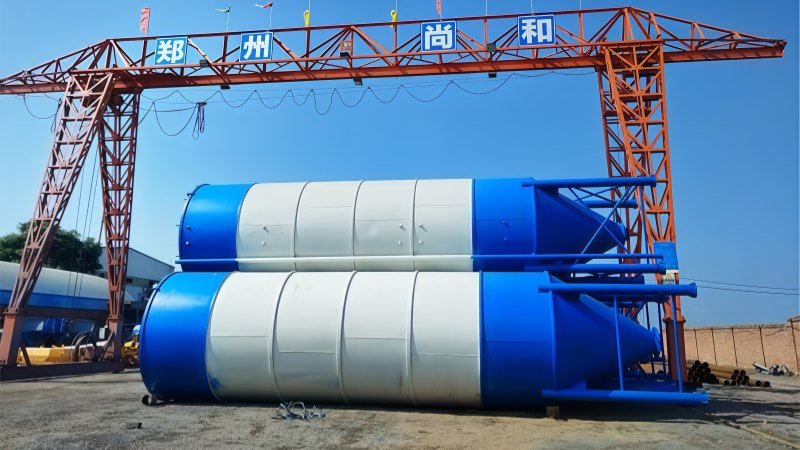
How is a Concrete Batch Plant Powered
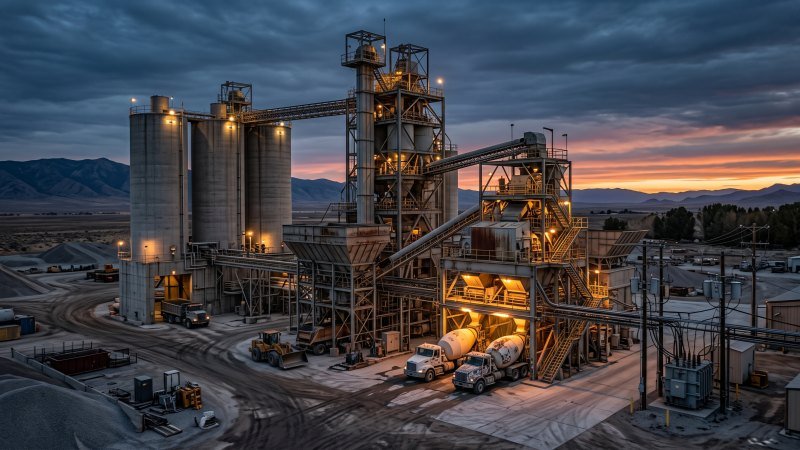
Have you ever wondered what exactly it takes to power the massive, heavy-duty machinery inside a modern concrete production facility?
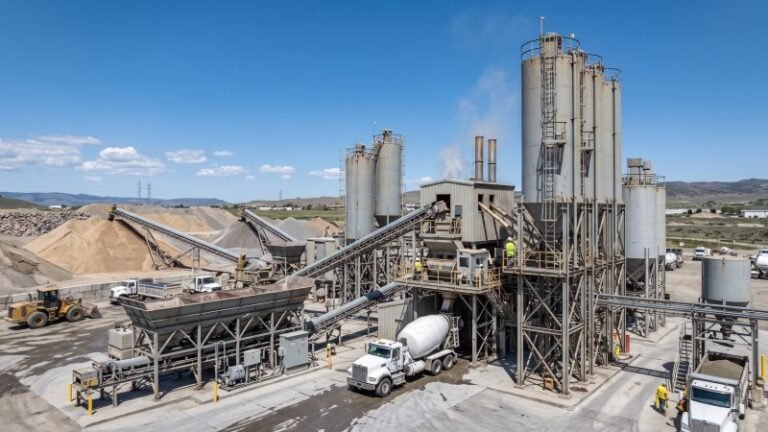
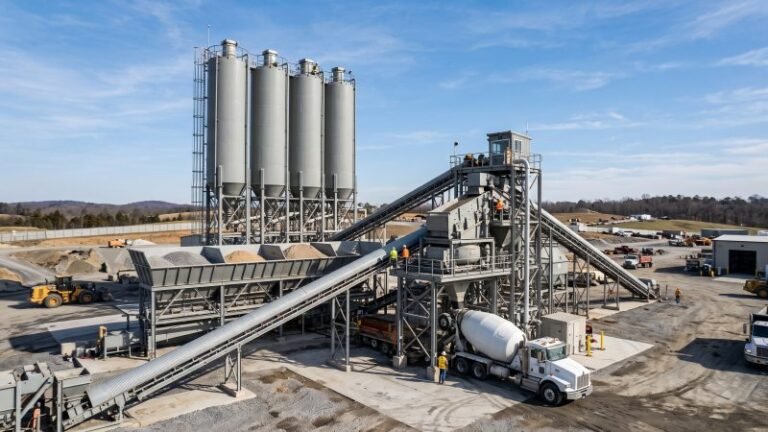
A concrete batch plant is powered by a combination of high-voltage industrial electricity, robust mechanical drive systems, and compressed air. The main electrical grid or oversized diesel generators supply three-phase power to drive high-torque electric motors, which operate the central mixers, conveyor belts, and skip hoists. Simultaneously, a dedicated air compressor provides pneumatic power to actuate heavy discharge gates, while an isolated, uninterruptible power supply runs the sensitive Programmable Logic Controller (PLC) that automates the entire batching process.
Electrical Power Requirements for Site Setup
What are the core electrical power requirements needed to set up a concrete batch plant?
A concrete batch plant typically requires a robust three-phase industrial power supply, generally operating at 480V or 380V depending on the region. The total power capacity requirement ranges from 80 kVA for small transit-mix operations up to 300 kVA or more for high-capacity central-mix facilities. This power grid must support the combined electrical load of large mixer motors, conveyor drives, and pneumatic systems simultaneously.
Grid Connection Specifications and Amperage
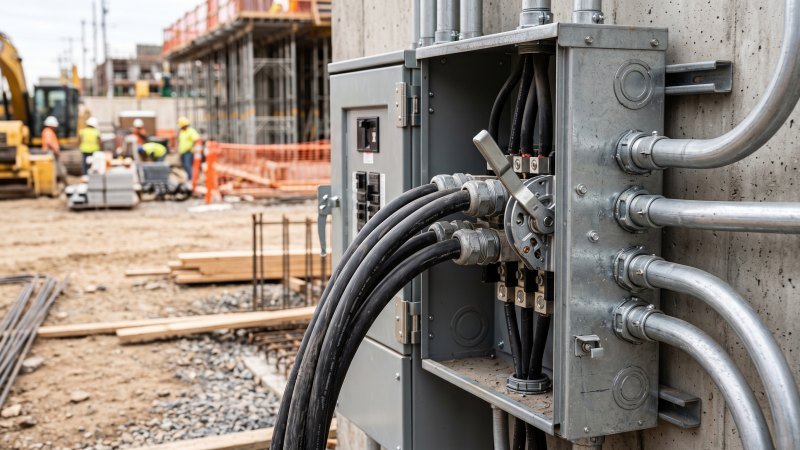
First, securing a reliable grid connection is the absolute foundation of your site setup. Most concrete plants run on heavy-duty industrial electrical systems. Specifically, they require a three-phase power supply. Standard single-phase residential power simply cannot handle this heavy industrial machinery.
In North America, the standard voltage requirement is often 480 volts. Meanwhile, in many other regions, 380 volts or 415 volts is the standard. Therefore, the exact voltage depends entirely on your local grid infrastructure.
Next, you must evaluate the amperage. The main electrical service panel must comfortably handle the peak current draw. A standard 60 to 90 cubic meter per hour (m³/h) plant usually requires a 400-amp to 600-amp service. However, large central-mix plants might need an 800-amp or even 1200-amp service.
Think of the main electrical panel as the main intake valve for a massive industrial aggregate washing plant. If the intake pipe is too narrow, the machinery starves for flow and shuts down. Similarly, insufficient amperage causes severe voltage drops and trips system breakers.
Because connection standards and local electrical codes vary widely, you should always verify the exact voltage and amperage requirements with your specific equipment supplier before starting any site preparation.
Average Energy Consumption by Plant Capacity
Energy consumption scales directly with the maximum production capacity of the facility. Additionally, the specific type of plant significantly impacts overall power usage.
For instance, a dry-mix (transit-mix) plant consumes much less electricity on-site. This is because the actual concrete mixing happens inside the heavy-duty mixer truck on the road. Conversely, a wet-mix (central-mix) plant uses a massive central mixer directly on the site. This central mixer requires a high-torque electric motor, which drastically increases the total electrical load.
| Plant Type & Capacity | Typical Installed Power (kW) | Estimated Energy Use per m³ (kWh) |
|---|---|---|
| Small Dry-Mix (30-60 m³/h) | 40 – 75 kW | 0.8 – 1.2 kWh |
| Large Dry-Mix (90-120 m³/h) | 80 – 120 kW | 0.7 – 1.1 kWh |
| Small Wet-Mix (30-60 m³/h) | 90 – 130 kW | 1.8 – 2.5 kWh |
| Large Wet-Mix (90-120 m³/h) | 150 – 220 kW | 1.5 – 2.2 kWh |
As shown in the data above, larger plants often achieve better energy efficiency per cubic meter. This happens because the baseline power for control rooms and small conveyors is spread over a much higher production volume.
Therefore, understanding your target production volume is crucial. It helps project managers calculate monthly utility costs accurately. Furthermore, knowing these exact electrical demands ensures you do not under-build your site’s power infrastructure.
Sizing a Generator for Off-Grid Operations
What size generator is required to effectively run an off-grid concrete batch plant?
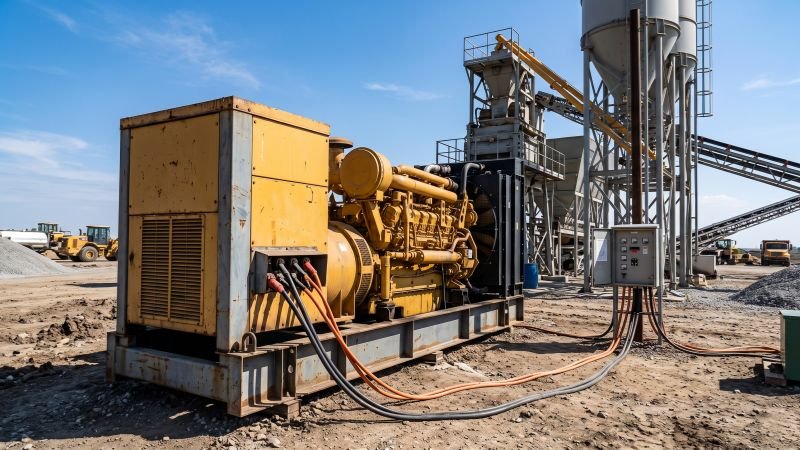
To correctly size a generator, operators must choose a unit with a kilovolt-ampere (kVA) rating that is 1.5 to 2 times the plant’s total continuous running load. This oversized capacity is strictly required to handle the sudden, massive power surges caused when heavy-duty electric motors start up. Additionally, the generator must include an automatic voltage regulator to maintain a steady power supply and prevent sensitive electronic control systems from failing.
Accommodating High Motor Starting Currents
Starting heavy machinery requires a lot of extra energy. Have you ever noticed lights flickering when a heavy machine turns on? That happens because of starting currents.
When a massive electric motor inside a central mixer first turns on, it must overcome dead inertia. This sudden demand for energy is called inrush current. Generally, an industrial electric motor requires three to six times its normal running power just to start spinning.
Consider a heavy front-end loader pushing a massive pile of dense gravel. It takes a huge surge of engine torque just to break the friction and get the heavy pile moving. However, once the gravel is sliding, the loader needs much less effort to keep it rolling forward. Similarly, a concrete mixer motor needs a massive surge of electricity to break the static friction of heavy wet cement and aggregates. Once the mixing paddles are spinning, the power demand drops back to normal levels.
To handle this surge, your generator must have a high surge capacity. If the generator is too small, the sudden power draw will stall the engine or trip the main circuit breakers. Plant manufacturers use different electrical starters to help manage this problem:
| Starter Type | Starting Current Multiplier | Generator Sizing Impact |
|---|---|---|
| Direct-On-Line (DOL) | 5x to 7x running current | Requires severely oversized generator |
| Star-Delta | 3x to 4x running current | Requires moderately sized generator |
| Soft Starter | 2x to 3x running current | Most efficient for off-grid generator sizing |
Electrical components often vary based on specific brand standards. Always verify the exact starting current multipliers with your generator supplier before making a purchase.
Ensuring Voltage Stability During Production
Powering a plant is not just about raw energy; it is also about consistency. During normal production, various conveyor belts, water pumps, and air compressors constantly cycle on and off. Each time a new motor kicks on, it temporarily drains power from the rest of the system, causing voltage dips.
Imagine the hydraulic system on a heavy-duty concrete boom pump. If the operator suddenly engages multiple boom cylinders at once, the overall hydraulic pressure momentarily drops, slowing down the pumping mechanism. Electrical voltage acts in the exact same way. When a large skip hoist motor suddenly pulls power, the voltage drops across the entire concrete plant.
This voltage fluctuation is dangerous for modern plants. Today, automated batching plants rely on highly sensitive Programmable Logic Controllers (PLCs) and digital load cells. If the voltage drops too low, these computers can reboot mid-batch. A sudden reboot ruins the concrete mix and causes costly delays.
“A voltage drop of just 10% can cause magnetic contactors in the control panel to release, instantly shutting down production.”
To prevent this, off-grid generators must be equipped with a high-quality Automatic Voltage Regulator (AVR). The AVR constantly monitors the electrical output. It instantly adjusts the generator’s alternator to keep the voltage steady, usually within a strict 5% margin. Therefore, maintaining stable voltage ensures your sensitive control systems remain online and your batch weights remain perfectly accurate.
Mechanical Drive Systems of Core Components
What exactly powers the heavy physical movements inside a concrete batch plant?
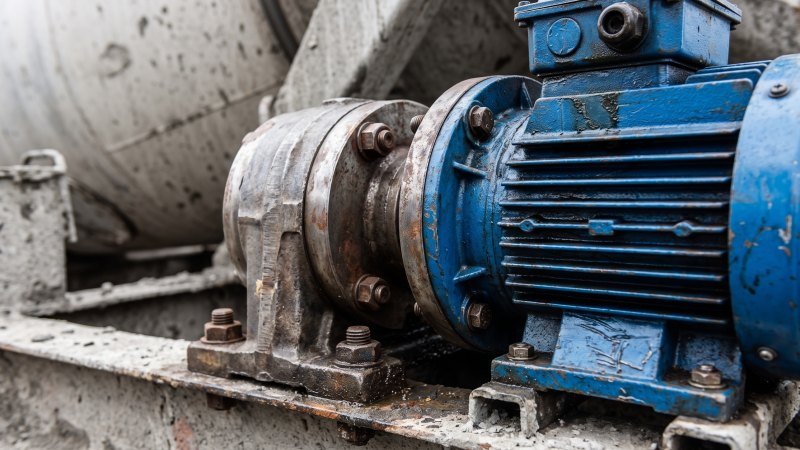
Electric mechanical drive systems provide the raw physical force required to move, lift, and mix thousands of pounds of raw materials. These systems convert electrical energy into kinetic energy using high-torque gear motors, heavy-duty drive belts, and enclosed gearboxes. Specifically, these robust mechanical drives power the central concrete mixer, the aggregate transport conveyors, and the cement delivery augers to ensure continuous, heavy-duty material processing.
High-Torque Motors for Concrete Mixers
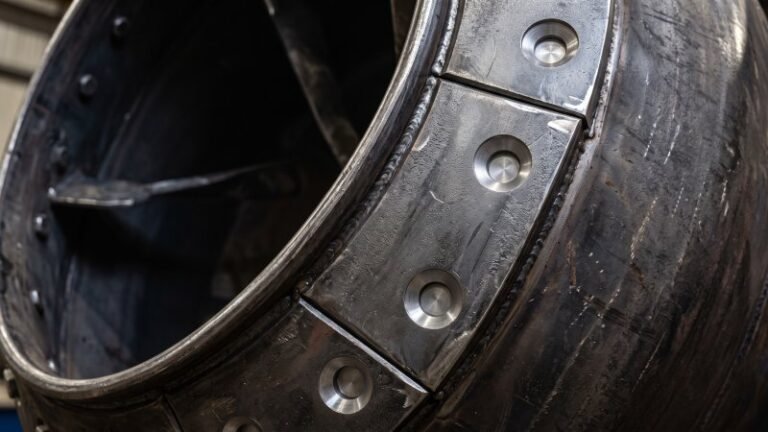
First, the central mixer is the most physically demanding component in the entire facility. Therefore, it requires massive turning force to blend heavy aggregates, sand, and cement effectively. Plant manufacturers rely on high-torque electric motors coupled directly with heavy-duty reduction gearboxes.
For example, a standard 3.0 cubic meter twin-shaft mixer typically utilizes two synchronized 55 kW electric motors. These motors connect to precision planetary gearboxes. Consequently, the gearboxes reduce the high-speed spinning of the motor down to a slow, incredibly powerful rotational force.
Think of an industrial rock crusher grinding solid granite. The crusher does not spin extremely fast. Instead, it uses massive gear reduction to maximize its crushing torque. Similarly, the mixer shafts spin slowly—usually around 20 to 25 revolutions per minute—but they do so with immense physical power. This high torque prevents the steel mixing paddles from stalling inside the dense, sticky wet concrete.
Electric Drives for Aggregate Conveyors and Skip Hoists
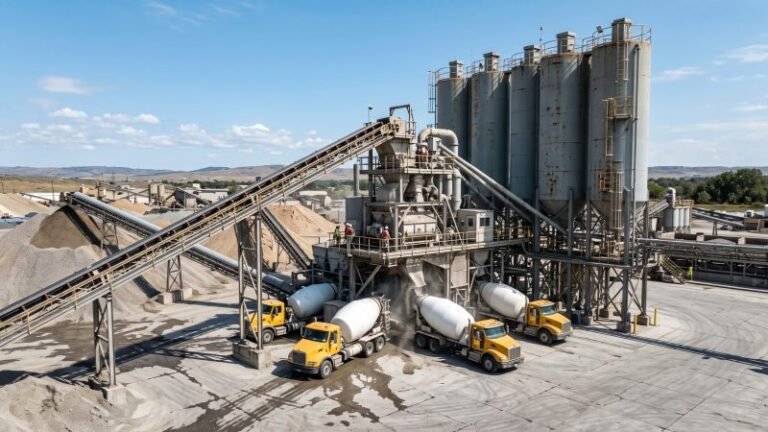
Next, plants must transport heavy raw aggregates from the ground-level storage bins up to the elevated mixer. They use either inclined belt conveyors or wire-rope skip hoists to move these materials. Both systems rely entirely on rugged electric drives.
Inclined belt conveyors typically use a motorized head pulley or an external electric gear motor. This motor firmly grips and drives a heavy rubber belt over a series of steel idler rollers. Furthermore, these conveyor motors are built to run continuously under heavy friction loads.
Conversely, skip hoists use a powerful electric winch system. A large electric motor turns a grooved steel drum, which winds up a thick steel wire rope. This rope forcefully pulls a loaded steel bucket straight up a steep vertical track.
“A specialized brake motor is critical for a skip hoist system. It instantly locks the mechanical winch drum if power fails, preventing a fully loaded bucket from dropping unexpectedly.”
| Drive System | Mechanical Method | Primary Advantage |
|---|---|---|
| Belt Conveyor | Motorized head pulley turning a continuous belt | Delivers a smooth, continuous flow of materials |
| Skip Hoist | Electric winch winding a steel wire rope | Saves physical ground space with a steep vertical lift |
Operating Cement Silo Screw Conveyors
Finally, powder materials like cement and fly ash present a unique transportation challenge. Plants cannot move dry powder on open belts because the wind would quickly blow it away. Instead, they use enclosed tubular screw conveyors.
A screw conveyor, often called an auger, consists of a long steel tube containing a rotating spiral blade. An electric drive motor and a reduction gearbox sit at either the intake or the discharge end of the tube. When the motor turns, the spiral blade rotates rapidly inside the enclosed housing.
Consider a heavy-duty soil auger used for drilling foundation pilings. As the steel flighting rotates, its deep spiral grooves physically pull heavy dirt up and out of the ground. In a very similar manner, the rotating helical blade of the screw conveyor physically catches the heavy cement powder and pushes it upward from the cement silo into the weighing hopper.
These electric auger drives are engineered to stop instantly. As soon as the electronic scale detects the correct target weight, the motor brakes engage. This sudden stop prevents excess cement from spilling into the batch, thereby keeping the concrete mixture perfectly accurate.
Pneumatic and Control System Integration
How do pneumatic elements and electronic control systems work together to automate a concrete batch plant?
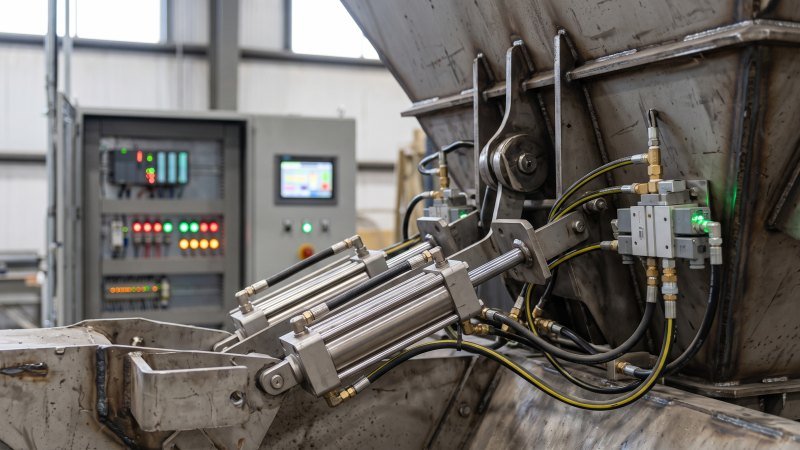
Pneumatic systems provide the necessary physical force to actuate heavy gates and valves, while the electronic control system acts as the brain coordinating these movements. An industrial air compressor generates compressed air, which solenoid valves then direct to open and close discharge gates. This process happens perfectly in sync with the Programmable Logic Controller (PLC), ensuring precise material weighing and fully automated batching cycles.
Air Compressors for Valve Actuation
First, you must understand that electric motors do not open the material storage gates. Instead, pneumatic air cylinders perform this specific job. An industrial air compressor acts as the lungs of the facility. It constantly generates high-pressure air. Next, this compressed air travels through heavy-duty hoses to various pneumatic cylinders across the site.
Think of the pneumatic air braking system on a fully loaded concrete mixer truck. High-pressure air instantly drives the heavy brake pads to lock the massive wheels firmly into place. In the exact same way, air pressure rapidly forces the aggregate bin gates closed. This instant clamping action stops the falling rocks exactly when the scale hits the target weight.
Specifically, the air compressor powers several critical moving parts:
- Aggregate Discharge Gates: Opening and closing the heavy steel clamshell doors under the sand and stone bins.
- Butterfly Valves: Controlling the flow of dry cement powder dropping from the weighing hopper into the mixer.
- Pneumatic Water Valves: Instantly shutting off the water supply line to ensure the water-to-cement ratio remains perfectly accurate.
Operating pressures typically range between 0.6 MPa and 0.8 MPa (87 to 116 psi), depending on specific cylinder sizes and valve configurations used across the facility.
Supplying Reliable Power to PLC Automation Systems
The Programmable Logic Controller (PLC) serves as the central brain of the entire operation. It constantly reads live data from precision load cells. Then, it sends electrical signals to the pneumatic solenoid valves. However, this electronic brain requires incredibly clean and stable electrical power to function properly.
A massive mixer motor creates severe electrical noise when it starts. This noise can easily corrupt the sensitive millivolt signals coming from the weighing scales.
Consider an automated laser grading system on a construction bulldozer. The heavy diesel engine creates massive vibration and electrical noise. However, the laser grading computer runs on a completely isolated circuit to ensure the cutting blade maintains exact elevation without digital interference. The concrete plant’s PLC requires the exact same electrical isolation from the heavy machinery.
“A power fluctuation of just a few milliseconds can reset a digital load cell, completely ruining the accuracy of an ongoing batch.”
To solve this problem, engineers separate the power supplies. They use specific devices to protect the delicate computers.
| Power System | Voltage Level | Primary Function |
|---|---|---|
| Main Industrial Power | 380V or 480V (AC) | Runs heavy mixer motors and large conveyors. |
| Control System Power | 24V (DC) or 110V (AC) | Powers the PLC, load cells, and computer screens. |
Therefore, an Uninterruptible Power Supply (UPS) is strictly mandatory. A standard 2kVA to 3kVA UPS provides clean, filtered electricity directly to the computer. Furthermore, if the main site power completely fails, the UPS keeps the control system running on battery power. This critical backup time allows operators to save the current batch data and shut down the software safely.
Conclusion
Powering a concrete batch plant is about much more than simply plugging it into the local electrical grid. It requires a carefully balanced integration of high-voltage electrical inputs, robust mechanical drives, and highly responsive pneumatic controls. From sizing an oversized generator to handle the massive inrush current of a twin-shaft mixer, to supplying perfectly clean, uninterrupted electricity to your automated PLC, every single power system must work in complete harmony. By understanding these mechanical and electrical demands, operators can ensure their stationary concrete batching plant or mobile facility runs continuously, maintains perfect batch accuracy, and avoids costly mechanical downtime. If you have any further questions regarding plant specifications or equipment configurations, please contact us.