-
Whatsapp: +86 15938761000
-
Email: likang@shconcretemixer.com
-
Address: Shenglong Youyi City, Zhongyuan District, Zhengzhou City, Henan Province
-
Whatsapp: +86 15938761000
-
Email: likang@shconcretemixer.com
-
Address: Shenglong Youyi City, Zhongyuan District, Zhengzhou City, Henan Province
What Are The Types of Concrete Plant

What are the different types of concrete batching plants available in the construction industry today?
Concrete batching plants are primarily classified into distinct types based on their mixing method, physical mobility, and specific project application. The main categories include dry mix transit plants and wet mix central batching plants, which are further divided structurally into stationary, mobile, and containerized setups designed specifically for either commercial ready-mix operations or precast component production.
Classification by Mixing Method
The method used to combine raw materials fundamentally defines the equipment structure of a concrete batching facility.
The primary distinction in concrete plant classifications by mixing method depends on where the actual blending of cement, aggregates, and water occurs. Facilities are categorized into two main types: dry mix transit plants, which rely on a mixer truck drum to blend materials during transport, and wet mix central batching plants, which utilize a stationary central mixer on-site to produce thoroughly mixed concrete before discharging it into a delivery vehicle.
Dry Mix Transit Plants
In a dry mix plant setup, the facility itself does not actually mix the concrete. Instead, it serves as a highly precise weighing and batching station. First, the plant weighs the sand, gravel, and cement. Next, it drops these dry materials directly into a transit mixer truck through a discharge chute. Finally, a metered amount of water is piped directly into the truck drum.
The plant does not perform the actual blending. All the rigorous mixing happens inside the rotating drum of the truck as it travels to the job site.
Operational Mechanics
Think of a dry mix plant like an aggregate loading terminal feeding a transport conveyor. The terminal only measures and drops the bulk materials. Meanwhile, the downstream transport equipment handles the continuous movement and integration. In this specific case, the truck drum must rotate between 70 and 100 times at mixing speed to ensure a proper concrete blend.
- Material Weighing: Electronic load cells accurately measure all dry ingredients.
- Discharge Process: Materials funnel into the truck simultaneously to prevent dry clumping.
- Transit Mixing: The truck drum physically mixes the concrete during road transport.
Because the delivery truck does the heavy lifting, the batch plant itself features fewer moving parts. However, the exact mixing time depends entirely on the truck’s drum design.
Wet Mix Central Batching Plants
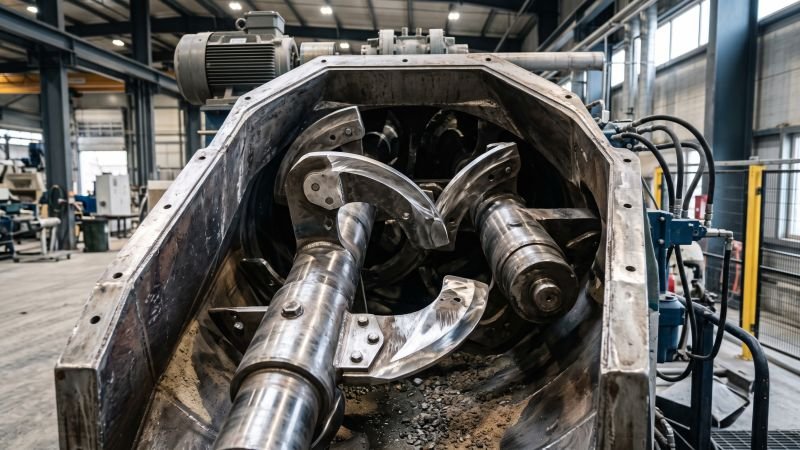
A wet mix plant takes a completely different operational approach. This facility includes a central mixing unit at the very heart of the operation. First, the plant weighs all the dry ingredients and the water, much like the dry setup. However, it then dumps everything into a central mixer located on the plant structure.
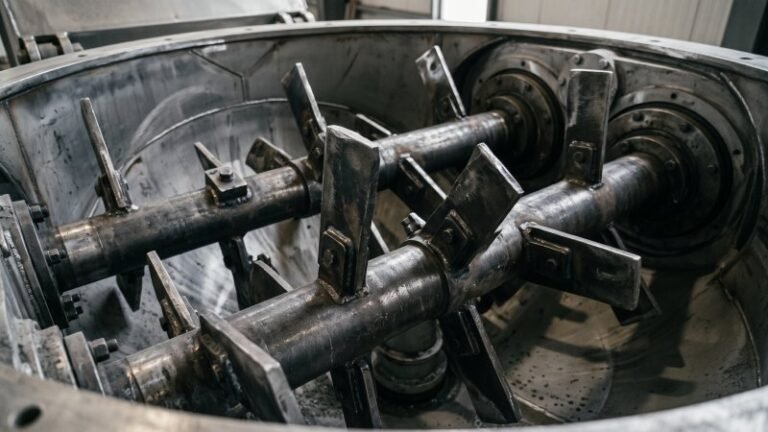
This process operates on the same principle as a heavy-duty pugmill used for stabilized soil base mixing. Raw aggregates, powders, and liquids are rigorously churned together in a central mixing chamber before being loaded out. Similarly, a central concrete mixer forces the wet and dry materials together using powerful rotating blades or paddles.
The Central Mixing Advantage
Once the concrete is completely mixed, the central mixer drops the wet batch directly into a waiting truck. Next, the truck only needs to slowly agitate the load. This slow rotation simply keeps the concrete from settling, meaning the truck does not need to perform any primary mixing.
Central mixers generally come in different styles. Twin-shaft mixers and planetary mixers are the most common industrial options. A standard heavy-duty twin-shaft mixer can often complete a full batch cycle in just 30 to 60 seconds. Consequently, this rapid cycle creates a highly consistent and uniform product.
To clearly understand the core differences between these two methods, review the structural comparison below:
| Feature | Dry Mix Transit Plants | Wet Mix Central Batching Plants |
|---|---|---|
| Mixing Location | Inside the delivery truck drum | Inside a stationary central mixer |
| Plant Structure | Simpler, lacks a central mixing unit | More complex, includes a central mixer |
| Truck Role | Primary mixing and transporting | Transporting and slow agitation only |
| Concrete Consistency | Depends on truck drum efficiency | Highly consistent, controlled on-site |
| Batch Cycle Time | Slower (truck requires time to mix) | Faster (30 to 60 seconds in central mixer) |
Classification by Mobility and Structure
The physical footprint and transportability of a facility determine its suitability for different job site environments.
Concrete batching plants are classified by mobility and structure into three primary categories based on their foundation requirements and ease of relocation. Stationary concrete plants require permanent concrete foundations and offer the highest production volumes. Mobile batching plants are built on wheeled chassis for rapid towing between temporary job sites. Finally, containerized plants utilize standard modular frames, allowing for efficient international shipping, quick structural assembly, and excellent environmental enclosure.
Stationary Concrete Plants for High Volume
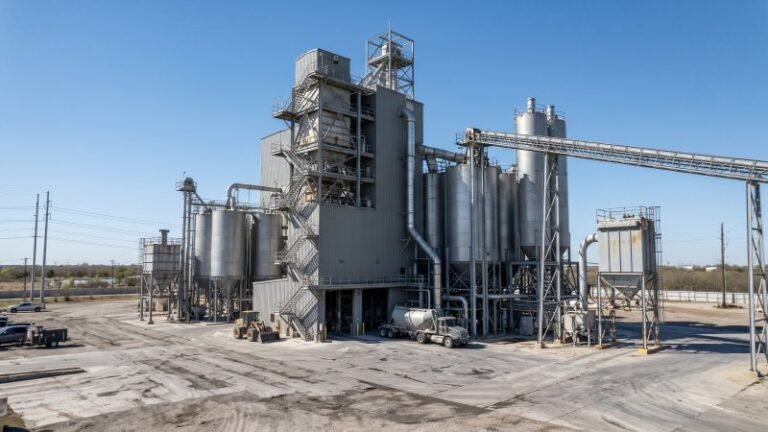
Stationary plants represent the heavyweights of the concrete manufacturing industry. Engineers design these facilities for permanent or long-term installation. Therefore, they require massive, poured concrete foundations to ensure absolute structural stability.
Think of a stationary plant like a permanent quarry crushing facility. A permanent crusher takes significant time to build and wire. However, it continuously processes heavy loads at maximum efficiency for years. Similarly, a stationary concrete plant maximizes continuous daily output. Furthermore, they feature massive aggregate bins and towering cement silos. Typically, these facilities achieve production rates ranging from 90 to over 240 cubic meters per hour. Since maximum production capacities and silo volumes vary based on individual manufacturers, verify the specific output range directly with your equipment supplier.
These high-volume structures are ideal for mega-infrastructure projects. For example, building a massive hydroelectric dam requires millions of cubic yards of material over several years. In such cases, a stationary plant provides unmatched reliability.
Mobile Batching Plants for Flexible Transfer
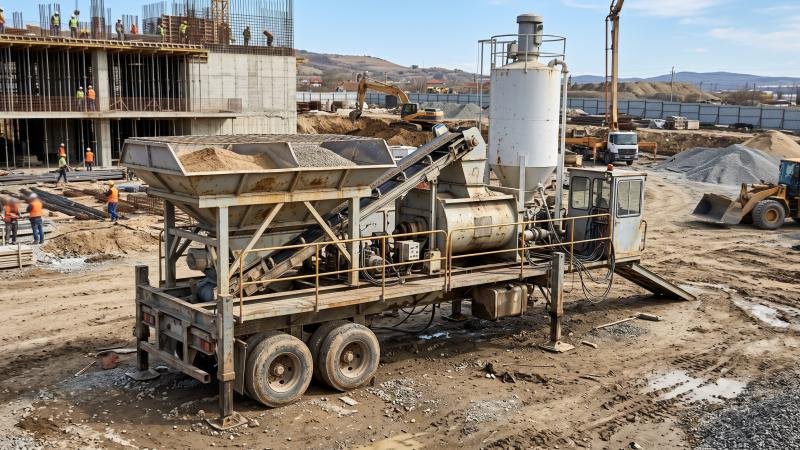
Mobile batching plants prioritize deployment speed and geographical flexibility. Manufacturers mount the entire weighing, mixing, and discharging system onto a heavy-duty wheeled chassis. Consequently, standard semi-trucks can easily tow these compact plants from one job site to another.
Consider a mobile plant similar to a track-mounted portable jaw crusher used in demolition. Instead of hauling raw materials across long distances, the portable equipment moves directly to the active work zone. Because mobile plants require minimal foundation work, installation often takes just one to three days.
This rapid setup completely eliminates the need for complex site preparation. Therefore, mobile units are highly beneficial for short-term projects. They frequently support rural highway paving, temporary wind farm construction, and remote pipeline installations.
Containerized Plants for Fast Assembly and Transport
Containerized plants utilize a highly efficient modular engineering approach. Engineers build the core plant modules to match the exact dimensions of standard ISO shipping containers. As a result, this smart structural choice drastically reduces international ocean freight costs.
Furthermore, the steel container framework acts as a built-in exterior housing. This solid enclosure naturally surrounds the noisy mixing equipment. Consequently, the walls provide excellent dust containment and superior noise reduction. They also protect the internal machinery from harsh weather conditions. Therefore, containerized setups are frequently chosen for strict urban environments where local governments enforce tough environmental regulations.
To easily compare the differences between these structural designs, please review the breakdown below:
| Plant Structure Type | Foundation Requirement | Typical Setup Time | Primary Advantage |
|---|---|---|---|
| Stationary Plant | Heavy poured concrete | Weeks to months | Maximum production volume |
| Mobile Plant | Flat, compacted ground | 1 to 3 days | Rapid relocation and towing |
| Containerized Plant | Simple concrete blocks | 3 to 7 days | Cost-effective shipping and eco-friendly |
Classification by Project Application
The intended end-use of the final concrete product heavily influences the required equipment configuration.
Concrete batching facilities are classified by project application based on their primary operational purpose. The two main categories are commercial ready-mix (RMC) plants and precast concrete component production plants. Ready-mix operations are designed for high-recipe flexibility and external market distribution. Conversely, precast plants are engineered for extreme batching precision and dedicated indoor manufacturing of structural elements.
Commercial Ready-Mix Operations
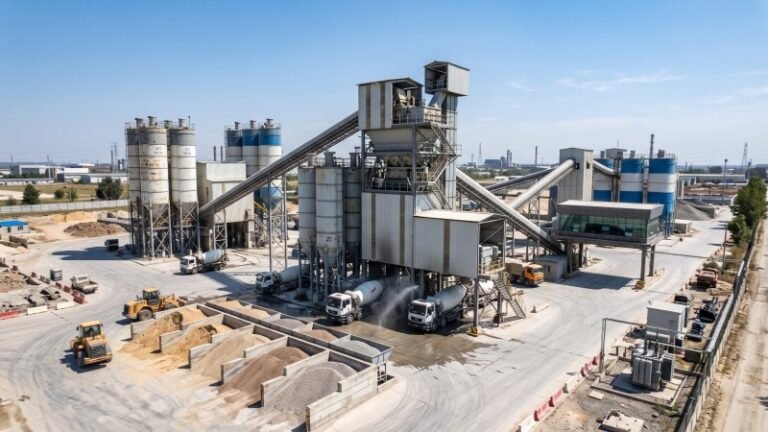
Commercial ready-mix (RMC) plants function as independent material suppliers. They manufacture and sell concrete to various external construction contractors. Therefore, these facilities must adapt to rapidly changing daily demands.
Consider a high-volume volumetric concrete mixer truck that must adjust its mix design on the fly for different residential pours. An RMC plant operates on the same principle but at a massive industrial scale. It must seamlessly switch between dozens of different concrete mix designs. For instance, one truck might require a highly fluid foundation mix. Immediately after, the next truck might need a fast-curing, high-strength driveway mix.
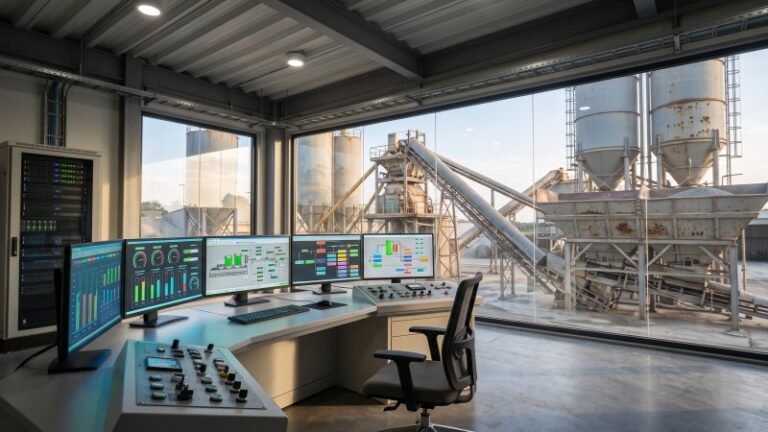
To achieve this flexibility, commercial plants utilize advanced batching control software. This software stores hundreds of custom recipes. Furthermore, RMC plants usually feature multiple admixture tanks. These chemical tanks allow operators to adjust curing times and workability on the fly to meet the exact specifications of the receiving contractor.
Precast Concrete Component Production
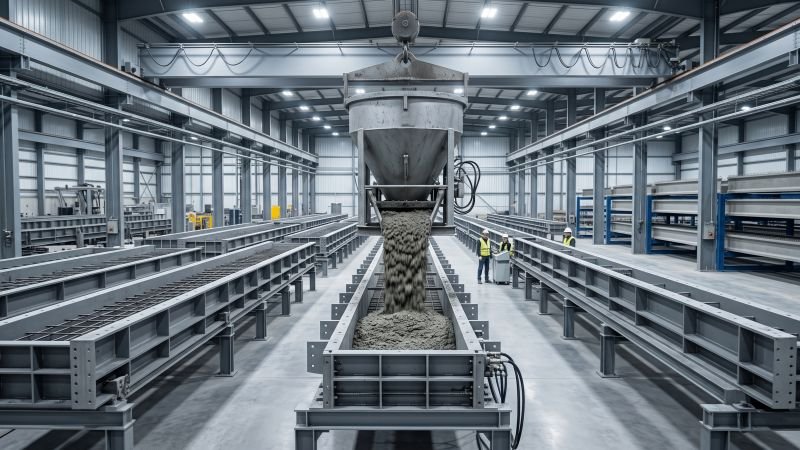
Precast plants operate exclusively for internal factory manufacturing. Instead of loading delivery trucks, these plants pour concrete directly into permanent steel molds. This process creates standardized products like drainage pipes, hollow-core floor slabs, and heavy bridge girders.
Think of a precast facility like an automated block-making machine line. The equipment repeatedly delivers the exact same raw material into fixed industrial molds. Consequently, these operations demand absolute consistency. Precast components require extremely tight moisture control. They also utilize very low water-cement ratios. As a result, the freshly mixed concrete is incredibly stiff and dry.
Because the material is so stiff, standard discharge chutes will not work. Instead, precast plants typically discharge directly into a flying bucket system. Alternatively, they use overhead factory cranes to move the concrete. The discharge gates must open and close with millimeter precision to fill small, complex molds accurately.
To clarify the operational differences between these two applications, review the comparison below:
| Operational Feature | Commercial Ready-Mix Operations | Precast Component Production |
|---|---|---|
| Primary Customer | External construction contractors | Internal factory production lines |
| Mix Flexibility | High (frequent daily recipe changes) | Low (consistent, repetitive batches) |
| Material State | Typically wetter (higher slump) | Typically very stiff (zero-slump) |
| Discharge Method | Drops into transit mixer trucks | Drops into flying buckets or cranes |
| Moisture Tolerance | Standard commercial tolerance | Extremely strict tolerance |
Matching the Plant Setup to Specific Project Needs
Evaluating critical project variables ensures you select the most cost-effective and operationally efficient machinery for your operations.
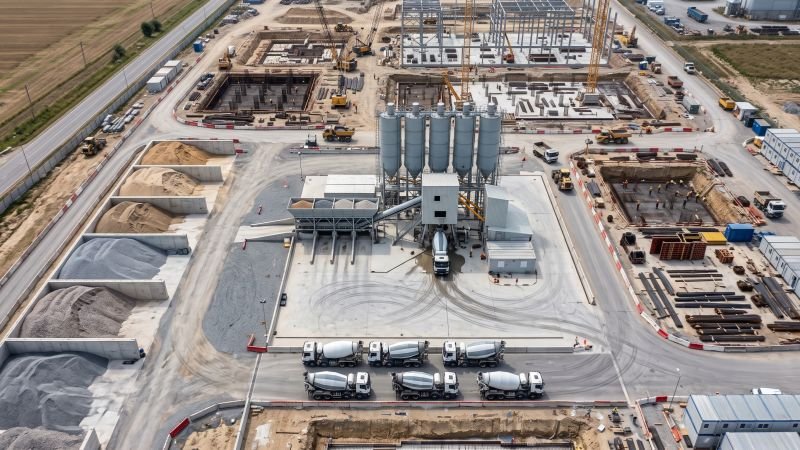
Selecting the correct concrete plant setup requires a strict evaluation of three primary operational metrics: maximum daily production volume, available site footprint, and project duration. Buyers must match the theoretical hourly output of the equipment to their peak pouring schedules, calculate the exact land area needed for raw material stockpiles, and weigh the upfront transportation and installation costs against the anticipated lifespan of the project.
Assessing Daily Production Capacity Requirements
Contractors must carefully align equipment output with peak project demands. You should never calculate your needs based solely on the total project volume. Instead, you must analyze your maximum daily pour schedule.
Think of sizing a plant like matching an excavator’s bucket capacity to a fleet of articulated dump trucks. If the excavator is too small, the trucks spend hours idling in line, bottlenecking the entire earthmoving operation. Similarly, an undersized concrete plant will leave your finishing crews waiting for material, causing cold joints and expensive labor delays.
Theoretical vs. Practical Output
Most equipment lists a maximum theoretical capacity. For example, a standard mid-size unit might advertise 60 cubic meters per hour. However, practical output is usually 10% to 20% lower. This drop happens due to truck positioning times, material loading delays, and recipe adjustments.
“Always plan for practical output, not theoretical maximums, to prevent job site delays.”
Because actual production rates heavily depend on your specific mix design, aggregate moisture, and operator efficiency, you should always consult with your equipment supplier to determine the guaranteed practical output for your exact scenario.
Evaluating Site Space and Relocation Frequency
The physical layout of your job site directly dictates your equipment options. You must account for the primary machinery, aggregate stockpiles, cement silos, and the turning radius of large delivery trucks.
Consider this similar to choosing between a permanent tower crane and a mobile rough-terrain crane. A tower crane lifts heavier loads but requires a massive, dedicated footprint. A rough-terrain crane maneuvers easily in tight, dynamic workspaces.
If your project spans a narrow mountain highway, a compact setup is mandatory. Conversely, a massive airport runway project offers ample land for large, sprawling aggregate bins. Furthermore, you must determine how often the equipment will move.
| Project Environment | Site Space Available | Relocation Frequency | Recommended Footprint Approach |
|---|---|---|---|
| Dam Construction | Very Large | Never (Permanent) | Expansive layout with high-volume storage |
| Highway Paving | Narrow / Linear | High (Every 3-6 months) | Compact, chassis-mounted footprint |
| Urban High-Rise | Extremely Tight | Low (End of project) | Vertical design with minimal ground area |
Factoring in Setup Time and Transportation Costs
Upfront logistics heavily impact your total return on investment. Buyers often ignore the hidden costs of freight, heavy crane rentals, and foundation pouring.
Transporting a high-capacity facility might require ten or more flatbed trucks. Alternatively, modular designs can pack neatly into standard shipping containers. Next, consider the erection time. Pouring a custom concrete foundation and waiting for it to cure can delay a project by several weeks.
Think of this like deploying modular scaffolding instead of welding custom structural steel on-site. Modular pieces snap together quickly, saving expensive labor hours. If your contract requires pouring concrete within 14 days of arriving on site, you cannot afford a complicated installation process. Therefore, rapid-deployment systems utilizing temporary foundations become essential.
Conclusion
Understanding the different types of concrete plants is the first and most critical step in optimizing your construction operations. Whether your project demands the high-volume consistency of a stationary wet mix plant, the rugged flexibility of a mobile unit, or the precise manufacturing capabilities of a precast facility, matching the machinery to your specific site footprint and daily production targets ensures long-term profitability. If you are currently evaluating these logistical variables and need expert assistance calculating the true operational costs for your next bid, please contact us.