-
Whatsapp: +86 15938761000
-
Email: likang@shconcretemixer.com
-
Address: Shenglong Youyi City, Zhongyuan District, Zhengzhou City, Henan Province
-
Whatsapp: +86 15938761000
-
Email: likang@shconcretemixer.com
-
Address: Shenglong Youyi City, Zhongyuan District, Zhengzhou City, Henan Province

How Choose a Concrete Batching Plant Blade for Maximum Wear Life
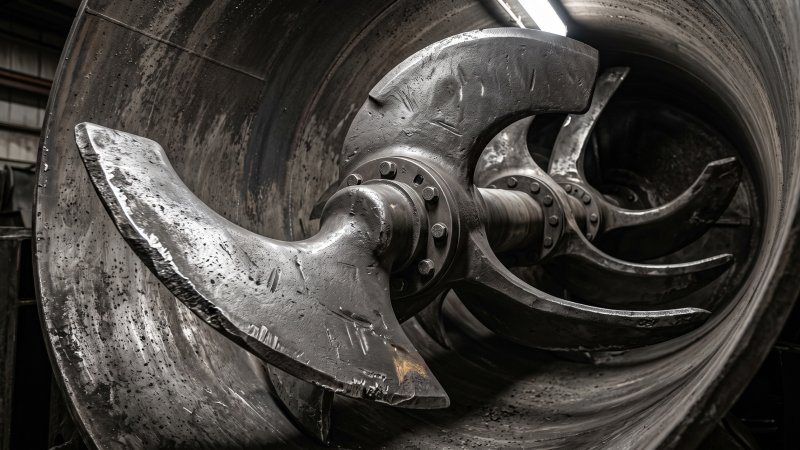
What is the most effective way to choose the right concrete batching plant blade to maximize its operational wear life?
To select the ideal concrete batching plant blade for maximum wear life, you must systematically evaluate your specific aggregate hardness, daily production volume, and target total cost of ownership. Matching specialized metallurgy—such as high-chromium cast iron for abrasive rock or ductile alloy steel for high-impact loads—ensures peak mixing efficiency while drastically reducing equipment downtime and ongoing maintenance expenses.
Match Blade Material to Your Aggregate Hardness
How does the specific type of rock you mix determine the exact metal your mixer blades need to be?
To maximize wear life, you must match the blade’s metallurgy to the aggregate’s abrasion level. Hard aggregates like granite require high-chromium cast iron for extreme wear resistance. Medium-hard stones like river gravel pair best with Ni-Hard alloys. Meanwhile, larger, heavy aggregates that drop forcefully into the mixer need alloy steel to prevent the blade from shattering under impact.
| Blade Material | Best For Aggregate Type | Key Characteristic | Typical Hardness |
|---|---|---|---|
| High-Chromium | Granite, Basalt, Crushed Rock | Extreme wear resistance | HRC 58-64 |
| Ni-Hard | Limestone, River Gravel | Balanced wear and cost | HBW 550-650 |
| Alloy Steel | Large Aggregates (>25mm) | High impact absorption | Varies |
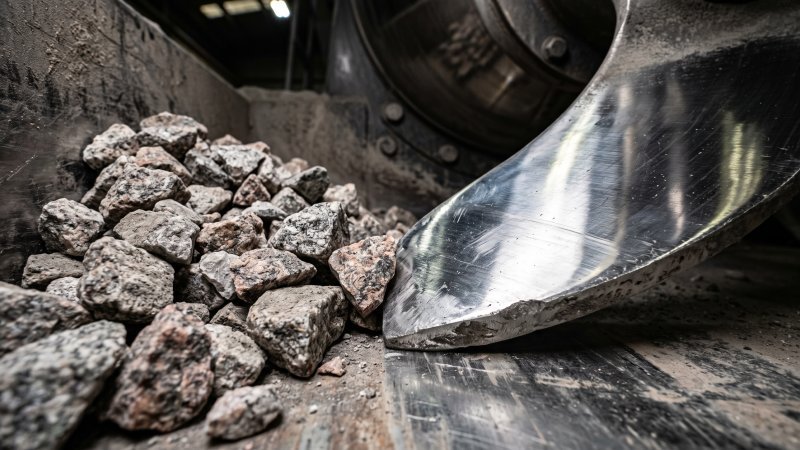
High-Chromium Cast Iron for Granite and Basalt
High-chromium cast iron is the ultimate defense against highly abrasive materials. Granite and basalt are incredibly hard stones. When these aggregates spin inside a concrete mixer, they grind against the metal like heavy-duty grinding wheels. Therefore, you need a metal that can resist this extreme friction.
High-Cr blades typically boast a hardness rating between HRC 58 and 64. However, hardness and specific metal compositions can vary based on different foundry processes, so always verify the exact specifications with your supplier before purchasing.
“Using standard carbon steel blades with crushed granite aggregate can reduce blade lifespan by up to 80% compared to high-chromium options.”
Just as a jaw crusher‘s manganese wear plates are designed to crush hard rock without wearing down instantly, High-Cr blades are built to survive constant grinding. The chromium forms hard carbides during the casting process. As a result, the blade simply does not scratch or wear away easily under severe friction.
Ni-Hard for Mixed and Medium-Hard Aggregates
If your batching plant primarily uses limestone or smooth river gravel, you might not need the extreme hardness of high-chromium. Instead, Ni-Hard provides an excellent middle ground. Ni-Hard is a specialized nickel-chromium cast iron.
This material offers strong wear resistance at a more manageable price point. Ni-Hard blades generally reach a Brinell hardness (HBW) of 550 to 650. Consequently, this makes them perfect for medium-hard stones.
Smooth river gravel does not gouge metal the way sharp, crushed granite does. Thus, investing in Ni-Hard ensures your plant runs efficiently without overspending on unnecessary metallurgy. You get a blade that lasts significantly longer than basic carbon steel, but without the premium cost of High-Cr.
Alloy Steel for High-Impact Loads
Sometimes, the biggest threat to a mixer blade is not abrasion, but physical impact. When large aggregates drop into the mixer from a weigh hopper, they hit the blades with massive force.
Very hard metals, like high-chromium, are naturally brittle. Consequently, a heavy rock striking a highly rigid blade can cause it to snap entirely. Alloy steel solves this specific problem. It is highly ductile, meaning it bends and absorbs shocks without breaking.
Think of alloy steel like the heavy-duty rubber impact idlers sitting under an aggregate conveyor belt loading zone. They absorb the sudden heavy hit so the main structure survives. You should specifically choose alloy steel when your recipes require mixing aggregates larger than 25mm. While alloy steel might wear down slightly faster from pure friction, it completely eliminates the risk of catastrophic blade failure during heavy drops.
Factor In Production Volume and Mixing Frequency
Why does the daily operational schedule of your concrete mixer dictate the exact type of blade you should install?
Your production volume and mixing frequency directly determine the required wear resistance of your mixer blades. Continuous commercial plants operating in multiple shifts require premium high-wear alloys to prevent frequent downtime. Conversely, intermittent project operations with lower seasonal outputs can safely utilize standard cast iron or mid-grade steel blades, balancing adequate performance with lower initial procurement costs.
| Operation Type | Operational Schedule | Primary Business Goal | Blade Investment Strategy |
|---|---|---|---|
| Commercial Plant | 24/7 or Double Shift | Eliminate maintenance downtime | Premium, extended-life materials |
| Project-Based Plant | Seasonal or Single Shift | Minimize upfront capital | Standard, cost-effective materials |
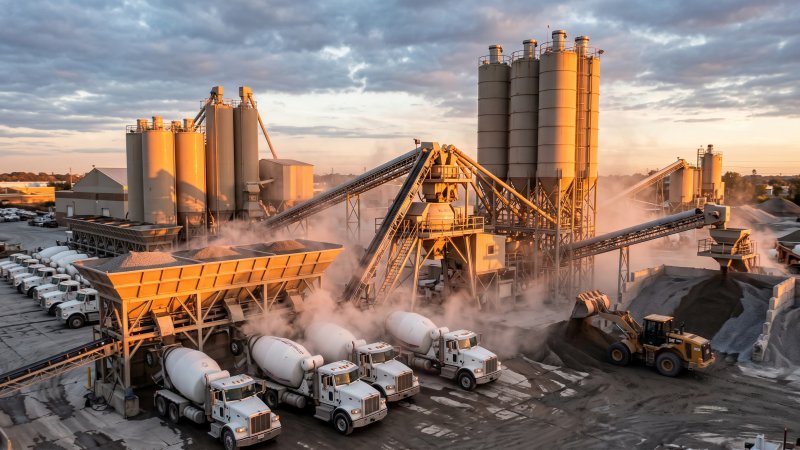
Material Requirements for Continuous Commercial Plants
Commercial ready-mix plants often operate 12 to 24 hours a day. Consequently, this high-volume production creates relentless friction inside the mixing drum. In these environments, minimizing equipment downtime is your absolute top priority. Stopping a continuous plant to change worn parts halts dozens of mixer trucks. Ultimately, this delays concrete pouring across multiple job sites.
Therefore, continuous plants demand top-tier wear materials. You must select premium alloys that offer the maximum possible operational hours. For example, a severe-duty blade might be rated to withstand up to 150,000 cubic meters of concrete production. However, expected wear life parameters vary widely based on specific sand-to-cement ratios and aggregate qualities.
Think of this like the main discharge belt conveyor on a high-capacity batching plant. You would never install budget-grade rollers on a belt that runs continuously. The labor costs and lost production time to replace them are simply too high. Similarly, continuous concrete plants require heavy-duty blades that survive months of uninterrupted production.
Cost-Effective Options for Intermittent Project Operations
Not every batching plant runs constantly. Many engineering projects build temporary batching setups right on the construction site. For instance, a contractor might install a mobile concrete batch plant solely to pour concrete for a single highway overpass. These intermittent plants mix lower volumes and often experience long idle periods.
In these specific scenarios, buying the most expensive blade is highly unnecessary. Why pay for a blade designed to last 200,000 cubic meters if the entire engineering project only requires 40,000 cubic meters? Instead, standard manganese steel or basic cast iron blades provide a much more logical solution.
“Selecting standard wear parts for short-term engineering projects prevents stranded capital in equipment that will soon be decommissioned.”
Consider a utility skid-steer loader used only occasionally around a dry batch concrete plant yard. You would equip it with standard pneumatic tires rather than severe-duty solid rock tires. The exact same logic applies to mixer blades. By matching the blade’s total wear life to the project’s actual production schedule, you conserve valuable upfront capital. You still achieve perfectly acceptable mixing performance without over-engineering your temporary setup.
Evaluating the Investment Value of Premium Blades
Does spending double the money on an advanced metal blade actually save your plant money in the long run?
Premium blades are highly cost-effective because their extended lifespan significantly lowers your Total Cost of Ownership (TCO). While standard blades require frequent replacement, premium alloys reduce maintenance labor, prevent costly production downtime, and maintain optimal mixing efficiency. Consequently, the initial higher purchase price is quickly offset by continuous, uninterrupted output and lower overall operating expenses.
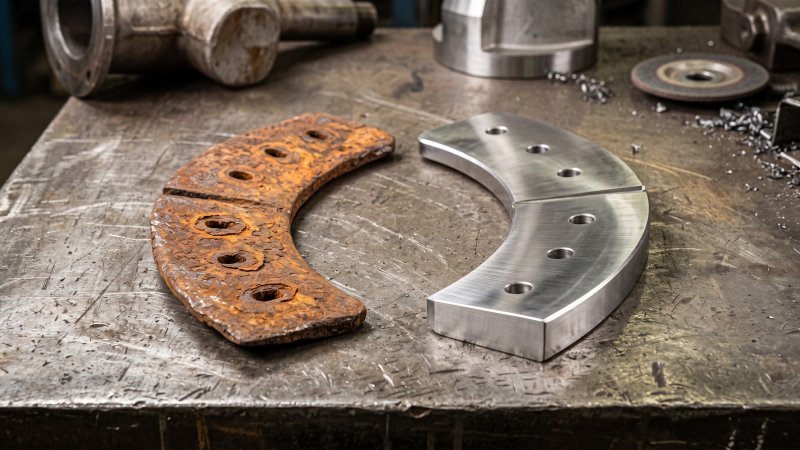
Calculating the Total Cost of Ownership
To understand the true price of a mixer blade, you must look beyond the initial invoice. Total Cost of Ownership (TCO) includes the purchase price, replacement labor, and the money lost during plant downtime.
When you buy a cheap carbon steel blade, you save money upfront. However, that blade wears out rapidly. You will have to pay a maintenance crew to replace it multiple times a year. Moreover, your batching plant stops producing concrete during every single replacement.
Consider this real-world comparison for a mid-sized commercial plant over a 12-month period:
| Cost Factor | Standard Steel Blade | Premium Alloy Blade |
|---|---|---|
| Initial Purchase Price | $200 | $600 |
| Yearly Replacements | 4 times | 1 time |
| Total Parts Cost | $800 | $600 |
| Labor & Downtime Costs | $2,000 ($500 per swap) | $500 ($500 per swap) |
| Annual TCO | $2,800 | $1,100 |
By upgrading, you actually save $1,700 per year per blade position. This logic is identical to installing premium cast-iron drum liners inside the mixer. The premium liners cost much more than standard steel plates. Yet, they process tens of thousands of additional cubic meters of concrete, completely eliminating constant machine stops for relining. Tracking your exact operational lifespans allows you to calculate a precise ROI for your facility.
Hidden Energy and Efficiency Costs of Worn Blades
The financial drain of a cheap blade is not limited to replacement costs. Worn blades silently steal energy and time from your operation.
Every mixer blade has a specifically engineered surface area and angle. This geometry folds and pushes the concrete to achieve perfect homogeneity quickly. When a cheap blade wears down, it loses this critical shape. It becomes smaller and blunter.
Consequently, the mixing process becomes highly inefficient. A significantly worn blade can cause a 15% to 30% drop in mixing efficiency. Your plant must mix the batch for a longer duration to meet strict structural concrete standards. This extra time forces the heavy electric motors to draw more power.
“Operating a mixer with severely worn blades can increase daily electrical consumption by up to 20% due to extended mixing cycles.”
You can compare this to a concrete boom pump. When the internal wear ring and spectacle plate wear down, the pump struggles to push the material. The hydraulic system works twice as hard, drawing massive current just to maintain normal flow. Similarly, investing in a premium mixer blade ensures the metal retains its optimal shape longer. This keeps your mix times fast and your electricity bills low.
How to Determine the Exact Time for Replacement
How do you know exactly when it is time to remove an old mixer blade before it ruins a concrete batch?
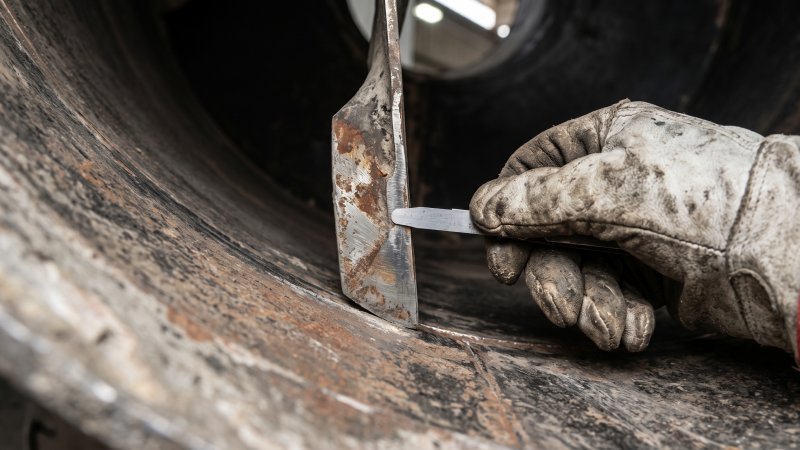
You must replace your concrete mixer blade when its original thickness wears down by 60 percent. Furthermore, you must replace it when the clearance gap between the blade and the drum liner exceeds standard limits. Delaying replacement beyond these critical thresholds compromises mix uniformity and severely risks catastrophic blade failure.
Recognizing the 60 Percent Wear Threshold
Every blade has a specific lifespan. You cannot run a blade until it completely disappears. The golden rule is the 60 percent threshold. Once a blade loses 60 percent of its original thickness, it is officially dead.
For example, imagine a new blade starts at 20 millimeters thick. When it wears down to just 8 millimeters, you must swap it out. Why is this rule so strict? As the blade thins, it loses its structural integrity. It can no longer push heavy, wet concrete effectively.
Moreover, this wear directly affects the clearance gap. The gap is the empty space between the moving blade and the stationary drum liner. A proper gap is usually tight. When the blade shrinks, this gap widens drastically. Consequently, unmixed sand and heavy aggregates will slip right through the gap.
Think of a polyurethane scraper on a primary aggregate conveyor belt. If the scraper wears down too far, rocks bypass it completely. The exact same failure happens inside your mixer. Since acceptable gap clearances and wear limits vary slightly based on different mixer designs, always refer to your equipment manual for specific gap tolerances.
Visual Signs of Impending Blade Failure
You should not wait for a complete breakdown. Instead, you need to conduct regular visual inspections inside the mixing drum. Catching early warning signs helps prevent sudden equipment failure during a busy production shift.
What should you look for during a routine maintenance check? You must watch for three major physical warnings.
| Visual Warning Sign | What It Means | Immediate Action Required |
|---|---|---|
| Deep Hairline Cracks | The metal is fatigued from heavy impact. | Replace before the blade snaps entirely. |
| Uneven “Wavy” Edges | The blade is hitting irregular aggregate clumps. | Check clearance gap and schedule a swap. |
| Missing Bolt Heads | The mounting hardware has eroded away. | Halt production to replace the bolts and check the blade. |
First, search for deep cracks near the mounting arms. Even a tiny crack is highly dangerous. The constant vibration of the mixer will quickly split the weakened metal.
Next, look closely at the outer edge of the blade. It should be relatively straight. If it looks wavy or severely chipped, it is failing rapidly. This is highly similar to inspecting the steel teeth on an excavator bucket. When the teeth become dangerously thin and chipped, they simply cannot dig. When a blade edge chips, it cannot mix. Therefore, recognizing these physical signs guarantees you maximize wear life without pushing the machine into a catastrophic breakdown.
Crucial Quality Checks Upon Delivery
What exactly should you look for the moment your new mixer blades arrive at the batching plant?
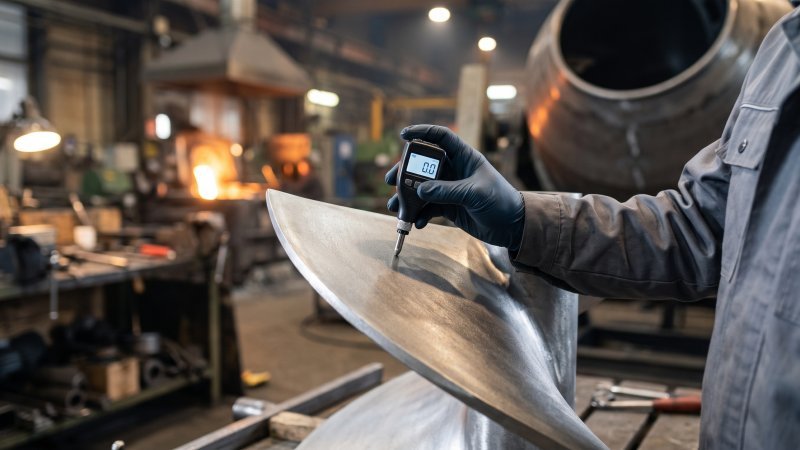
You must strictly inspect every newly delivered blade for surface casting defects, verify its specific hardness rating, and measure all critical dimensional tolerances. Performing this rigorous quality control check before installation prevents premature equipment failure, ensures seamless mounting, and guarantees you received the exact metallurgical grade you purchased.
Inspecting for Surface Casting Defects and Micro-Cracks
When foundries pour molten metal into molds, small manufacturing errors can easily occur. Therefore, you must visually inspect the surface of every blade immediately upon delivery. First, look closely for tiny surface holes. This common issue is known as porosity. Porosity simply means trapped air bubbles formed inside the metal during the cooling process.
Furthermore, you must search for sand inclusions. These defects look like rough, gritty patches on the metal surface. Most importantly, you need to check the entire blade for micro-cracks. You should pay special attention to the critical areas around the mounting holes.
“Installing a mixer blade with visible casting porosity creates severe weak points that will quickly shatter under heavy mixing loads.”
Think of this process like inspecting a newly cast track shoe for a heavy crawler excavator. If that track shoe has a hidden air pocket, it will suddenly fracture the moment it strikes a solid rock. Similarly, a defective mixer blade will snap under the intense pressure of moving dense concrete. You must reject any metal parts showing these clear structural flaws.
Verifying Hardness Standards and Dimensional Tolerances
You cannot determine a blade’s true strength just by looking at it. Consequently, your quality team should use a portable hardness tester to verify the metal against international specifications like those from ASTM International. If your purchase order specifies an HRC 60 wear rating, the testing tool must directly confirm that exact number.
Additionally, you must measure the dimensional tolerances before your maintenance crew begins the installation process. You need to carefully check the exact distance between the mounting bolt holes. Also, verify the overall thickness and curvature of the part. If the bolt holes are misaligned by just two millimeters, the blade will not fit the mixer arms. Always have your maintenance team reference the manufacturer’s original spec sheet for acceptable dimensional variations.
This strict verification is identical to receiving a replacement hydraulic cylinder for a large wheel loader. If the mounting pin holes do not align perfectly with the loader’s boom bracket, the new part is completely useless.
| Quality Check | Inspection Tool | Primary Goal |
|---|---|---|
| Surface Defects | Visual Inspection | Prevent unexpected structural breakage |
| Metal Hardness | Portable Hardness Tester | Confirm the purchased wear resistance rating |
| Bolt Hole Alignment | Calipers or Tape Measure | Ensure a smooth and fast installation |
Conclusion
Selecting the right mixer blade is a foundational maintenance decision that directly influences your batching plant’s profitability and output stability. By rigorously analyzing your aggregate types, operating schedules, and comprehensive lifetime costs, you can transition from reactive emergency repairs to highly predictable production cycles. Furthermore, diligent inspection of wear thresholds and incoming part quality guarantees you always maximize the mechanical lifespan of your equipment. For further guidance on identifying the optimal metallurgical profiles tailored to your specific plant’s operational demands, please contact us.