-
Whatsapp: +86 15938761000
-
Email: likang@shconcretemixer.com
-
Address: Shenglong Youyi City, Zhongyuan District, Zhengzhou City, Henan Province
-
Whatsapp: +86 15938761000
-
Email: likang@shconcretemixer.com
-
Address: Shenglong Youyi City, Zhongyuan District, Zhengzhou City, Henan Province
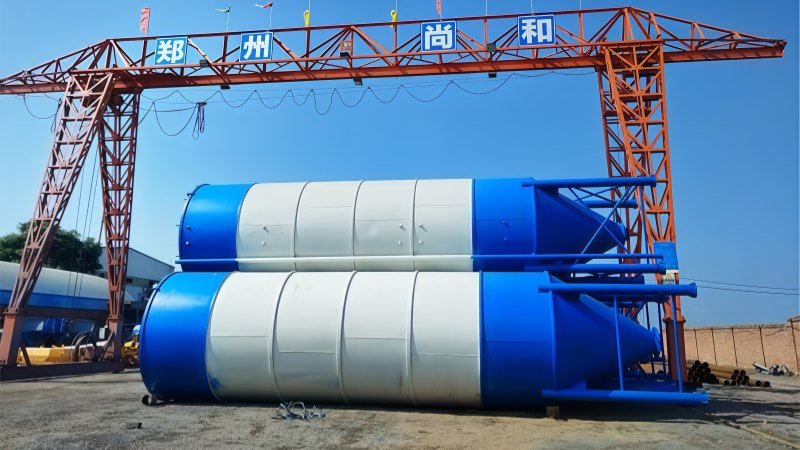
What Are Mobile Concrete Batch Plants
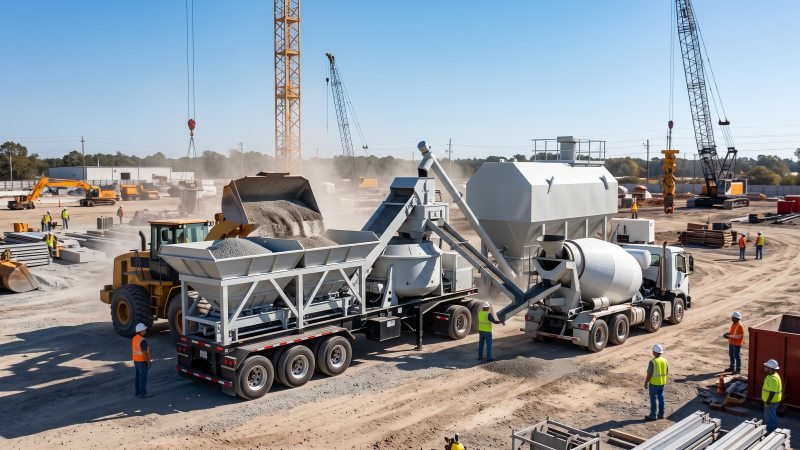
What exactly are mobile concrete batch plants, and how do they function on modern construction sites?
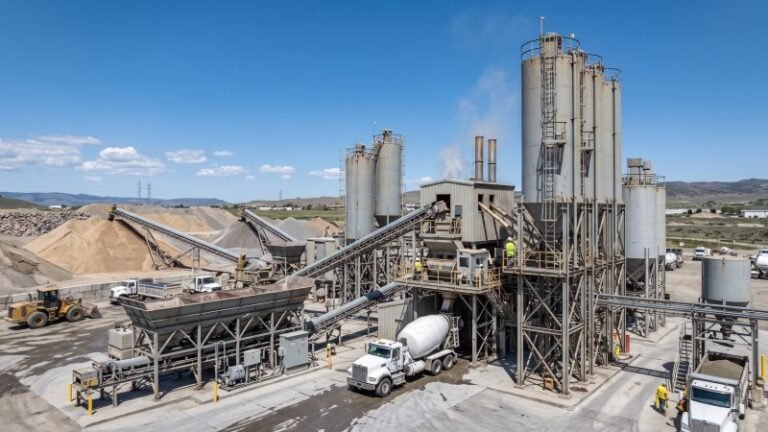
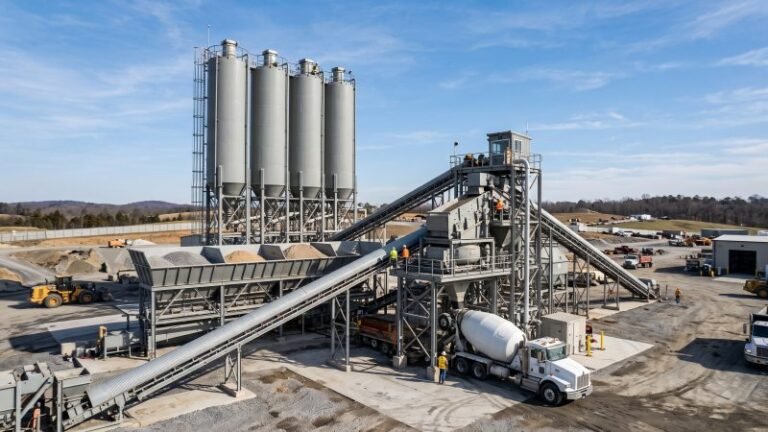
Mobile concrete batch plants are fully integrated, portable mixing systems mounted on wheeled chassis, designed to produce high-quality concrete directly at the job site. They combine aggregate batchers, compact cement silos, precise weighing systems, and heavy-duty mixers into a highly transportable footprint, allowing contractors to eliminate permanent foundations, reduce long-distance material hauling, and rapidly deploy the equipment within a few days.
Key Components That Make the Plant Portable
Understanding how a massive concrete batching system travels seamlessly between construction sites requires looking at its core engineering.
A mobile concrete batch plant achieves true portability by mounting its core machinery onto a single or dual wheeled chassis. This unified design includes folding aggregate batchers, heavy-duty mixers, low-level cement silos, and pre-wired smart control panels. Together, these integrated components eliminate the need for permanent concrete foundations and allow for rapid towing.
Aggregate Batchers and Weighing Systems
First, the aggregate batcher stores materials like sand, gravel, and crushed stone. These storage bins sit directly on the main transport frame. Furthermore, they feature cleverly designed foldable side panels. When it is time to move the plant, operators simply fold these steel panels inward. Therefore, the entire unit stays well within standard legal road dimensions.
Additionally, the weighing system is built directly into the discharge belt located under the bins. Heavy-duty load cells precisely measure the aggregates before mixing. Think of a portable asphalt plant. It uses similar modular hoppers that fold down for highway travel. The mobile concrete batcher follows this exact same engineering logic. Since standard bin storage capacities typically range from 20 to 60 cubic meters based on material density, it is highly recommended to confirm the exact capacities with your manufacturer to match your batching needs.
Heavy-Duty Mixers for On-Site Production
Why should you sacrifice mixing power just to gain mobility? You simply do not have to. Manufacturers mount powerful mixing engines directly onto the main portable chassis. Most portable units utilize either twin-shaft or planetary mixers to guarantee high-quality concrete.
How the Chassis Handles the Force
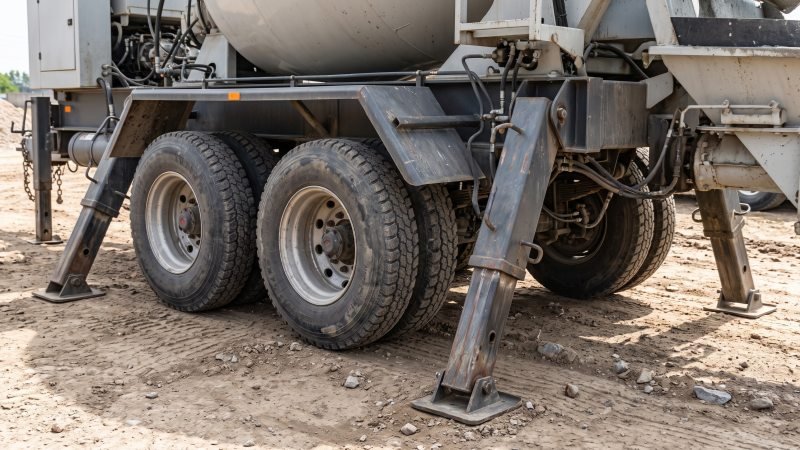
Stationary plants bolt their mixers to thick concrete pads to safely absorb vibrations. Conversely, mobile plants rely on heavy-duty steel frames and fold-out support legs. Just as a mobile crane deploys hydraulic outriggers to safely lift heavy loads without tipping, the batch plant chassis uses reinforced steel supports to handle the intense torque of the mixer.
| Mixer Type | Common Application | Portability Feature |
|---|---|---|
| Twin-Shaft Mixer | High-volume continuous production | Mounts horizontally on the main trailer frame. |
| Planetary / Pan Mixer | Specialized, high-strength concrete | Requires a slightly wider deck but remains chassis-mounted. |
Compact Cement Silos and Conveyor Belts
Traditional vertical cement silos demand deep, expensive concrete foundations. Therefore, mobile plants often utilize compact, horizontal cement silos instead. These low-level silos sit flat on the bare ground or on their own separate wheeled trailers.
Next, folding conveyor belts transfer the weighed materials into the mixer. Instead of taking a long belt apart piece by piece, hinges allow the heavy steel frame to fold in half. Consequently, this smart design saves precious deck space during transport, allowing the plant to deploy faster upon arrival.
Integrated Smart Control Panels
Finally, the true “brain” of the operation is the smart control panel. In older, permanent facilities, electricians spend weeks manually running cables. However, mobile plants feature pre-wired, fully integrated control cabins.
“A fully integrated, plug-and-play electrical system is the defining factor that separates a modern portable plant from a dismantled stationary one.”
All electrical components utilize quick-connect aviation plugs. You simply plug the main communication cables into the central cabin. As a result, operators can reliably manage the entire weighing and mixing process from a single computer interface on the very first day.
Mobile vs. Stationary Batch Plants: Which Fits Your Project?
Deciding whether a portable mixing system or a permanent stationary facility is the better choice depends entirely on your operational scope and site footprint.
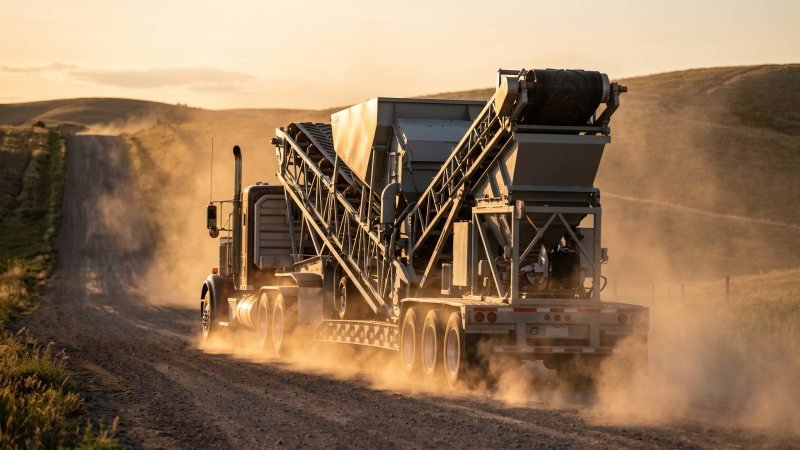
The choice between mobile and stationary batch plants depends strictly on project duration, site footprint, and daily volume needs. Mobile plants provide rapid deployment and zero foundation costs for temporary sites. Conversely, stationary plants offer massive, continuous production capacities for permanent, multi-year commercial operations.
Installation Time and Foundation Requirements
First, setting up a concrete facility requires heavy ground preparation. Stationary plants demand deep, expensive concrete foundations to support massive silos and absorb mixer vibrations. In contrast, mobile units only require flat, compacted soil.
You can compare this difference to heavy lifting equipment. A permanent tower crane requires a massive poured concrete base before it can safely operate. However, a mobile crawler crane simply rolls onto wooden mats and starts working immediately.
Therefore, stationary plants typically take two to four weeks to fully install and calibrate. Meanwhile, a skilled crew can set up a mobile batch plant in just one to three days. Because footing load requirements can vary based on soil conditions and equipment weight, always verify exact foundation safety specifications before deployment.
Transportation and Concrete Logistics Costs
Why transport wet concrete when you can transport the plant? Moving fresh concrete over long distances is highly inefficient. Standard ready-mix concrete begins to lose its slump and workability after just 90 minutes in a transit mixer.
When you place a mobile plant directly on your job site, you completely eliminate these long trucking routes. This strategy is identical to using a mobile rock crusher. You bring the crusher directly to the quarry face instead of trucking raw stone miles away for processing.
By producing material on-site, you drastically reduce fuel consumption and truck rental fees.
| Logistics Factor | Mobile Batch Plant (On-Site) | Stationary Batch Plant (Off-Site) |
|---|---|---|
| Transit Mixer Fleet Size | Small (Short turnaround times) | Large (Requires many trucks to cover distance) |
| Concrete Slump Risk | Very Low (Poured immediately) | High (Risk of setting during traffic delays) |
| Logistics Cost | Low (Only hauling raw dry materials) | High (Paying hourly rates for wet transport) |
Production Capacity and Yield Differences
Does your project truly need to pour 200 cubic meters of concrete every single hour? Stationary plants clearly dominate in sheer volume. They utilize massive twin-shaft mixers and enormous overhead aggregate bins to achieve maximum output. Standard stationary setups routinely produce 90 to over 240 cubic meters per hour.
However, mobile plants trade some of that maximum capacity for portability. Their compact frames limit the size of the onboard mixer and weighing hoppers. Consequently, most portable plants yield between 25 and 120 cubic meters per hour.
Matching Yield to Project Pacing
Most mid-sized projects cannot even consume 100 cubic meters per hour. If your pouring schedule is steady but moderate, a mobile plant perfectly matches the daily demand. Conversely, large-scale commercial precast factories must rely on stationary plants to meet their massive, non-stop production targets.
Ideal Construction Projects for Portable Batching Systems
Certain job sites benefit significantly more from a portable concrete mixing setup than others due to their unique logistical constraints.
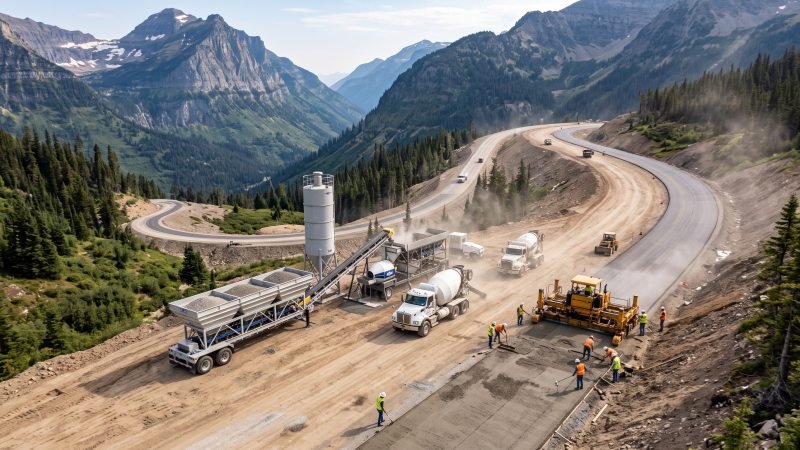
Portable batching systems are the ideal solution for linear, remote, and phased construction projects. They specifically excel in highway paving, bridge construction, temporary rural developments, and large-scale hydroelectric dam infrastructure where local ready-mix supply is either unavailable or financially impractical.
Highway and Bridge Construction
Highway projects present a unique geographical challenge. They are strictly linear. Therefore, the active work zone constantly moves further away from the starting point. Can you afford to truck wet concrete over 40 miles of rough terrain? Absolutely not. Fresh concrete degrades quickly during long transit times.
Instead, contractors tow a mobile batch plant directly along the newly graded route. Just as a slip-form paver continuously advances down the highway alignment to lay continuous concrete, the batch plant relocates to stay within a short, efficient driving radius. This strategy guarantees fresh concrete and avoids weak cold joints in the pavement.
Remote and Temporary Job Sites
Remote sites like wind farms, forestry roads, or mining camps face severe logistical hurdles. Often, the nearest commercial ready-mix facility is hours away. Consequently, paying for long-distance wet concrete delivery becomes incredibly expensive. Furthermore, the concrete will likely begin to set inside the drum before it even arrives.
A mobile plant solves this problem completely. Similar to deploying a portable crushing and screening plant to process local materials at an off-grid mining camp, a mobile batch plant provides total material independence. You only transport dry cement and raw aggregates to the site. Then, you mix the concrete exactly when you need it.
| Logistics Challenge | Relying on Distant Ready-Mix | Using an On-Site Mobile Plant |
|---|---|---|
| Delivery Costs | High (charged per mile for wet transport) | Low (bulk delivery of dry materials) |
| Concrete Quality | High risk of slump loss during travel | Perfect consistency (mixed on demand) |
| Schedule Control | Dependent on third-party traffic delays | Total internal control over pour times |
Hydroelectric Dams and Infrastructure
Large infrastructure projects, such as hydroelectric dams, usually sit in deep, isolated mountain valleys. These massive structures require tens of thousands of cubic yards of concrete. Often, they utilize highly specialized mixes like Roller-Compacted Concrete (RCC) for extreme strength.
Building a permanent, stationary mixing facility in a steep, narrow gorge is incredibly difficult and expensive. Therefore, contractors deploy heavy-duty portable plants instead. Similar to how a tower crane is erected directly adjacent to the core of a high-rise to minimize lifting distance, a portable plant is positioned right at the dam’s abutment to minimize transit time. Once a specific phase is complete, the crew simply tows the plant to the next elevation level to continue pouring.
Essential Factors to Consider Before Purchasing
Investing in a portable mixing system requires careful evaluation of several critical technical specifications to ensure it matches your operational capabilities.
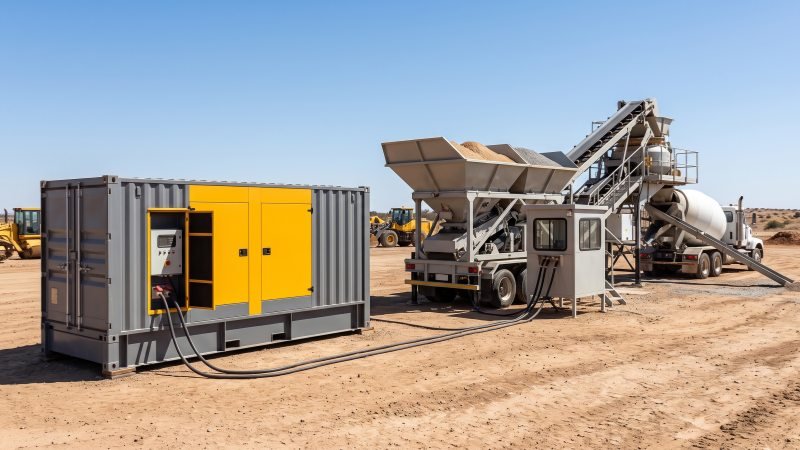
Before purchasing a mobile concrete batch plant, contractors must evaluate three primary constraints: the local road-legal transport dimensions of the trailer chassis, the on-site availability of high-voltage power and clean water, and the software integration capabilities for automated material tracking.
Road-Legal Dimensions and Towing Constraints
A portable plant is only useful if you can move it legally. Mobile batch plants act as heavy commercial semi-trailers during transport. They feature standard fifth-wheel towing hitches and rear axles. However, their folded size is the biggest purchasing factor.
If the folded hoppers or chassis exceed local highway width limits, you will face major logistical headaches. You will have to pay for expensive oversized load permits every single time you relocate. Think of transporting a massive 50-ton tracked excavator. If the tracks are too wide for a standard lowboy trailer, you must hire escort vehicles and conduct route surveys.
To avoid these costs, look for plants engineered to stay under standard transport widths, which are typically around 2.5 to 3 meters. Because maximum allowable highway dimensions and axle weight limits vary significantly by region, always verify the exact towing specifications with the manufacturer to ensure compliance with local transport authorities.
Power Supply and Water Source Availability
You cannot run a heavy-duty industrial facility without massive amounts of energy and water. Remote construction sites rarely feature dedicated high-voltage power grids. Therefore, you must carefully plan your off-grid power strategy.
Mobile plants use large electric motors to turn the mixer and drive the conveyor belts. Consequently, you will likely need to rent or buy a heavy-duty diesel generator. For example, a standard mid-sized portable plant often demands a generator capable of outputting at least 150 kW to 200 kW of continuous power. Because total electrical draw heavily depends on the specific mixer style and motor size, confirming exact generator sizing requirements with your equipment supplier is critical.
Additionally, concrete consists of roughly 15% water by volume. You must secure a reliable, high-volume water source.
| Utility Requirement | On-Grid Site Solution | Off-Grid Remote Site Solution |
|---|---|---|
| Electricity | Direct connection to high-voltage municipal lines | 150kVA – 300kVA portable diesel generator |
| Water Supply | Direct municipal fire hydrant or water main tie-in | Fleet of water tanker trucks and large holding tanks |
Automation Level and Software Integration
Manual mixing controls are entirely obsolete. Today, smart buyers prioritize fully automated Programmable Logic Controller (PLC) systems. Why does this computer software matter so much? Precision directly saves you money.
Cement is the most expensive ingredient in concrete. If an operator manually over-pours cement by just 2% on a large highway job, the wasted material costs can reach thousands of dollars. An automated system uses highly sensitive electronic load cells. These sensors instantly shut off the cement silo valves the exact second the target weight is reached.
This process is identical to a modern asphalt plant control room. In an asphalt plant, computer software continuously monitors the flow of liquid bitumen to prevent costly waste. Moreover, modern concrete automation software offers cloud integration. This allows project managers to track daily concrete yield, monitor material consumption, and print quality control tickets from a remote office in real-time.
Conclusion
Mobile concrete batch plants have completely transformed how contractors approach remote, linear, and temporary construction projects. By mounting full-scale production components onto towable chassis, these machines offer unmatched flexibility without sacrificing concrete quality. Whether you are paving a new highway or pouring foundations for a rural wind farm, investing in the right portable plant eliminates logistical bottlenecks and keeps your project moving forward profitably. Ready to find the perfect mobile batching setup for your next job? Contact us to discuss your specific site requirements and technical specifications.